Kiren Rijiju to lead India at NAM's 65th anniversary meet in Belgrade

Synopsis
India is sending a ministerial-level delegation to Belgrade for NAM's 65th anniversary — but the real story is how New Delhi is using this historic platform to press its counter-terrorism agenda, following the Pahalgam attack and Pakistan's controversial move to shield The Resistance Front at the UN Security Council.
Key Takeaways
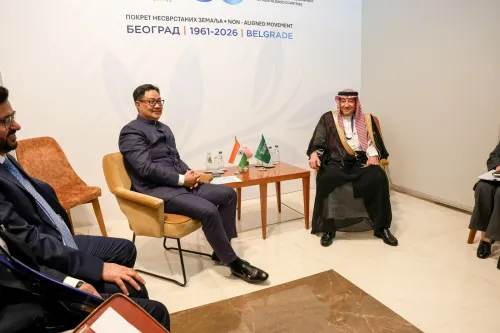
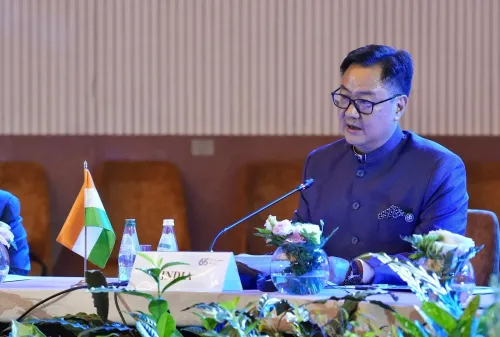
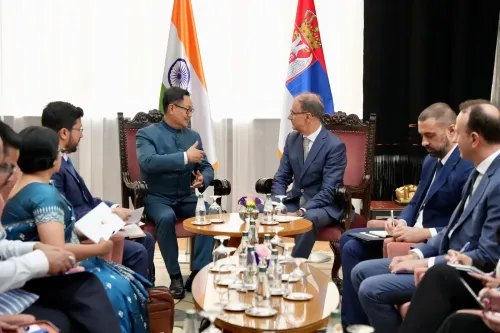
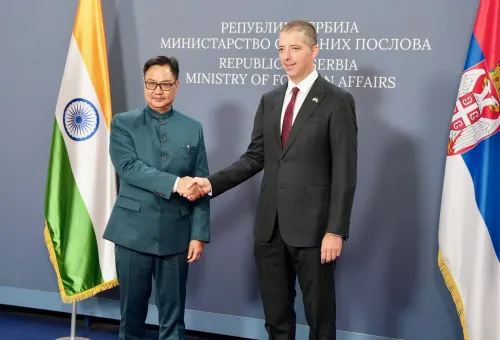
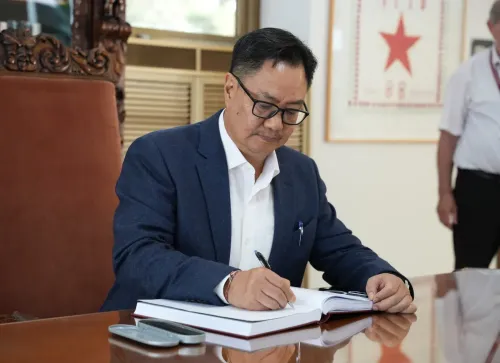
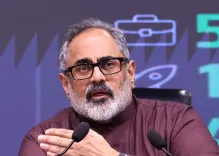
Union Parliamentary Affairs Minister Kiren Rijiju will lead India's delegation to the NAM High-Level Commemorative Meeting in Belgrade, Serbia on 31 August – 1 September .
The meeting marks the 65th anniversary of NAM's first summit, with the theme 'The Legacy of Non-Alignment: Lessons for Today's World' .
India is a founding member of NAM, which currently brings together 121 developing countries .
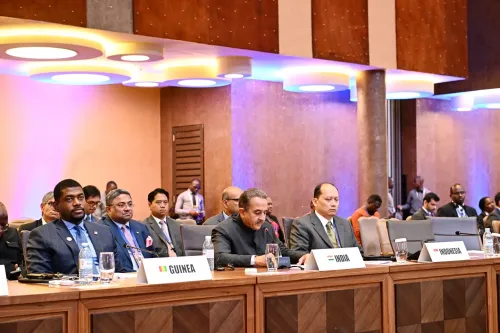
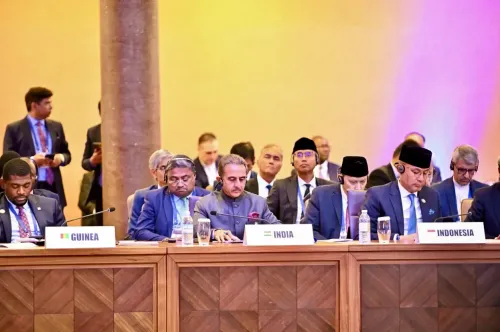
At the 19th NAM Mid-Term Ministerial in Kampala in October 2025 , India's MoS Kirti Vardhan Singh called out Pakistan for shielding The Resistance Front at the UN Security Council after the Pahalgam attack on 22 April 2025 .
NAM was formally established in Belgrade in 1961 , six years after the 1955 Bandung Conference in Indonesia.
Union Parliamentary Affairs Minister Kiren Rijiju will head the Indian delegation to a High-Level Commemorative Meeting in Belgrade, Serbia, scheduled for 31 August – 1 September, marking the 65th anniversary of the Non-Aligned Movement (NAM) summit, the Ministry of External Affairs (MEA) confirmed on Saturday, 29 August. The meeting commemorates the First Conference of Heads of State or Government of NAM, held in Belgrade in 1961.
Theme and Significance
The High-Level Commemorative Meeting carries the theme 'The Legacy of Non-Alignment: Lessons for Today's World'. The MEA underlined India's founding role in the movement, stating: 'India is a founding member of the movement which brings together 121 developing countries on a platform of historical significance. India remains committed to the principles and values of the movement.'
NAM traces its roots to the 1955 Bandung Conference in Indonesia, where Asian and African nations rallied around sovereignty, peaceful coexistence, non-interference, and opposition to colonialism. The movement was formally constituted six years later at its inaugural summit in Belgrade — the same city now hosting this milestone commemoration.
India's Recent Engagement with NAM
India's participation in Belgrade follows its active presence at the 19th NAM Mid-Term Ministerial Meeting held in Kampala, Uganda, in October 2025. At that forum, Minister of State for External Affairs Kirti Vardhan Singh placed cross-border terrorism at the centre of India's diplomatic messaging within the NAM framework.
Singh had stated: 'Terrorism is a shared threat that can be addressed only through deeper international cooperation. For decades, India has been a victim of barbaric cross-border terrorist attacks, most recently on 22 April 2025, when innocent tourists were slaughtered in Pahalgam in Jammu and Kashmir.'
India's Stand on Terrorism and Pakistan
Singh's remarks at Kampala included a pointed reference to a member state's conduct at the UN Security Council following the Pahalgam attack. Without naming Pakistan directly, he said: 'It is a matter of deep regret that when the UN Security Council deliberated on the Pahalgam terrorist attack, a member state chose to defend the perpetrator — The Resistance Front — to the extent of seeking a deletion of any public reference to them.'
He further warned: 'It is imperative that the Non-Aligned Movement display zero tolerance for terrorism. Any sponsorship, support, justification or cover-up of terrorism will come back to bite those who do so.' Singh also noted that virtually every NAM member recognises the threat posed by terrorism and is committed to combating it.
What the Belgrade Meeting Represents
For India, the Belgrade meeting is both a reaffirmation of its foundational role in NAM and an opportunity to advance its multilateral agenda at a time of heightened global tensions. NAM today continues to champion the interests of developing countries within the United Nations system, and India's ministerial-level representation signals the continued strategic weight it accords to the platform.
With Rijiju leading the delegation, New Delhi is expected to reiterate its commitment to multilateralism while keeping the anti-terrorism narrative prominent — a posture consistent with India's diplomatic stance since the Pahalgam attack.
Point of View
Particularly its counter-terrorism push post-Pahalgam. The repeated invocation of Pakistan's conduct at the UN Security Council within NAM forums is deliberate: India is building a multilateral record against Islamabad at every available platform. The tension worth watching is whether NAM's 121-member consensus can be leveraged on terrorism without fracturing the movement's non-alignment identity — since several members maintain ties with Pakistan. Belgrade will test how far India can advance that agenda without overreaching.
NationPress
13 Oct 2026
Frequently Asked Questions
Why is Kiren Rijiju going to Belgrade?
Kiren Rijiju is leading India's delegation to a High-Level Commemorative Meeting in Belgrade, Serbia, on 31 August–1 September 2025, marking the 65th anniversary of the Non-Aligned Movement's first summit. The MEA confirmed his participation on 29 August 2025.
What is the Non-Aligned Movement (NAM)?
NAM is a grouping of 121 developing countries that originated at the 1955 Bandung Conference and was formally established at its first summit in Belgrade in 1961. It champions multilateralism, sovereignty, and the interests of developing nations, particularly within the United Nations system.
What is the theme of the 2025 NAM High-Level Commemorative Meeting?
The theme is 'The Legacy of Non-Alignment: Lessons for Today's World.' The meeting commemorates the First Conference of Heads of State or Government of NAM, held in Belgrade 65 years ago.
What did India say at the NAM Mid-Term Ministerial in Kampala?
At the 19th NAM Mid-Term Ministerial in Kampala, Uganda, in October 2025, Minister of State Kirti Vardhan Singh called for zero tolerance for terrorism within NAM and criticised a member state — widely understood to be Pakistan — for defending The Resistance Front at the UN Security Council after the Pahalgam attack on 22 April 2025.
Is India a founding member of NAM?
Yes, India is a founding member of the Non-Aligned Movement. The MEA reaffirmed that India 'remains committed to the principles and values of the movement,' which it helped establish alongside other Asian and African nations in the early 1960s.