Kiren Rijiju visits Museum of Yugoslavia, pays tribute to Tito at NAM meet
Synopsis
India's parliamentary affairs minister Kiren Rijiju arrived in Belgrade to lead the Indian delegation at NAM's 65th anniversary summit — and began with a visit to Tito's mausoleum and the Museum of Yugoslavia, the city where the movement was born in 1961. With 121 developing nations gathering under the theme 'The Legacy of Non-Alignment: Lessons for Today's World,' the meeting is a test of whether the Cold War-era bloc still speaks with one voice.
Key Takeaways
Kiren Rijiju visited the Museum of Yugoslavia and House of Flowers (Tito's mausoleum) in Belgrade on 31 August .
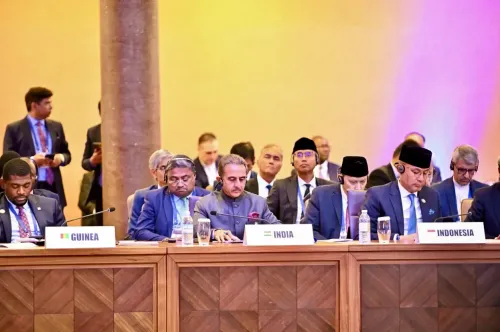
He is leading India's delegation at the NAM High-Level Commemorative Meeting , marking the movement's 65th anniversary .
The meeting runs from 31 August to 1 September under the theme 'The Legacy of Non-Alignment: Lessons for Today's World.' Rijiju paid floral tributes at the bust of Mahatma Gandhi in Belgrade and met members of the Indian community in Serbia .
The NAM comprises 121 developing countries ; India was a founding member at the first conference held in Belgrade in 1961 .
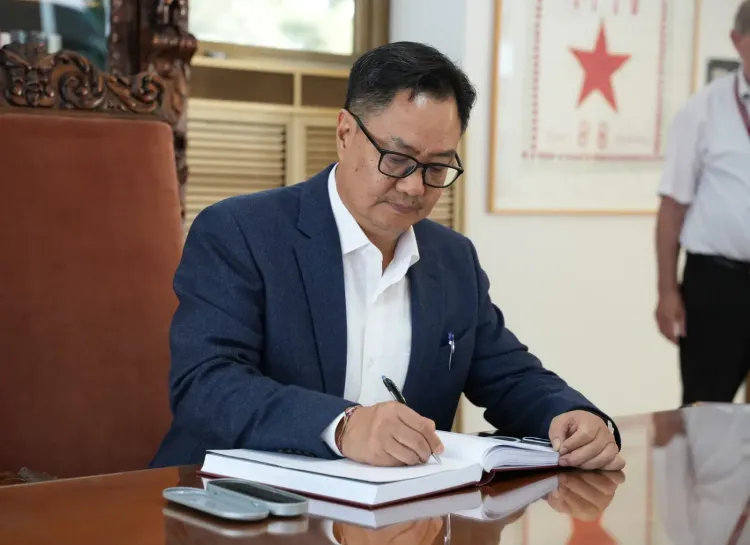
Union Parliamentary Affairs Minister Kiren Rijiju visited the Museum of Yugoslavia and the House of Flowers — the mausoleum of former Yugoslav President Josip Broz Tito — in Belgrade, Serbia, on 31 August, as he arrived to lead India's delegation at a high-level commemorative meeting of the Non-Aligned Movement (NAM). The visit preceded the 65th anniversary meeting of the First Conference of Heads of State or Heads of Government of the NAM, scheduled from 31 August to 1 September.
Rijiju at the Historic Sites
Sharing details of his visit on social media platform X, Rijiju described the sites as offering a window into Yugoslavia's political history and cultural legacy. 'Visited the Museum of Yugoslavia & the House of Flowers (Tito's Mausoleum) in Belgrade, Serbia. A significant historical site offering insights into Yugoslavia's political history, cultural heritage & the life & legacy of Josip Broz Tito,' he posted.
The minister called the experience meaningful, noting it provided an opportunity to reflect on the history that shaped the region. Belgrade's deep association with the birth of the NAM — the first conference was held here in 1961 — lends particular weight to the visit.
Tribute to Gandhi, Outreach to Indian Community
Before the commemorative meeting, Rijiju also paid floral tributes at the bust of Mahatma Gandhi in Belgrade. He subsequently interacted with members of the Indian community in Serbia, acknowledging their contribution to strengthening bilateral ties between India and Serbia. 'Before the NAM Meeting, paid floral tributes at the bust of Mahatma Gandhi ji in Belgrade, Serbia. Interacted with members of Indian community appreciating their contribution towards strengthening India–Serbia ties,' he said in a separate post on X.
The NAM Anniversary Meeting
The high-level commemorative meeting is being held under the theme 'The Legacy of Non-Alignment: Lessons for Today's World.' The gathering marks 65 years since the first NAM summit, a landmark event in the history of developing nations that sought to chart an independent course between the Cold War blocs led by the United States and the Soviet Union.
India was among the founding members of the NAM and has consistently reaffirmed its commitment to the movement's principles. According to the Ministry of External Affairs, the NAM today brings together 121 developing countries and continues to serve as a platform of historical and diplomatic significance.
India's Stake in the Movement
Rijiju's presence at the anniversary meeting underscores India's continued engagement with the NAM framework at a time when the global order is again marked by geopolitical competition and shifting alliances. Notably, this is India's latest high-level participation in a multilateral forum that traces its roots to the Nehruvian foreign policy doctrine of strategic autonomy.
The ministry has reiterated that India remains committed to the movement's founding values — sovereignty, territorial integrity, and opposition to interference in the internal affairs of states. With 121 member nations representing a majority of the world's population, the NAM's relevance in contemporary diplomacy continues to be debated and reasserted in equal measure.
As the Belgrade meeting concludes, attention will turn to what joint statements or declarations the member nations adopt — and whether the forum can translate its historical legacy into actionable consensus on today's pressing global challenges.
Point of View
And India's presence there carries historical weight. Yet the harder question is whether a 121-member bloc born of Cold War non-alignment retains coherence in an era of fragmented multipolarity, where many NAM members have quietly tilted toward competing great powers. India's commitment to strategic autonomy remains rhetorically consistent, but the movement's ability to produce collective positions on contemporary crises — from Gaza to Ukraine — has been visibly strained. The Belgrade anniversary is as much an occasion for nostalgia as it is a test of relevance.
NationPress
15 Oct 2026
Frequently Asked Questions
Why is Kiren Rijiju in Belgrade?
Kiren Rijiju is in Belgrade to lead India's delegation at the High-Level Commemorative Meeting marking the 65th anniversary of the first Non-Aligned Movement (NAM) conference. The meeting is being held from 31 August to 1 September under the theme 'The Legacy of Non-Alignment: Lessons for Today's World.'
What is the Non-Aligned Movement (NAM)?
The Non-Aligned Movement is a grouping of 121 developing countries that was founded in 1961 in Belgrade, with India among its founding members. It was established to allow developing nations to chart an independent foreign policy course outside the Cold War blocs, and continues to serve as a multilateral diplomatic platform.
What did Rijiju visit in Belgrade?
Rijiju visited the Museum of Yugoslavia and the House of Flowers, the mausoleum of former Yugoslav President Josip Broz Tito, in Belgrade. He described the sites as offering insights into Yugoslavia's political history, cultural heritage, and Tito's legacy.
Why is the 2024 NAM meeting significant?
The meeting marks 65 years since the first NAM conference, which was held in Belgrade in 1961. It brings together 121 developing nations to reflect on the movement's founding principles and their relevance to contemporary global challenges.
What else did Rijiju do in Belgrade ahead of the NAM meeting?
Before the meeting, Rijiju paid floral tributes at the bust of Mahatma Gandhi in Belgrade and interacted with members of the Indian community in Serbia, acknowledging their role in strengthening India–Serbia bilateral ties.