PM Modi Thanks Serbia's Vučić, Reaffirms India-Serbia Ties
Synopsis
Prime Minister Narendra Modi publicly thanked Serbian President Aleksandar Vučić on June 14, 2026, recalling a recent bilateral visit to India and pledging to deepen the two countries' partnership — a relationship rooted in over seven decades of diplomatic ties dating to the Non-Aligned Movement era.
Key Takeaways
PM Modi responded to goodwill wishes from Serbian President Aleksandar Vučić on June 14, 2026 .
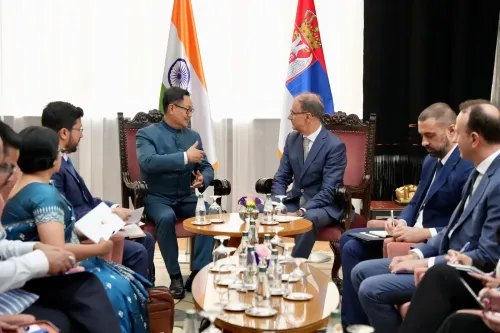
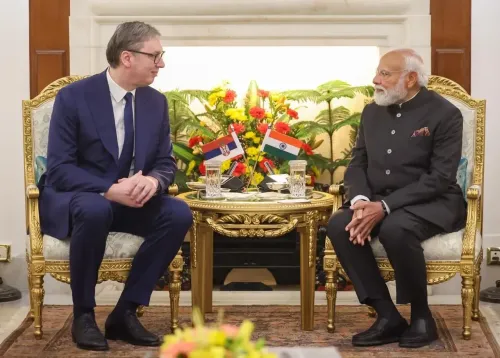
Modi recalled Vučić's recent visit to India and described the discussions as 'productive.' India and Serbia have maintained diplomatic relations since 1948 , originally with the Federal People's Republic of Yugoslavia.
Both nations share a legacy as founding participants of the Non-Aligned Movement , underpinning decades of multilateral cooperation.
India's engagement with Serbia fits a broader multi-alignment strategy of diversifying European partnerships beyond major EU powers.
Possible follow-up outcomes include bilateral agreements on trade, defence, or IT cooperation and a potential Indian leadership visit to Belgrade .
Prime Minister Narendra Modi on Sunday, June 14, 2026, responded warmly to birthday or goodwill wishes from Serbian President Aleksandar Vučić, recalling a recent bilateral visit and reaffirming India's commitment to deepening its partnership with Serbia.
Context
In his post, PM Modi wrote: 'Thank you President Vučić for your warm and heartfelt wishes. I fondly recall your recent visit to India and our productive discussions. India deeply values its friendship with Serbia and I look forward to working together to further strengthen our partnership in the years ahead.' The message signals a personal warmth between the two leaders following President Vučić's visit to New Delhi.
The exchange is notable for its emphasis on 'productive discussions,' suggesting the bilateral agenda extended beyond ceremonial interaction to substantive policy ground. India and Serbia have maintained diplomatic relations since 1948, when ties were established with the Federal People's Republic of Yugoslavia.
Policy Backdrop
India and Serbia share a diplomatic lineage rooted in the Non-Aligned Movement (NAM), of which founding members India and Yugoslavia — Serbia's predecessor state — were central pillars. That legacy established a tradition of South-South cooperation, sovereignty advocacy at the United Nations, and regular multilateral consultations.
After Serbia emerged as an independent state in 2006, New Delhi continued the bilateral relationship without interruption. Both countries have since coordinated on UN reform and other multilateral platforms. President Vučić, who has led Serbia since 2017, has pursued a policy of balanced foreign relations, making him a natural interlocutor for India's own multi-alignment doctrine.
Stakeholders and Impact
India's diplomatic outreach to Western Balkan states like Serbia reflects New Delhi's broader strategy of diversifying European partnerships beyond traditional engagements with major EU powers. Mid-sized nations in the region offer India pathways for cooperation in trade, defence technology, and information technology sectors.
Business communities and diplomatic services on both sides stand to benefit from any framework agreements that may follow the recent visit. Serbia's position as a candidate country for EU membership also gives India a potential bridge into European regulatory and trade ecosystems.
What's Next
PM Modi's explicit statement that he looks 'forward to working together to further strengthen our partnership' points toward possible follow-up engagements. Analysts will watch for the announcement of bilateral agreements on trade, defence, or IT cooperation, as well as a potential reciprocal visit by Indian leadership to Belgrade.
The tone and timing of this public exchange suggest both governments are keen to maintain momentum from the recent in-person meeting, keeping the India-Serbia relationship on an upward trajectory within India's wider European diplomatic calendar.
Point of View
Building European footholds outside the EU's formal architecture. The NAM reference point, while historical, also provides both sides a non-Western normative frame that neither Delhi nor Belgrade needs to justify to domestic audiences.
NationPress
22 Sept 2026
Frequently Asked Questions
Why did PM Modi thank Serbian President Vučić?
PM Modi thanked President Vučić for sending warm wishes, likely on the occasion of a personal greeting, and used the opportunity to recall Vučić's recent visit to India and reaffirm bilateral ties.
When did President Vučić visit India?
PM Modi referenced a recent visit by President Vučić to India in his June 2026 post, though the exact dates of that visit have not been officially detailed in this statement.
What is the history of India-Serbia relations?
India established diplomatic relations with Yugoslavia — Serbia's predecessor — in 1948. Both nations were founding members of the Non-Aligned Movement, and ties continued with Serbia after it became independent in 2006.
What could come out of India-Serbia talks?
Possible outcomes include bilateral agreements on trade, defence technology, and IT cooperation, as well as a potential reciprocal visit by Indian leadership to Belgrade.
How does Serbia fit into India's foreign policy?
India views Serbia as part of its strategy to diversify European partnerships beyond major EU powers, engaging mid-sized Western Balkan nations for economic, defence, and multilateral cooperation.