Is the Risk of a Direct US-Venezuela Confrontation Increasing as Maduro Defies Trump's Blockade?
Click to start listening
Synopsis
Tensions heighten as Venezuelan President Nicolas Maduro defies Trump's blockade by ordering navy escorts for oil tankers. This action raises alarms about a potential military confrontation, as diplomatic efforts to ease the situation continue amid accusations and political maneuvering.
Key Takeaways
- Maduro's navy is escorting oil tankers, escalating tensions.
- Trump's blockade is aimed at crippling Venezuela's oil exports.
- International diplomatic efforts are underway to defuse the situation.
- China has accused the US of bullying Venezuela.
- Military conflict remains a serious concern for regional stability.
New York, Dec 18 (NationPress) In a bold move against US President Donald Trump’s blockade, Venezuelan President Nicolas Maduro has commanded his navy to provide escort for oil tankers, inciting fears of a potential military clash.
Reports surfaced on Wednesday detailing the naval escorts for Venezuelan oil tankers, following Trump’s declaration on Tuesday of having formed “the largest Armada ever assembled in the History of South America” to enforce the blockade.
In a post on Truth Social, Trump labeled Maduro’s government a terrorist organization, effectively attempting to delegitimize it.
Venezuela is believed to possess the largest oil reserves globally; however, it has been unable to fully utilize these resources due to political turmoil, corruption, and its opposition to Western influences.
As tensions rose regarding a naval confrontation between Trump’s armada and Maduro’s fleet, diplomatic efforts were underway both internationally and within the US to mitigate the crisis.
Two resolutions aimed at preventing escalation in the US House of Representatives, which sought to require Congressional approval for military action, narrowly failed on Wednesday.
Democrat Jim McGovern, who introduced one of the resolutions, stated, “We have a president beating the drums of war without so much as a vote from the House of Representatives.”
The President of the UN Security Council, Slovenia, confirmed that they received a letter from Venezuela regarding US actions and are consulting with Council members.
Maduro also reached out to UN Secretary-General Antonio Guterres to discuss the unfolding situation.
The UN indicated that Guterres reiterated the necessity for Member States to adhere to international law, emphasizing restraint and de-escalation to maintain regional stability.
Mexico’s President Claudia Sheinbaum commented that the UN “must assume its role to prevent any bloodshed and always seek peaceful conflict resolution.”
Trump has limited the effects of his blockade to “ghost” ships under sanctions, leaving open the possibility of other vessels operating without interference for the time being.
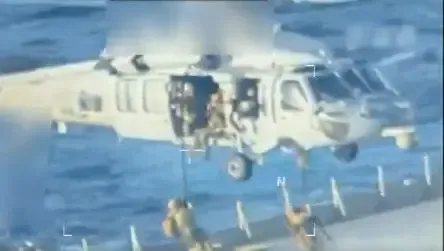
Last week, one of these “ghost” ships, the 'Skipper', was seized in a civil action by the US Coast Guard while reportedly heading to Cuba.
Reports indicate that the tankers leaving on Wednesday were bound for Asia and were not part of the targeted “ghost” fleet.
In response, China, a significant buyer of Venezuelan oil, accused the US of “bullying.” China’s Foreign Minister Wang Yi asserted, “China believes the international community understands and supports Venezuela’s position in defending its legitimate rights and interests.”
Trump has vowed to see Maduro, who faces allegations of electoral fraud in his re-election last year, removed from power.
He has accused Venezuela of jeopardizing US security through drug exports and harboring criminals.
This confrontation traces back to September when Trump launched a campaign against vessels reportedly carrying drugs to the US, resulting in approximately 25 boats destroyed and around 80 fatalities.
Point of View
It's crucial to observe that the unfolding crisis between the US and Venezuela not only threatens regional stability but also highlights the urgency for diplomatic engagement. While the actions of both nations are steeped in political maneuvering, the potential humanitarian ramifications deserve immediate attention and consideration.
NationPress
19/12/2025
Frequently Asked Questions
What prompted Maduro to order navy escorts for oil tankers?
Maduro's decision to escort oil tankers comes as a direct defiance of President Trump's blockade, raising concerns over military confrontation.
What are the implications of the US blockade on Venezuela?
The US blockade aims to restrict Venezuela's oil exports, which are crucial for its economy, but also risks escalating military tensions.
How has the international community reacted?
Countries like China have criticized the US actions, calling them bullying, while diplomatic efforts are ongoing to de-escalate the situation.
What is the current status of military actions between the US and Venezuela?
As of now, the US has formed a naval presence in the region, while Venezuela has mobilized its navy, leading to heightened fears of a confrontation.
What are the potential consequences of this conflict?
A military confrontation could lead to significant regional instability, humanitarian crises, and broader international implications.