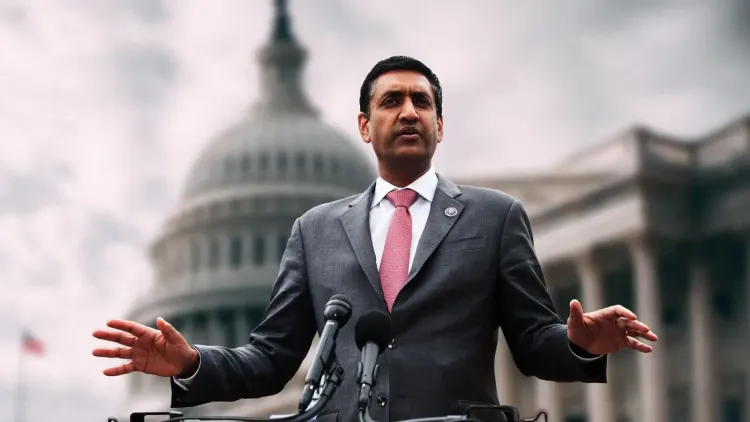
Ro Khanna leads Indian-American House members with $16.6M campaign cash
Synopsis
Ro Khanna's $16.6 million campaign cash balance — with zero debt — dwarfs the combined reserves of all other Indian-American House members and members-elect. The figures, drawn from FEC records, reveal a stark two-tier structure: a well-resourced Khanna at the top and competitive-district newcomers like Amish Shah and Pia Dandiya running on nearly empty after tight wins.
Key Takeaways
Ro Khanna held $16.6 million in campaign cash as of mid-November 2026 , with no debt — the largest balance among eight Indian-American House members and members-elect.
Khanna's balance exceeded the combined $11.1 million of the other seven Indian-American lawmakers.
Shri Thanedar had the second-largest cash reserve at $5.9 million , but carried $14.44 million in campaign debt.
Members-elect Amish Shah (Arizona) and Pia Dandiya (Florida) each held under $750,000 in cash after spending heavily to win competitive districts.
Raja Krishnamoorthi's Senate campaign received $31.6 million , including $19.4 million in inter-committee transfers — requiring careful accounting to avoid double-counting.
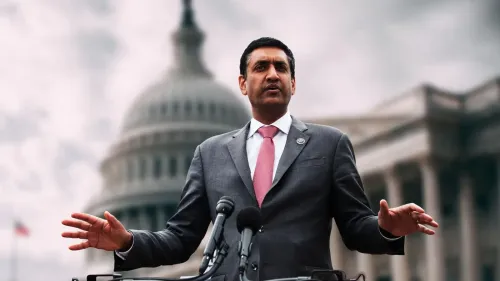
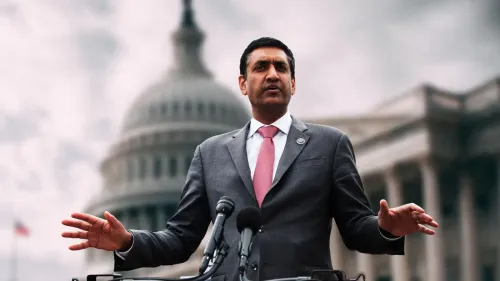
Representative Ro Khanna held $16.6 million in campaign cash as of mid-November 2026, the largest balance among the eight Indian-American House members and members-elect, according to a review of Federal Election Commission (FEC) records. Notably, his campaign carried zero debt — a rare position among the group.
Khanna's Commanding Lead
The California Democrat's cash-on-hand figure surpassed the combined balances of the other seven Indian-American lawmakers — roughly $11.1 million — by a significant margin. During the 2026 election cycle through 14 October, Khanna's campaign reported receipts of $15.3 million and disbursements of $9.5 million. His accumulated cash balance exceeded even his cycle-to-date receipts, suggesting a strong carry-forward from prior fundraising.
Where the Other Incumbents Stand
Among sitting Indian-American House members, Representative Pramila Jayapal of Washington reported $1.75 million in cash, while California's Ami Bera held $1.65 million — with $80,000 in reported debt. Virginia's Suhas Subramanyam disclosed approximately $746,000 in cash and carried no debt.
Jayapal's campaign received $2.9 million and disbursed $3.2 million during the cycle. Bera reported receipts of $1.5 million against disbursements of $1.7 million. Subramanyam brought in $1.7 million and spent about $1.1 million over the same period.
Members-Elect: Smaller Reserves, Bigger Races
Amish Shah, who defeated Republican Jay Feely in Arizona's 1st Congressional District, reported receipts of $5.7 million and disbursements of $5.5 million through 14 October, leaving roughly $206,000 in cash and nearly $37,000 in debt. His defeated opponent, Feely, reported receipts of $3.8 million and disbursements of $3.6 million, with approximately $183,000 in cash and $330,000 in debt.
Pia Dandiya, who flipped Florida's 22nd District by defeating Republican Casey Askar, reported receipts of $4.6 million and disbursements of $3.9 million, leaving her campaign with about $735,000 and $247,000 in debt. Askar had reported higher receipts of $7.4 million — including $6.69 million in self-loans — with disbursements of $5.5 million, cash of $1.9 million, and debt of $6.29 million after $400,000 in loan repayments.
Thanedar and Krishnamoorthi: Notable Complexities
Shri Thanedar held the second-largest cash balance among the group at $5.9 million as of 30 September, but his campaign reported $14.44 million in debt — substantially exceeding that reserve. The campaign received $3.2 million and disbursed $4.2 million during the cycle.
Raja Krishnamoorthi, who ran for a Senate seat, presented a more complex financial picture split across two accounts. His House campaign account held about $47,000 on 30 September, with receipts of $3.9 million and disbursements of $21 million. His Senate account held approximately $33,000, with receipts of $31.6 million and disbursements of $31.5 million. Notably, the Senate receipts included $19.4 million in transfers from other authorised committees — a standard but important accounting detail, since simply adding figures across accounts can count the same money twice.
What This Signals
The fundraising divergence underscores the growing financial clout of Indian-American politicians in federal contests, while also highlighting the stark gap between top-tier operations like Khanna's and candidates running in competitive swing districts where every dollar was deployed. With the 2026 cycle now closed, attention will shift to how these cash positions translate into legislative influence and whether Khanna's war chest signals ambitions beyond the House.
Point of View
The two newly elected Indian-American members, Shah and Dandiya, spent almost everything they raised to win, leaving them financially vulnerable heading into their first terms. Thanedar's $14.44 million debt alongside a $5.9 million balance is the most precarious position in the group and deserves closer scrutiny than the headline cash figure suggests.
NationPress
12 Nov 2026
Frequently Asked Questions
How much campaign cash does Ro Khanna have?
Ro Khanna held $16.6 million in campaign cash as of mid-November 2026, according to Federal Election Commission records. His campaign reported no debt and receipts of $15.3 million during the 2026 election cycle through 14 October.
Which Indian-American House members have the most campaign funds?
Ro Khanna leads with $16.6 million, followed by Shri Thanedar at $5.9 million — though Thanedar also carries $14.44 million in debt. Pramila Jayapal and Ami Bera hold $1.75 million and $1.65 million, respectively.
Who are the new Indian-American members of Congress elected in 2026?
Amish Shah won Arizona's 1st Congressional District by defeating Republican Jay Feely, and Pia Dandiya flipped Florida's 22nd District by defeating Republican Casey Askar. Both are members-elect as of November 2026.
Why does Krishnamoorthi's fundraising look unusually large?
Raja Krishnamoorthi's Senate campaign reported $31.6 million in receipts, but $19.4 million of that consisted of transfers from other authorised committees. Because the same money can pass through multiple accounts, simply adding figures across his House and Senate accounts would overstate his total fundraising.
What does campaign cash-on-hand indicate for a politician?
Cash-on-hand reflects a campaign's financial health and capacity to fund future races or support allies. A large, debt-free balance like Khanna's is often interpreted as a signal of broader political ambitions beyond the current office.