Kishan Reddy Lays Out India's Critical Minerals Roadmap to 2047

Synopsis
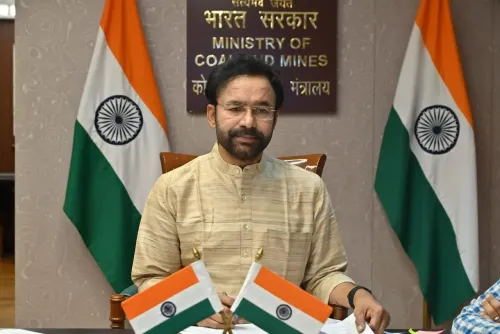
Union Mines Minister G. Kishan Reddy has outlined India's end-to-end critical minerals strategy — covering exploration, processing and recycling — to build self-reliance in materials powering EVs and green energy, anchored to the Viksit Bharat 2047 national vision.
Key Takeaways
Kishan Reddy framed India's critical minerals push as central to the Viksit Bharat 2047 development goal.
The strategy covers the full value chain: exploration, processing and recycling of critical minerals.
India notified a list of 30 critical minerals and amended the MMDR Act in 2023 to open exploration to private entities.
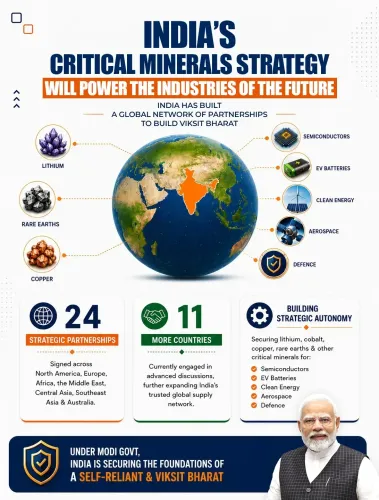
Key minerals targeted include lithium, cobalt and rare earths — currently import-dependent, largely from China.
India's approach is aligned with global initiatives such as the Mineral Security Partnership to diversify clean-energy supply chains.
Upcoming milestones include critical mineral block auctions, recycling policy guidelines and new bilateral exploration agreements.
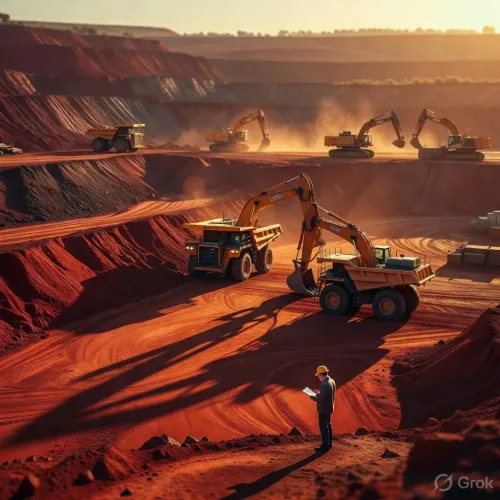
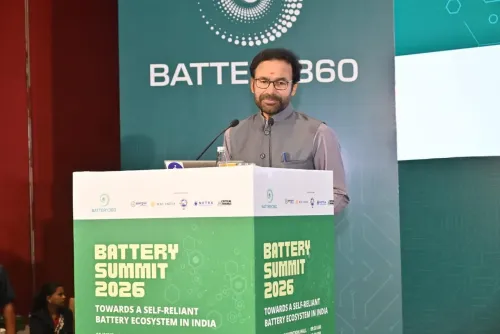
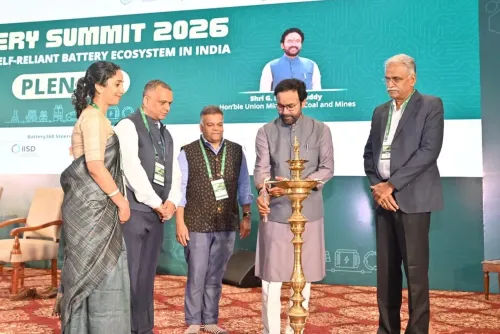
From the earth beneath India's feet to the batteries powering its electric future — Union Coal and Mines Minister G. Kishan Reddy has spelled out a sweeping vision for self-reliance in critical minerals, framing the country's exploration-to-recycling ambition as the backbone of Viksit Bharat 2047.
The Chain India Is Building — From Mine to Motor
Reddy's post lays out a deliberate, end-to-end architecture: exploration, processing, recycling — three links in a chain designed to wean India off import dependence for the minerals that run green energy grids and electric vehicles. That sequence is not rhetorical. It mirrors the government's Critical Minerals Mission, which targets domestic capability at every stage rather than simply digging ore and exporting it raw.
The strategic stakes are significant. Minerals such as lithium, cobalt and rare earths — the building blocks of EV batteries and solar panels — are today sourced overwhelmingly from China and a handful of other countries, giving those suppliers outsized leverage over global clean-energy supply chains. India's intent, as Reddy signals, is to shrink that vulnerability.
The 2023 MMDR Amendment and the 30-Mineral List
The policy foundation was laid when the central government notified a list of 30 critical minerals and amended the Mines and Minerals (Development and Regulation) Act to allow private entities into exploration for the first time. That opened the door to faster, commercially-driven prospecting across geologies that state agencies had left largely untouched.
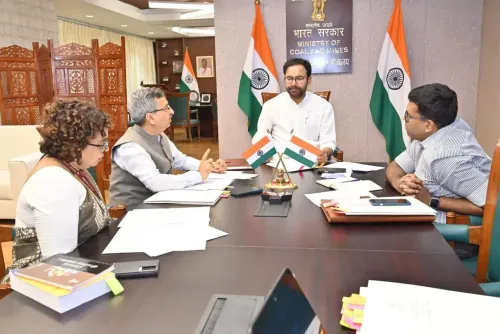
The Ministry of Mines has since been the operational nerve-centre — managing mineral block auctions, drafting recycling-policy guidelines and negotiating bilateral exploration agreements with resource-rich nations. Each of those tracks feeds directly into the self-reliant ecosystem Reddy is describing.
India's Place in the Global Minerals Race
India's push is not happening in isolation. The country is part of the Mineral Security Partnership — a grouping of like-minded nations working to diversify supply chains away from single-country dominance. Reddy's framing connects the domestic mission to that geopolitical reality: India wants a seat at the table where tomorrow's clean-energy economy is being shaped, not just a spot in the queue for imports.
For industries watching closely — EV manufacturers, renewable energy firms and battery recyclers — the signal from the minister is that the regulatory and investment environment around critical minerals will keep evolving, with block auctions, recycling norms and new bilateral pacts on the near-term horizon.
What 2047 Actually Demands
The Viksit Bharat 2047 vision — transforming India into a fully developed economy by the centenary of independence — is impossible to deliver without securing the raw material inputs for the energy transition. No lithium, no lithium-ion batteries. No rare earths, no wind turbines. Reddy's post makes the linkage explicit: critical minerals are not a niche mining story; they are an infrastructure story, an industrial story and, ultimately, a sovereignty story.
The blocks still to fall into place include the finalisation of recycling policy guidelines and the pace of critical mineral block auctions. How fast those auctions move — and how many private players they attract — will tell the real story of whether India's minerals ambition is being built or merely announced.
Point of View
The Minister is embedding resource security within the government's most high-profile long-term narrative — making it politically harder to deprioritise if targets slip. The emphasis on recycling alongside exploration also hints at a maturing policy framework, one that acknowledges India cannot mine its way out of import dependence alone. How aggressively block auctions are executed and bilateral agreements inked will ultimately determine whether this vision is transformative or performative.
NationPress
12 Nov 2026
Frequently Asked Questions
What is India's Critical Minerals Mission?
India's Critical Minerals Mission is a government effort to build domestic capabilities across the full chain of exploration, processing and recycling of minerals essential for EVs, renewable energy and advanced industries. It is backed by the 2023 amendment to the MMDR Act and a notified list of 30 critical minerals.
Which minerals does India consider critical?
The Indian government has notified a list of 30 critical minerals, prominently including lithium, cobalt and rare earth elements — materials essential for EV batteries, wind turbines and solar panels that India currently imports heavily.
What is Viksit Bharat 2047?
Viksit Bharat 2047 is India's national vision to become a fully developed economy by 2047, the centenary of independence. It encompasses goals across infrastructure, manufacturing, energy and technology, with critical minerals now explicitly linked to this target.
What did the 2023 MMDR Act amendment do for critical minerals?
The 2023 amendment to the Mines and Minerals (Development and Regulation) Act opened up exploration of critical minerals to private companies for the first time, aiming to accelerate prospecting across geologies previously covered mainly by state agencies.
What is the Mineral Security Partnership and is India part of it?
The Mineral Security Partnership is a grouping of countries working to diversify critical mineral supply chains away from single-country dependence. India is a participant, aligning its domestic minerals mission with this broader geopolitical effort to reduce reliance on China-dominated supply chains.