RSS Chief Hosabale Presents Civilisational Vision at Hudson Institute
Synopsis
RSS General Secretary Dattatreya Hosabale told Washington's Hudson Institute that Hindu identity is civilisational, not religious, and that the RSS does not dictate India's Pakistan policy — a rare, high-profile global pitch reframing the Sangh's image before Western policymakers and think tanks.
Key Takeaways
Dattatreya Hosabale , RSS General Secretary , spoke at the Hudson Institute's New India Conference in Washington D.C. on April 24, 2025 .
Hosabale stated that the RSS does not interfere in the Government of India's foreign policy , including decisions related to Pakistan .
He described Hindu identity as a civilisational, not religious, identity rooted in worldview, human-nature relations, and historical facts.
Hosabale said people-to-people ties with neighbouring countries remain strong despite state-level tensions, singling out Pakistan as the primary friction point.
The RSS has been actively expanding outreach to Western think tanks and influencing sections to explain its philosophy and work on the global stage.
He invoked the principle of Vasudhaiva Kutumbakam — the whole world as one family — as the foundation of the RSS's universal civilisational vision.
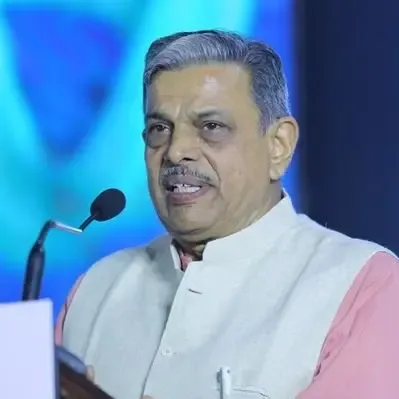
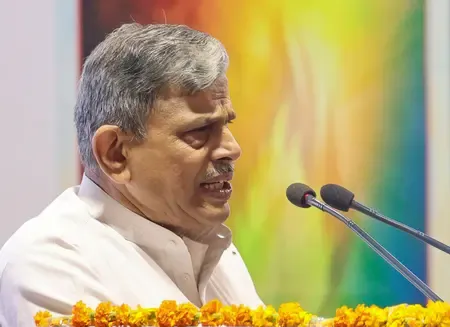
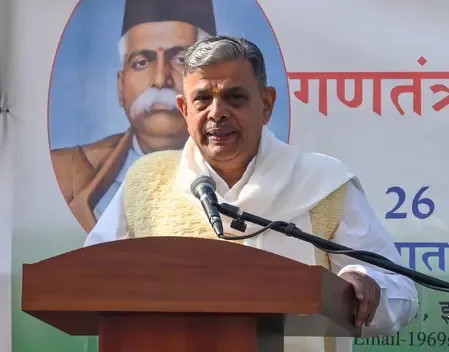
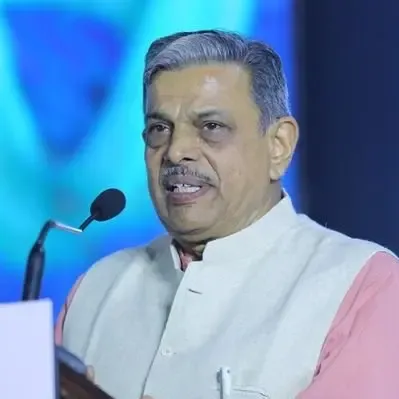
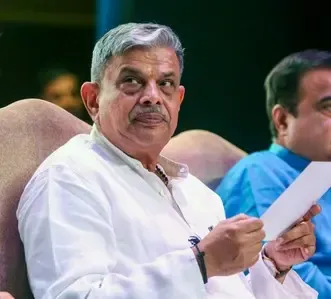
Washington, April 24: Rashtriya Swayamsevak Sangh (RSS) General Secretary Dattatreya Hosabale presented a sweeping civilisational worldview before an international audience at the Hudson Institute in Washington D.C., emphasising social cohesion, people-to-people diplomacy, and India's universal cultural ethos. Speaking at the think tank's prestigious New India Conference, Hosabale steered clear of direct commentary on Indian foreign policy while articulating a vision that positions Hindu civilisation as a unifying, not exclusionary, force on the world stage.
RSS Role in Governance and Pakistan Policy
When pressed on India-Pakistan tensions — particularly in the wake of heightened hostilities — Hosabale was categorical that the RSS does not intervene in the day-to-day policy decisions of the Government of India. "RSS doesn't get into this politics of the government of India… things and peace that is in the interest of India, and we are in alignment," he stated firmly.
He reiterated this position, underlining that the organisation's mandate is societal transformation, not statecraft. This distinction is significant: it signals that while the RSS and the ruling Bharatiya Janata Party (BJP) share ideological roots, the Sangh maintains a deliberate institutional separation from executive foreign policy decisions.
On the question of Pakistan, Hosabale attributed bilateral tensions to political and historical factors rather than civilisational incompatibility. "Tensions are there because of various factors… the political leadership of neighbouring countries many times have not come to trust," he observed, pointing to a trust deficit at the leadership level rather than between ordinary citizens.
People-to-People Ties and the Neighbourhood Doctrine
Hosabale drew a nuanced distinction between state relations and societal bonds, arguing that cross-border human connections remain fundamentally strong. "People to people relation with neighbouring countries is still, even today, one of the best," he said — a statement that contrasts sharply with the current diplomatic freeze between New Delhi and Islamabad.
In a pointed remark, he noted that the primary friction exists with "one neighbouring country… which is born out of the Indian womb" — a clear reference to Pakistan, born from the Partition of 1947. This framing reflects the RSS's long-held view that the subcontinent shares a civilisational heritage that political borders cannot entirely sever.
This comes amid one of the most strained phases of India-Pakistan relations in recent memory, with diplomatic ties virtually suspended and cross-border military exchanges intensifying. Hosabale's emphasis on societal resilience offers a longer-term lens that transcends the current crisis.
Hindu Identity as Civilisational, Not Religious
In one of the most strategically crafted portions of his address, Hosabale sought to redefine the international perception of Hindu identity. "Hindu identity is a civilisational identity, not a religious one," he said, grounding it in "world view, human relation with nature and historic facts" rather than faith-based exclusion.
This framing is a deliberate effort to counter Western narratives that conflate Hindutva with religious nationalism or majoritarian politics. By presenting Hindu civilisation as a universal, inclusive framework, the RSS is making a sophisticated pitch to Western think tanks and policymakers who have historically been skeptical of the organisation's ideology.
Hosabale articulated the RSS's core philosophical tenet: "We see that the whole world is one family and all are brothers and sisters" — invoking the ancient Sanskrit concept of Vasudhaiva Kutumbakam, which India also prominently featured during its G20 Presidency in 2023.
Global Outreach and Western Engagement Strategy
Hosabale revealed that the RSS has been systematically expanding its engagement with "thinking and influencing sections… particularly the Western countries" to communicate its work and philosophical underpinnings. This marks a notable evolution in the Sangh's international posture, which for decades remained largely inward-facing.
He stressed that durable international partnerships must be built on "mutual trust… mutual respect and recognising the needs of each." The warning that the absence of such mutuality could erode long-term cooperation carries implicit relevance to India's relationships with both the United States and European nations, which have at times raised concerns over democratic backsliding and minority rights in India.
Among the universal principles Hosabale outlined as central to the RSS's global vision were "social harmony," "eco-friendly life," "family values," and "civic duties" — a value framework he described as transcending national boundaries.
Nation Building and the Path Ahead
Hosabale concluded with a vision of India as a self-confident civilisational power capable of contributing to global welfare. "A nation has to be strong and self-confident… then only we can serve humanity wherever there is misery and hardship," he said — a statement that echoes India's broader Vishwaguru aspirations under the current political dispensation.
The remarks were delivered at the Hudson Institute's New India Conference, a high-profile platform that examines India's strategic partnerships with major global powers. Hosabale's presence at such a forum underscores the RSS's growing ambition to shape India's soft-power narrative internationally, not just domestically.
As India navigates a complex geopolitical environment — balancing ties with the United States, managing tensions with Pakistan and China, and asserting its voice in multilateral forums — the RSS's civilisational diplomacy is likely to become an increasingly visible complement to New Delhi's official foreign policy apparatus. Observers will watch closely whether Hosabale's Washington visit translates into deeper institutional dialogue between the Sangh and influential American policy circles.
Point of View
Hosabale is threading a needle: reassuring Western audiences anxious about Hindu nationalism while reinforcing the RSS's ideological primacy at home. What the mainstream narrative misses is the deeper significance of the Hudson Institute platform — a neoconservative think tank with deep ties to U.S. foreign policy — lending institutional legitimacy to the RSS's global outreach. India's official diplomacy and the RSS's civilisational diplomacy are increasingly operating in parallel, and that dual-track approach deserves far more scrutiny than it currently receives.
NationPress
18 Sept 2026
Frequently Asked Questions
What did RSS General Secretary Hosabale say at the Hudson Institute?
RSS General Secretary Dattatreya Hosabale outlined a civilisational worldview at the Hudson Institute's New India Conference on April 24, 2025, emphasising social cohesion, Hindu identity as non-religious, and people-to-people diplomacy. He also clarified that the RSS does not interfere in the Indian government's foreign policy decisions, including on Pakistan.
Does the RSS influence India's Pakistan policy?
According to Hosabale, the RSS does not get involved in the Government of India's day-to-day political and foreign policy decisions, including those related to Pakistan. He stated that the RSS aligns with whatever is in India's national interest but does not shape state policy.
What is the RSS's view on Hindu identity?
The RSS views Hindu identity as a civilisational identity, not a religious one, according to Hosabale. He described it as being rooted in worldview, humanity's relationship with nature, and historical facts, rather than faith-based exclusion.
Why is the RSS engaging with Western think tanks?
The RSS has been expanding outreach to influential sections in Western countries to explain its philosophy, work, and civilisational worldview, as Hosabale revealed at the Hudson Institute. This reflects a strategic shift toward international soft-power engagement to counter negative perceptions of the organisation abroad.
What is the Hudson Institute's New India Conference?
The Hudson Institute's New India Conference is a high-profile policy forum in Washington D.C. that examines India's evolving role in global affairs and its strategic partnerships with major powers. The April 2025 edition featured RSS General Secretary Dattatreya Hosabale as a prominent speaker.