RSS Highlights Cultural Foundations of Democracy in India
Synopsis
The RSS asserts that India's democracy thrives on its rich cultural and civilizational heritage, emphasizing a democratic mindset rooted in Hindu philosophy. Dattatreya Hosabale discusses the deep-seated values that uphold democratic principles amidst challenges.
Key Takeaways
Democracy in India is deeply intertwined with its civilizational ethos.
Hindu philosophy contributes to a unique democratic mindset.
Democratic values extend beyond governance to everyday life.
Political awareness and civic education are essential for democracy.
Unity in diversity is a hallmark of Indian society.
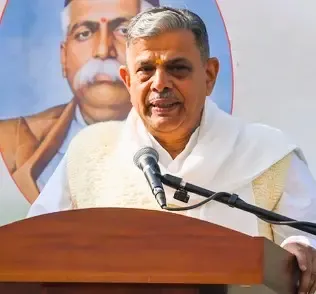
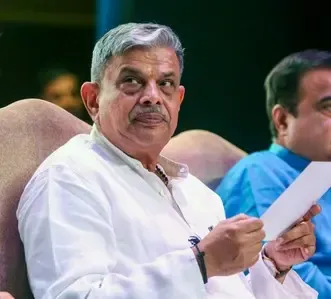
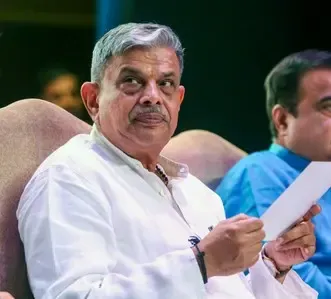
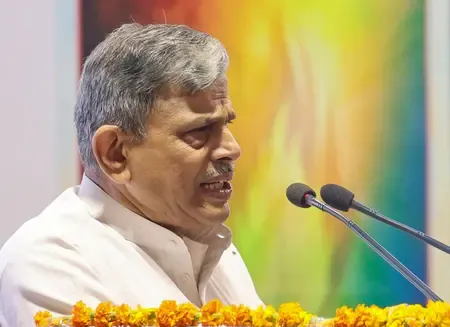
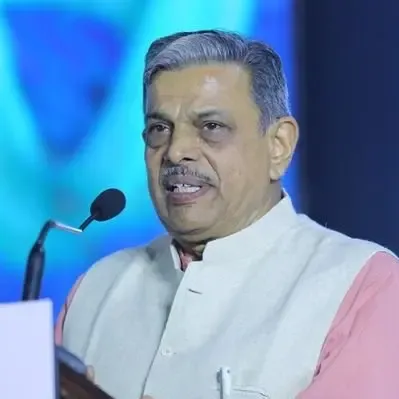
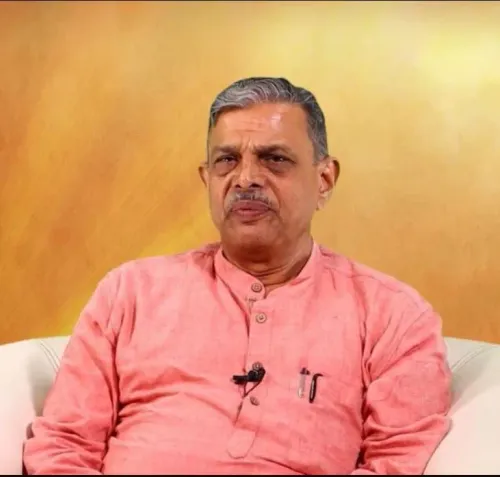
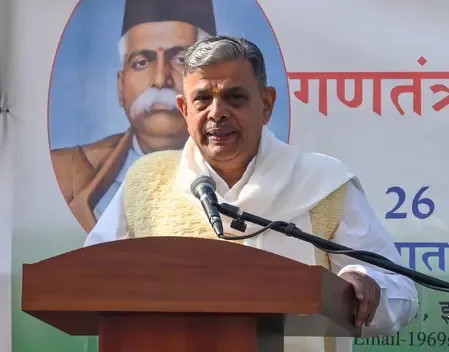
Stanford, April 18 (NationPress) The Rashtriya Swayamsevak Sangh (RSS) has emphasized that the triumph of democracy in India is deeply rooted in its civilizational and cultural framework. General Secretary Dattatreya Hosabale has articulated that the essence of democratic principles is intertwined with what he identifies as the Hindu philosophical tradition of the nation.
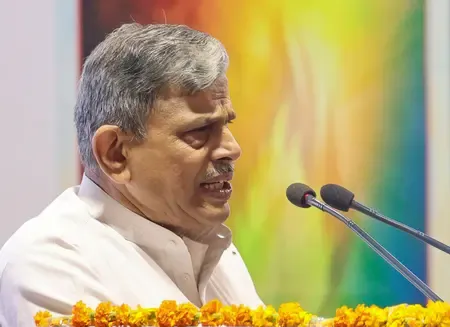
In a discussion commemorating the centenary of the RSS, Hosabale informed IANS that democracy in India should not solely be perceived as a governance mechanism but rather as a profound societal mindset influenced by cultural values.
“The framework of democracy may evolve over time,” he noted, highlighting that various countries adopt distinct institutional frameworks.
“Britain has its model, Germany has another, and the US has yet another. India has embarked on its unique experimentation,” he added.
However, Hosabale underscored that the longevity of democracy relies not only on institutions but on the societal mindset that underpins them.
“The presence of a democratic mindset is crucial… Hindu philosophy inherently possesses this democratic perspective,” he asserted.
He characterized this as “spiritual democracy,” asserting that India's civilizational heritage has continuously embraced diversity while fostering unity.
“There are myriad cultures in Bharat, yet we are all one,” he stated, citing coexistence across traditions as a hallmark of Indian society.
According to Hosabale, this cultural bedrock elucidates why democracy has persisted in India despite various political and social hurdles.
“The Indian psyche is fundamentally democratic,” he remarked.
He contrasted India's journey with that of neighboring nations that share a similar historical backdrop but have faced challenges in maintaining democratic governance.
“Look at these neighboring countries… those that separated in 1947, do they enjoy democracy?” he questioned.
He noted that India's democratic resilience was particularly evident during times of political turmoil.
“When attempts were made to disrupt it, it did not endure… the populace rejected the regime,” he referred to a time when democratic values were under threat.
Hosabale connected this resilience to a deeply rooted cultural commitment to pluralism and active participation.
He asserted that democracy in India transcends electoral practices or institutional frameworks, extending into social conduct and daily interactions.
“Living democratically is not merely a function of governance; it is a way of life,” he elaborated.
The RSS leader also posited that India's democratic journey provides insights for the global community, especially as numerous nations grapple with political divisions and institutional challenges.
“It is a mindset. It is an approach,” he emphasized, highlighting that nurturing democratic values within society is vital for sustaining political frameworks.
While acknowledging that governance structures vary by nation and evolve over time, he maintained that cultural foundations are pivotal in determining outcomes.
His statements occur amidst ongoing discussions in India and beyond concerning the essence of democracy, secularism, and the influence of cultural identity on governance.
Hosabale’s remarks intersect with broader conversations about the development of democratic institutions in India, which include electoral reforms, governance models, and the role of civil society.
In the same interview, he underscored the significance of political awareness and civic education, asserting that a well-informed citizenry is crucial for democracy's functionality.
“People need political education to think critically,” he said, linking democratic engagement to societal duty.
He also urged political parties to prioritize national interests over partisan agendas, reinforcing the notion that democracy should be steered by a collective commitment to unity.
“Nation first, followed by other concerns,” he stated.
Hosabale reiterated that all citizens should have equal rights regardless of their religion or background, while also stressing the necessity of national loyalty.
“All Indians possess equal rights. There are no second-class citizens,” he affirmed.
Philosophically, he framed democracy as a component of a broader civilizational vision that harmonizes diversity with unity and reconciles individual freedoms with collective responsibilities.
He proposed that this perspective could aid in addressing contemporary global issues, such as social fragmentation and ideological conflicts.
Point of View
Highlighting the interplay between cultural ethos and democratic values. It emphasizes the importance of civic education and national unity while acknowledging the complexities of governance structures.
NationPress
17 Sept 2026
Frequently Asked Questions
What does the RSS say about India's democracy?
The RSS asserts that the success of India's democracy is rooted in its civilizational and cultural ethos, particularly influenced by Hindu philosophy.
How does cultural identity influence democracy in India?
Cultural identity plays a crucial role in shaping the democratic mindset, promoting pluralism and unity within Indian society.
Why is civic education important for democracy?
Civic education is vital for fostering an informed citizenry, which is essential for the effective functioning of democracy.
What distinguishes India's democracy from that of its neighbors?
India's democracy has shown resilience and longevity, unlike some neighboring countries that have struggled to maintain democratic systems.
What does 'spiritual democracy' mean?
'Spiritual democracy' refers to a democratic outlook rooted in India's cultural traditions, emphasizing unity amidst diversity.