Rubio warns Iran's Hormuz moves risk global oil shock, launches 'Project Freedom'
Synopsis
The US has launched a military escort operation through the Strait of Hormuz as Secretary of State Rubio warns Iran's shipping blockade — costing Tehran $500 million a day — risks triggering a global oil shock. With petrol at $4.50 a gallon domestically and Rubio invoking a nightmare $9-a-gallon nuclear scenario, Washington is framing this as an existential economic and security confrontation.
Key Takeaways
US Secretary of State Marco Rubio warned on 6 May that Iran's actions in the Strait of Hormuz could trigger broader global economic instability.
The Trump administration launched 'Project Freedom' , a military escort operation for commercial vessels through the Strait; two US-flagged ships have already crossed safely.
The Strait of Hormuz handles approximately a quarter of the world's oil trade; disruption risks volatility in crude prices, freight costs, and insurance rates.
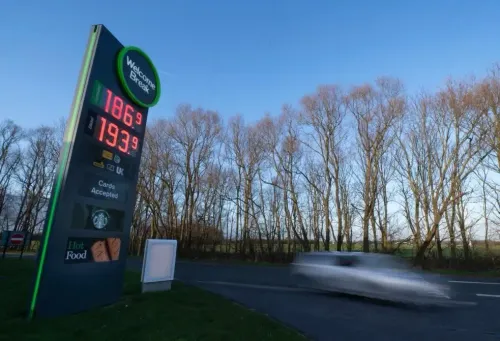
US domestic petrol prices stood at $4.50 per gallon at the time of the briefing; Rubio warned of a $8–$9 per gallon scenario if Iran acquired nuclear weapons.
The maritime blockade and sanctions are reportedly costing Iran $500 million a day in lost revenue, according to Rubio.
Rubio cautioned that unchecked Iranian control over the Strait could encourage similar moves by other nations across six or seven other vital global shipping lanes.
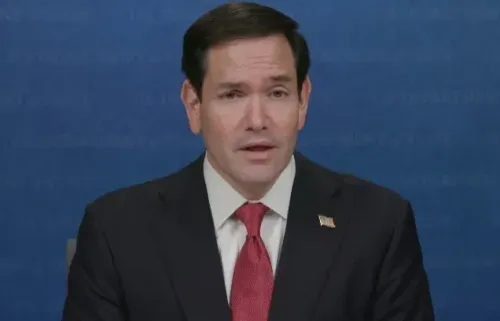
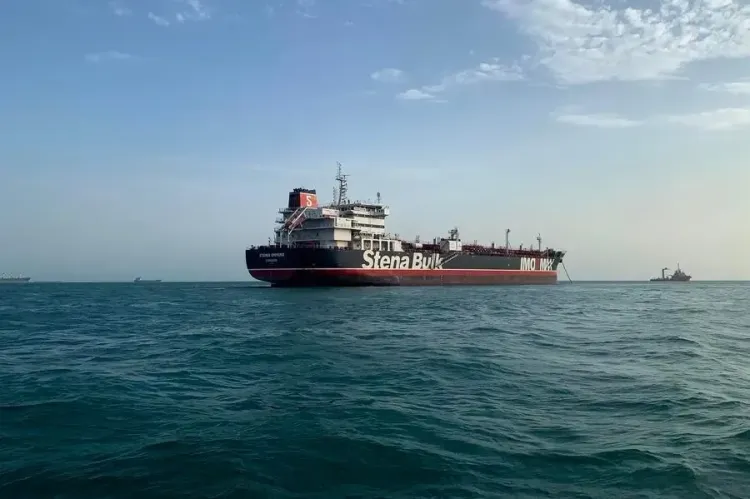
US Secretary of State Marco Rubio on 6 May warned that Iran's escalating actions in the Strait of Hormuz could trigger broader economic instability, as mounting tensions in one of the world's most critical energy corridors intensified pressure on global oil markets. Speaking at a White House news conference, Rubio announced the launch of 'Project Freedom', a military escort operation designed to shepherd commercial vessels through the narrow maritime chokepoint linking the Persian Gulf to global trade routes.
What Rubio Said
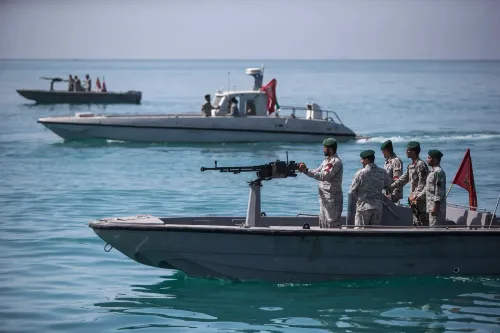
Rubio accused Iran of attempting to seize permanent control over an international shipping lane, warning that the regime's actions threatened fuel supplies, global trade, and shipping routes relied upon by major economies.
Point of View
If accurate, represents an extraordinary economic squeeze, but the administration has offered no independent verification. Notably, 'Project Freedom' marks the first named US military escort operation in the Strait since the 1987–88 'Operation Earnest Will' during the Iran-Iraq tanker war — a historical parallel Washington appears eager to invoke without fully spelling out. The risk of miscalculation in a narrow, mine-laden corridor with US naval assets now directly involved should not be understated.
NationPress
18 Sept 2026
Frequently Asked Questions
What is happening in the Strait of Hormuz?
Tensions have escalated sharply in the Strait of Hormuz, with Iran accused of attacking commercial shipping and laying mines in international waters. The US has launched a military escort operation called 'Project Freedom' to protect vessels transiting the corridor, which handles roughly a quarter of the world's oil trade.
What is 'Project Freedom'?
'Project Freedom' is a US military operation announced by the Trump administration to escort commercial vessels safely through the Strait of Hormuz using naval and air assets. As of 6 May, two US-flagged merchant ships had already crossed safely under the operation's first phase.
How much is the Iran blockade costing Tehran?
According to Secretary of State Marco Rubio, the combined US sanctions and maritime blockade are costing Iran as much as $500 million a day in lost revenue. This figure has not been independently verified.
Why are global oil markets worried about the Strait of Hormuz?
The Strait of Hormuz is the world's most critical oil chokepoint, handling approximately a quarter of global oil trade and a significant share of liquefied natural gas exports. Any sustained disruption triggers volatility in crude prices, freight costs, and shipping insurance rates, with knock-on effects for economies worldwide.
What did Rubio say about Iran's nuclear programme and oil prices?
Rubio warned that if Iran acquired a nuclear weapon and chose to close the Strait of Hormuz, it could push US petrol prices to $8 or $9 a gallon, leaving Washington with no effective response. He framed Iran's nuclear ambitions as a direct threat to global economic stability.