Rubio: Hamas disarmament essential before Gaza reconstruction can begin
Synopsis
Marco Rubio has drawn a sharp red line on Gaza: no demilitarisation of Hamas, no reconstruction money. Pitching an international stabilisation force and a non-Hamas Palestinian administration, the US Secretary of State framed disarmament as the single hinge on which donor commitments, security and any post-war political structure will turn.
Key Takeaways
US Secretary of State Marco Rubio said Gaza reconstruction cannot proceed unless Hamas is demilitarised.
Rubio told Congress investors will not commit funds while Hamas retains military capabilities.
He backed an international stabilisation force to provide security in Gaza.
Washington envisions Gaza under a non-Hamas Palestinian administration supported by international partners.
Rubio said the US has already spent hundreds of millions of dollars on humanitarian aid in Gaza.
He distanced the plan from Benjamin Netanyahu's remarks on controlling parts of Gaza: “That's not part of this plan.”
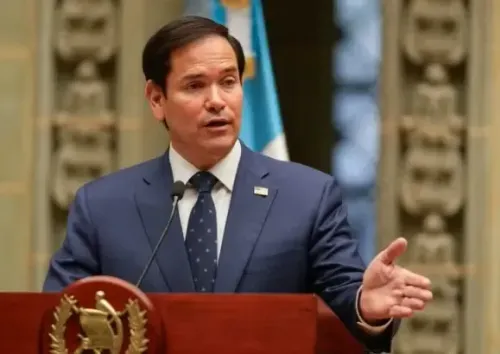
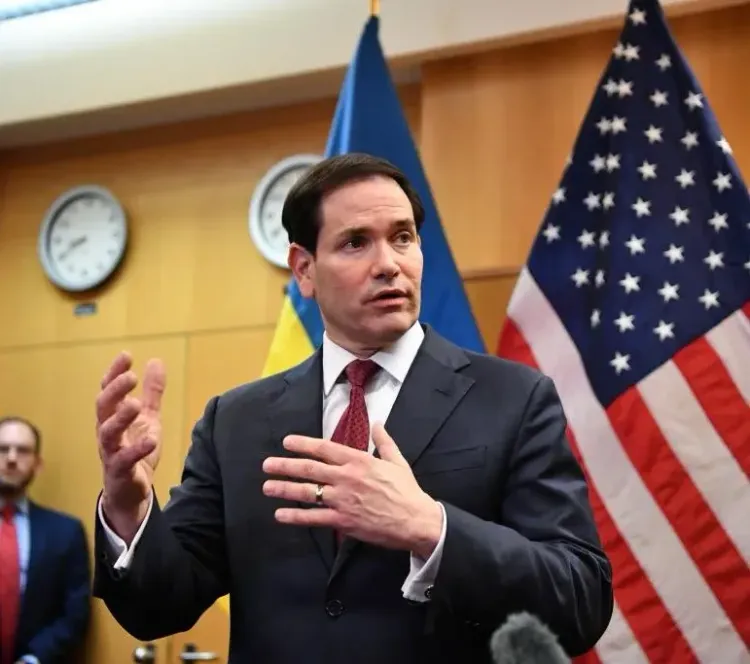
US Secretary of State Marco Rubio on 3 June told a Congressional hearing that the reconstruction of Gaza cannot move forward unless Hamas is demilitarised, warning that governments and private investors will not commit billions of dollars while the group retains its military capabilities. Rubio defended the Trump administration's Gaza strategy as Democratic lawmakers pressed him on the pace of the broader peace and reconstruction plan.
Demilitarisation framed as the central obstacle
“The goal now is to demilitarise Hamas,” Rubio said. “That is the impediment that's holding up the rest of it.” The Secretary argued that donor countries and private capital remain interested in Gaza's recovery, but that security concerns continue to block movement.
“No one is going to invest there as long as Hamas is militarised, because as long as Hamas is militarised, they know that there's going to be a war in the future,” he said.
Sharp exchange with Democratic lawmakers
Rubio's remarks came during a pointed back-and-forth with Representative Rosa DeLauro, who questioned the status of the US-backed peace initiative and flagged worsening humanitarian conditions in the territory. Rejecting the suggestion that Washington had moved on from the crisis, Rubio said, “No one's forgotten about it.”
He added that the United States had already committed substantial relief resources: “We spent hundreds of millions of dollars on humanitarian aid in Gaza already.”
A non-Hamas administration and an international force
Rubio outlined a vision that would place Gaza under a non-Hamas Palestinian administration backed by international partners. “What we want, and I think what the Israelis would ultimately want, is a Gaza that is governed by a non-Hamas” authority, he said.
Current discussions, he added, focus on conditions that would allow an international stabilisation force to deploy while longer-term political and economic arrangements are worked out. “We should be having or want to have an international stabilisation force that goes in and provides the security,” Rubio said.
Regional pressure on Hamas
The Secretary said the push for demilitarisation is not solely an American demand. “It's not just the United States that's complaining about it,” he said. “Many of our partners in the region are pressuring Hamas to enter the demilitarisation phase.”
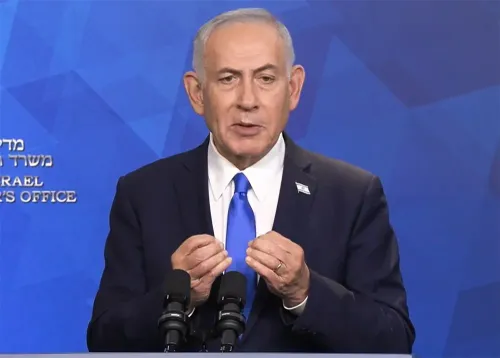
Asked about recent comments attributed to Israeli Prime Minister Benjamin Netanyahu regarding control of parts of Gaza, Rubio distanced Washington from such proposals. “That's not part of this plan,” he said. “This plan doesn't call for that.”
What's next
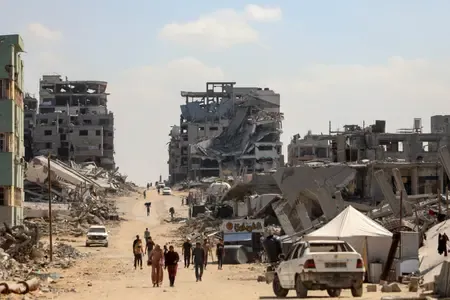
Gaza's future remains one of the most sensitive files in Middle East diplomacy, with international efforts increasingly focused on a political arrangement that prevents renewed conflict while enabling reconstruction of infrastructure, housing, healthcare facilities and public services damaged in years of fighting. The next phase, by Rubio's own framing, hinges on whether regional pressure can move Hamas toward laying down arms — a precondition without which, he argues, no rebuild can credibly begin.
Point of View
Governance, reconstruction. That conveniently shifts responsibility for Gaza's humanitarian trajectory onto a group with no incentive to disarm without guarantees Washington has not publicly offered. The bigger gap is the absence of any named Palestinian authority willing and able to take over, or any regional state publicly committing troops to a stabilisation force. Until those blanks are filled, the plan reads more as a diplomatic holding pattern than a roadmap.
NationPress
20 Oct 2026
Frequently Asked Questions
What did Marco Rubio say about Gaza reconstruction?
US Secretary of State Marco Rubio told a Congressional hearing on 3 June that Gaza reconstruction cannot move forward unless Hamas is demilitarised. He said governments and private investors will not commit billions while the group retains military capabilities.
Why does Rubio say Hamas disarmament is the key issue?
Rubio argued that as long as Hamas remains armed, investors and donor countries will assume another war is inevitable and refuse to fund reconstruction. He called demilitarisation 'the impediment that's holding up the rest of it.'
What governance model is the US proposing for Gaza?
Rubio said Washington envisions Gaza being governed by a non-Hamas Palestinian administration supported by international partners. He added that an international stabilisation force would provide security while longer-term arrangements are developed.
Did Rubio support Netanyahu's remarks on controlling parts of Gaza?
No. Rubio explicitly distanced the US plan from those proposals, saying, 'That's not part of this plan. This plan doesn't call for that.'
How much has the US spent on humanitarian aid in Gaza?
Rubio said the United States has already spent hundreds of millions of dollars on humanitarian assistance in Gaza, pushing back against criticism that Washington had abandoned relief efforts.