What is the Three-Phase US Plan for Venezuela?
Click to start listening
Synopsis
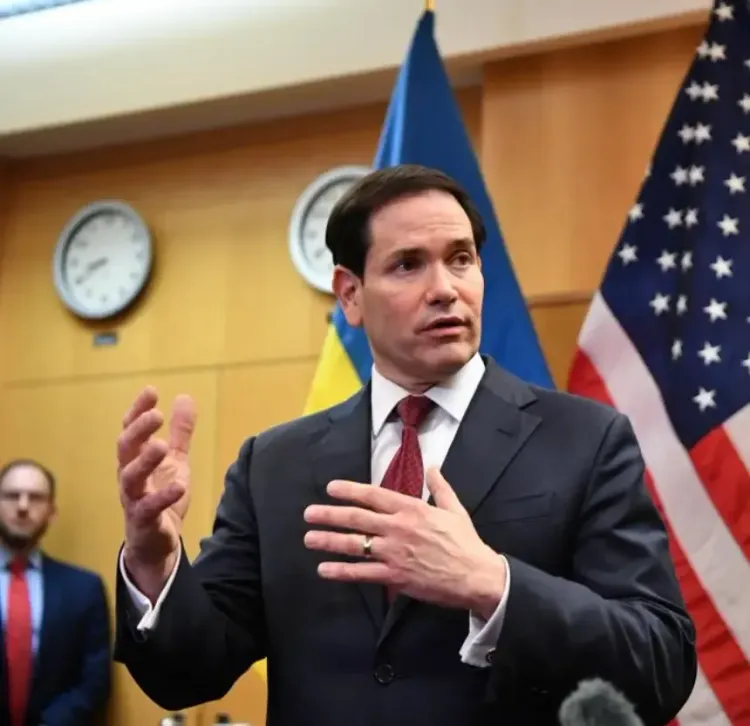
In a significant move, Secretary of State Marco Rubio discusses a comprehensive three-phase plan aimed at stabilizing Venezuela's political landscape. This roadmap emphasizes long-term U.S. engagement, focusing on stabilization, recovery, and eventual political transition, with no immediate elections anticipated. Explore how this approach could shape Venezuela's future and its implications for global markets.
Key Takeaways
- Three-Phase Strategy: Focuses on stabilization, recovery, and eventual political transition.
- Long-Term Engagement: Signals US commitment to Venezuela's future.
- Economic Leverage: Prioritizes economic control over immediate political restructuring.
- Reconciliation Efforts: Includes potential amnesty for opposition figures.
- Global Implications: Could affect global oil markets significantly.
Washington, Jan 8 (NationPress) The Trump administration has unveiled a three-phase strategy for Venezuela, focusing on stabilization, recovery, and transition. This indicates a prolonged US commitment, with no immediate elections expected, according to Secretary of State Marco Rubio.
Rubio informed journalists that the initial phase aims at averting chaos after the ousting of Nicolas Maduro. A key aspect of this initiative involves US oversight of Venezuelan oil exports through stringent sanctions and a naval blockade.
“The first step is to stabilize the country,” Rubio remarked, asserting that the US currently possesses significant leverage over Venezuela's interim leaders.
The second phase, termed recovery, will focus on reopening Venezuela's economy to American, Western, and other authorized businesses. This phase encompasses the reconstruction of infrastructure, restoration of the electricity grid, and creation of favorable conditions for economic expansion.
Efforts towards reconciliation will also play a role in recovery, including the release or amnesty of opposition leaders and the repatriation of Venezuelans who have fled the country.
According to Rubio, only in the third phase will the nation shift towards a political transition. He refrained from providing a timeline, noting that expectations of swift change are unrealistic.
“It’s been just a few days,” he stated, emphasizing that years of institutional deterioration cannot be rectified overnight.
For India, this phased strategy highlights the US's long-term engagement in shaping Venezuela's economic landscape. Such involvement could have significant implications for global oil supplies for years to come, impacting markets that India heavily depends on.
Responding to inquiries, Rubio indicated that the phases will overlap and progress, underscoring that Washington plans to advance “in a very constructive manner.” He dismissed allegations from lawmakers claiming the administration was acting without a plan.
“We’re not just improvising,” Rubio asserted, mentioning that thorough planning has already been communicated to Congress.
House Democrats have remarked that the administration has proposed “12 plans” without providing definite assurances regarding Venezuela’s political future. The administration maintains that pushing for early elections could lead to further instability. Rubio emphasized that stabilization and recovery are prerequisites.
This plan reflects a broader US trend of employing economic leverage—especially control over energy—rather than immediate political restructuring. The strategy also highlights Washington’s intent to counteract China's influence in Latin America.
Point of View
The phased approach outlined by the Trump administration reflects an urgent need for stability in Venezuela. As the nation grapples with political turmoil and economic strife, the U.S. strategy aims to engage constructively, fostering conditions conducive to recovery while countering foreign influence. This plan underscores the importance of careful, strategic involvement in international affairs.
NationPress
10/01/2026
Frequently Asked Questions
What are the phases of the US plan for Venezuela?
The US plan consists of three phases: stabilization, recovery, and transition. Each phase focuses on different aspects of rebuilding Venezuela's political and economic landscape.
Why are early elections not being considered?
The administration believes that forcing early elections could destabilize the country further. They emphasize that stabilization and recovery must precede any political transition.
How will this affect global oil markets?
The US's control over Venezuelan oil exports may impact global oil supply, influencing markets that countries like India rely upon.