What Strategy is Marco Rubio Implementing for US Pressure on Venezuela?
Synopsis
US Secretary of State Marco Rubio reveals the Trump administration's strategy for Venezuela, focusing on economic pressure and sanctions. With drug trafficking and foreign influence at stake, this approach highlights the importance of Venezuela's oil sector in shaping future developments.
Key Takeaways
Economic sanctions are central to the US strategy on Venezuela.
The oil sector is seen as a critical leverage point.
The US aims to address drug trafficking and organized crime.
Venezuela's situation is linked to a larger regional instability issue.
Any US intervention is focused on promoting a stable and secure future for Venezuela.
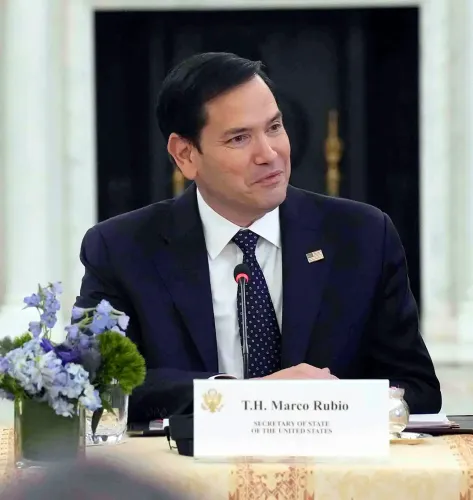
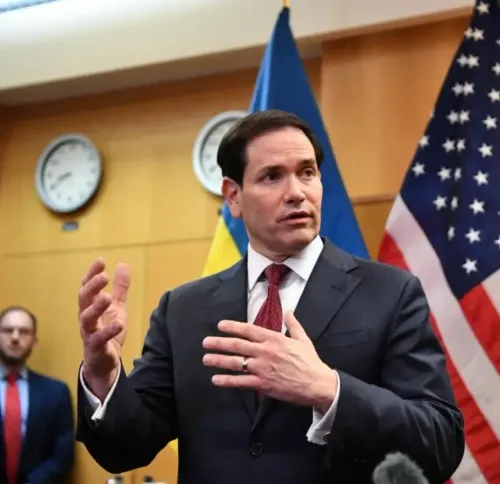
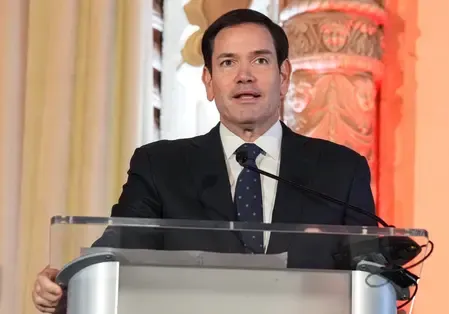
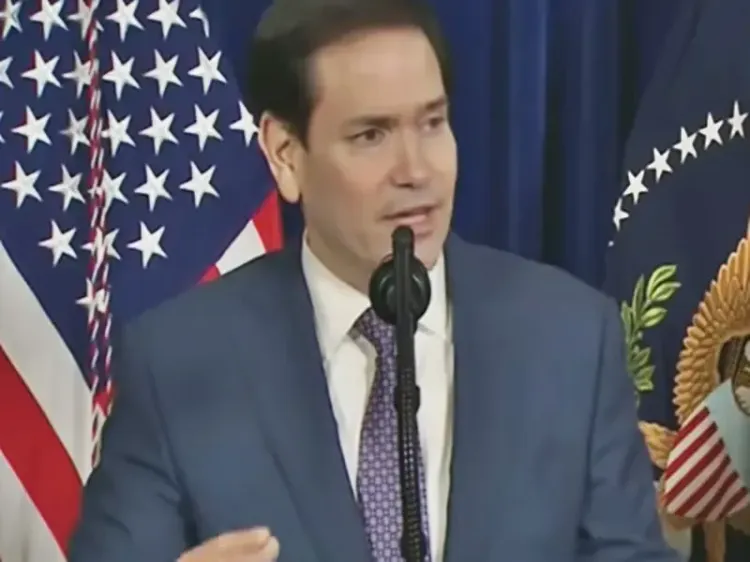
Washington, Jan 4 (NationPress) US Secretary of State Marco Rubio stated on Sunday that the Donald Trump administration is utilizing economic strain, naval enforcement, and oil sanctions to influence the situation in Venezuela. This approach is aimed at addressing issues such as drug trafficking, foreign intervention, and regional instability linked to the country.
During an appearance on CBS’ Face the Nation, Rubio emphasized that Venezuela’s oil industry is pivotal to the crisis and serves as the main leverage point for the United States.
“The backbone of that regime is the economy sustained by oil,” Rubio indicated, criticizing an industry that he claimed no longer benefits Venezuelans. “The oil revenue does not reach the people; it is all misappropriated by those in power,” he remarked.
Rubio noted that the US has implemented what he termed an oil “quarantine,” supported by sanctions and naval activities. “Currently, there’s a quarantine,” he explained. “We will take action to seize sanctioned oil shipments following a court order.”
The US pressure tactics will persist until there are observable changes regarding issues deemed direct threats to security. Rubio pointed to drug trafficking, organized crime, and armed groups operating within Venezuelan borders as critical concerns.
“We expect to witness changes,” Rubio stated, including measures to “halt drug trafficking, alleviate gang issues, and expel FARC and ELN militants.”
Rubio expressed apprehension about foreign entities exerting influence in the Western Hemisphere, noting that Venezuela has established ties with Hezbollah and Iran, relationships that are viewed as unacceptable by Washington.
When questioned about President Trump’s remarks about maintaining “all military options,” Rubio clarified that while the administration is not dismissing any possibilities, current actions do not extend to occupation.
“The President always maintains a range of options,” Rubio said, emphasizing that the administration will not publicly exclude any available legal and constitutional measures.
He highlighted that the current US military presence includes one of the largest naval deployments in recent history in the region, aimed at disrupting drug shipments, enforcing sanctions, and curtailing revenue streams that support the current regime.
Rubio connected Venezuela’s domestic collapse to broader regional implications, noting that approximately eight to nine million people have fled the nation since 2014, marking “the largest mass migration event in modern history.”
“This is what we are addressing now,” Rubio affirmed.
He dismissed comparisons to previous US military interventions, asserting that Venezuela's situation necessitates a distinct strategy. “This is not the Middle East,” he asserted. “This is the Western Hemisphere.”
When asked about the potential for political transitions and elections, Rubio urged a realistic perspective. “It is unreasonable to expect an election to be scheduled immediately after Nicolas Maduro's arrest,” he stated. “Such matters require time.”
“There’s a process involved,” he added. “These transitions take time.”
Rubio refrained from discussing specifics regarding private discussions with Venezuelan officials, calling them “delicate and intricate.” He reiterated that Washington would evaluate future interactions based on actions rather than mere promises.
“Our assessments will be based on their actions,” Rubio stated. “We will evaluate everything based on what they do.”
His remarks are likely to be monitored closely in New Delhi and other global capitals as Washington portrays Venezuela not merely as a domestic political crisis but as a case study in how state collapse, energy control, transnational crime, and foreign influence can intertwine to produce larger security challenges.
Rubio reiterated that the administration's goals remain the same. “We aspire for Venezuela to transition into a nation vastly different from its current state,” he declared, stressing that any outcome must mitigate threats rather than export them beyond the region.
Point of View
It's imperative to recognize the complexities of the Venezuelan crisis. The US strategy, underpinned by economic sanctions and naval presence, aims to address critical security threats. However, any intervention must consider the humanitarian implications and strive for a sustainable resolution that prioritizes the well-being of the Venezuelan people.
NationPress
1 Oct 2026
Frequently Asked Questions
What is the main focus of the US strategy towards Venezuela?
The US strategy primarily focuses on economic pressure, naval enforcement, and oil sanctions to curb drug trafficking, foreign influence, and regional instability.
How does Venezuela's oil sector impact the crisis?
Venezuela's oil sector is central to the crisis as it is the main source of revenue for the regime, which is purportedly misappropriated by those in power.
What are the expected outcomes of the US pressure campaign?
The US pressure campaign aims to induce changes in Venezuela's policies regarding drug trafficking and organized crime, with the goal of enhancing regional security.
Why is the situation in Venezuela different from past US interventions?
Rubio argues that Venezuela's circumstances require a unique approach due to its geographical and geopolitical context, distinguishing it from interventions in the Middle East.
What does the US intend to achieve regarding Venezuela's future?
The US seeks a transition for Venezuela to a nation that significantly differs from its current state, with an emphasis on reducing threats and instability in the region.