South Korea Secures Farm Inputs Amid Middle East Crisis: $256M Budget
Synopsis
South Korea has pre-secured fertiliser and farm film stocks for spring planting and unleashed a ₩377.5 billion emergency budget to protect farmers from Middle East-driven energy shocks — while simultaneously launching sweeping anti-corruption reforms at the scandal-hit Nonghyup agricultural conglomerate.
Key Takeaways
Agriculture Minister Song Mi-ryung confirmed on April 27 that South Korea has pre-secured fertilisers and agricultural films for the spring planting season despite the ongoing Middle East crisis .
The agricultural ministry will deploy a ₩377.5 billion (US$256 million) supplementary budget to subsidise diesel for farm machinery and support farmer livelihoods.
This forms part of a larger ₩26.2 trillion emergency budget passed by South Korea's National Assembly in April 2025 .
Nonghyup , South Korea's agricultural banking conglomerate, faces sweeping reforms including a new independent audit committee following embezzlement and accounting fraud scandals.
Cash relief of up to ₩550,000 (US$372) per person is being rolled out for vulnerable citizens, with applications open until May 8, 2025 .
Relief funds expire on August 31 and can only be spent at small businesses with annual sales of ₩3 billion or less .
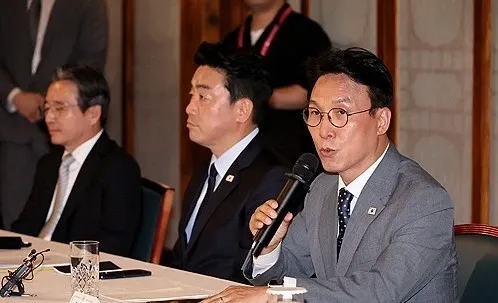
Seoul, April 27 — South Korea's Agriculture Minister Song Mi-ryung announced on Monday that the government has already secured sufficient supplies of critical agricultural inputs — including fertilisers and agricultural films — ahead of the spring planting season, even as the Middle East crisis continues to rattle global supply chains and energy markets. The announcement signals Seoul's proactive stance in shielding its farming sector from geopolitical turbulence.
Emergency Budget Mobilised for Farmers
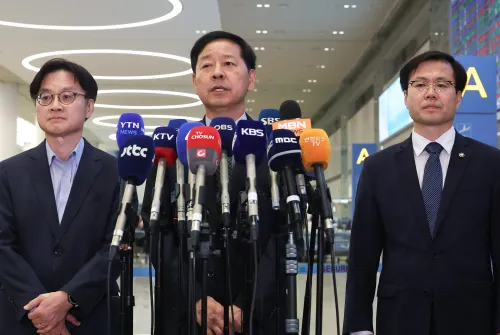
Speaking at a press conference, Minister Song confirmed that the agricultural ministry will rapidly deploy a ₩377.5 billion (approximately US$256 million) supplementary budget earmarked specifically for agricultural stabilisation. A significant portion of these funds will expand subsidies for diesel purchases used in farm machinery — a direct response to surging fuel costs triggered by the ongoing Middle East conflict.
This allocation forms part of a larger ₩26.2 trillion emergency budget passed by South Korea's National Assembly earlier this month, designed to cushion the economy against uncertainties stemming from Middle East instability. The speed of parliamentary approval and fund deployment underscores the urgency Seoul attaches to supply chain resilience.
Nonghyup Reform: Tackling Corruption at the Root
Minister Song also addressed the government's ongoing push to overhaul Nonghyup, South Korea's powerful agricultural cooperation and banking conglomerate. She stated that the reforms are aimed at strengthening governance and restoring institutional checks and balances — a direct response to a series of damaging corruption scandals that have plagued the group.
Last month, both the government and the ruling Democratic Party unveiled reform measures following revelations of alleged embezzlement of public funds and accounting fraud within Nonghyup. Under the reform blueprint, a new independent audit committee will be established to provide oversight of the group's operations.
The plan further mandates transparency by prohibiting Nonghyup's chairman from exercising undue influence over personnel decisions and management, while also creating legal mechanisms to suspend employees convicted of bribery or embezzlement. Critics have long argued that Nonghyup's sprawling influence — spanning agriculture finance, insurance, and retail — made it particularly vulnerable to internal misuse of power.
Cash Relief for Vulnerable Citizens
Beyond the farm sector, the government has simultaneously rolled out direct cash assistance for economically vulnerable groups burdened by rising oil prices. Basic livelihood security recipients are eligible for ₩550,000 (US$372) per person, while single-parent households and those marginally above the welfare eligibility threshold will receive ₩450,000 per person.
Residents living outside Seoul or in areas with declining populations — a growing demographic concern in rural South Korea — will receive an additional ₩50,000, acknowledging the compounded economic vulnerabilities of depopulating regions.
Applications are open until May 8, with recipients able to receive assistance through credit cards, debit cards, prepaid cards, or local currency vouchers. The funds, which expire on August 31, are restricted to small businesses with annual sales of ₩3 billion or less, ensuring that relief money circulates within local economies rather than flowing to large corporations.
Why This Matters: Supply Chain Vulnerability and Geopolitical Risk
South Korea imports a substantial share of its energy and agricultural raw materials, making it acutely exposed to Middle East supply disruptions. Fertiliser prices, which spiked globally following the Russia-Ukraine war in 2022, have remained volatile — and any escalation in the Middle East risks compounding that pressure on Korean farmers already managing thin margins.
Notably, the government's swift pre-positioning of fertiliser and agricultural film stocks before the spring planting window reflects lessons learned from the 2022 global fertiliser shock, when delayed procurement left many farmers scrambling. This time, Seoul appears to have acted ahead of the curve.
The dual focus on Nonghyup reform and emergency agricultural spending also reveals a government walking a political tightrope — managing external economic shocks while simultaneously confronting institutional corruption that has eroded public trust in one of the country's most critical agricultural bodies.
With applications for cash assistance running through May 8 and the supplementary budget set for rapid deployment, all eyes will be on whether the funds reach ground-level farmers before the critical spring planting window closes — and whether the Nonghyup audit committee delivers meaningful accountability or becomes another bureaucratic layer.
Point of View
But the real test lies in whether the new audit committee has genuine independence or simply provides political cover. South Korea is doing the right things on paper; execution under crisis conditions will define the outcome.
NationPress
15 Sept 2026
Frequently Asked Questions
What steps has South Korea taken to secure agricultural supplies amid the Middle East crisis?
South Korea's Agriculture Minister Song Mi-ryung confirmed that sufficient stocks of fertilisers and agricultural films for the spring planting season have already been secured. The government is also deploying a ₩377.5 billion supplementary budget to subsidise diesel for farm machinery and stabilise farmer livelihoods.
What is the Nonghyup reform and why is it happening?
Nonghyup is South Korea's major agricultural cooperation and banking conglomerate that has been embroiled in corruption scandals including alleged embezzlement and accounting fraud. The government and the ruling Democratic Party announced reforms including a new independent audit committee and restrictions on the chairman's influence over personnel decisions.
Who is eligible for South Korea's cash relief amid rising oil prices?
Basic livelihood security recipients will receive ₩550,000, while single-parent households and those marginally above the welfare threshold receive ₩450,000. Residents outside Seoul or in depopulating areas get an additional ₩50,000.
When is the deadline to apply for South Korea's Middle East crisis cash assistance?
Applications for the cash relief programme are open until May 8, 2025. The funds, which expire on August 31, can be used at small businesses with annual sales of ₩3 billion or less.
How large is South Korea's emergency budget to counter Middle East crisis impacts?
South Korea's National Assembly passed a ₩26.2 trillion emergency budget earlier in April 2025 to address economic fallout from the Middle East crisis. Of this, ₩377.5 billion (approximately US$256 million) has been allocated specifically to the agriculture ministry.