South Korea PM vows zero tolerance after Jeju missing woman case
Synopsis
A South Korean police officer’s decision to close a missing person case without confirming the victim’s safety has ended in tragedy — the body of Jang Mi-ran, 37, was found more than three months after she was reported missing. With the officer arrested, the prime minister pledging zero tolerance, and the president ordering systemic reform, South Korea is confronting a serious accountability failure at the heart of its police investigation system.
Key Takeaways
The body of Jang Mi-ran , 37 , was found on 24 August in Jeju , more than three months after her family reported her missing.
A Jeju police officer has been arrested for closing her missing person case without confirming her safety; the same officer prematurely closed a second case in which a man was also later found dead.
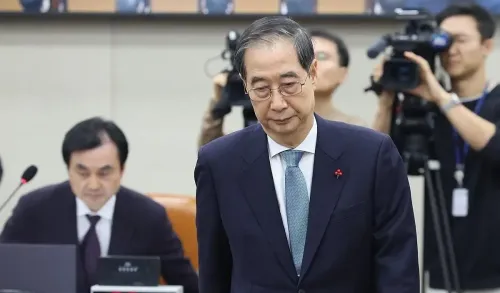
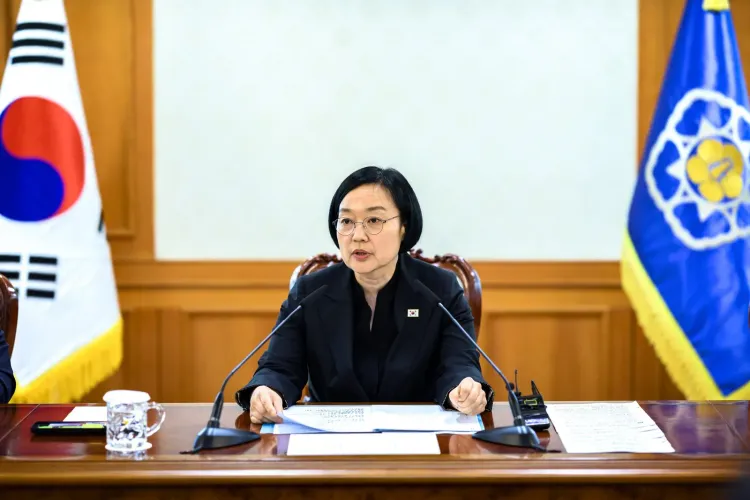
Prime Minister Han Seong-sook pledged zero tolerance and vowed to punish those responsible regardless of rank.
Han ordered the National Police Agency (NPA) to review all missing person cases nationwide and proposed separating investigation rights from case-closure rights.
President Lee Jae Myung directed officials to scrutinise the police command system and ordered internal reform measures.
The NPA has launched a formal audit into the chain of command and supervision in the Jeju case.
South Korean Prime Minister Han Seong-sook on Monday, 24 August pledged zero tolerance against mishandling of missing person cases, following the discovery of the body of Jang Mi-ran, 37, on Jeju island — more than three months after her family first reported her missing. A police officer who prematurely closed her case without confirming her safety has been arrested.
What the Prime Minister Said
Han made the pledge in a post on X (formerly Twitter), stressing that nothing is more important than the lives and safety of citizens. “We will thoroughly check if there have been unfair and unlawful acts by investigative agencies and issue stern punishment regardless of rank, based on the principle of zero tolerance,” she wrote. “The government will pour in every possible effort to make sure missing person investigations are conducted strictly and fairly.”
Han also expressed personal anguish over the case. “I pray from the bottom of my heart for the soul of the late Jang Mi-ran,” she said, adding that she feels “indefinite responsibility” over the tragedy.
Key Developments in the Jeju Case
The police officer stationed in Jeju was found to have closed Jang Mi-ran’s case without verifying her whereabouts. Her body was recovered on Monday, over three months after the initial missing person report. The same officer had also prematurely closed a separate missing person case; the man in that case was subsequently found dead as well, making this at least the second such failure attributed to the officer.
Government Response and Systemic Overhaul
Earlier on Monday, Han ordered the National Police Agency (NPA) to conduct a nationwide review of all missing person cases. A key structural reform proposed is the separation of the authority to investigate cases from the authority to close them — a change aimed at eliminating the kind of unchecked discretion that allegedly allowed the Jeju officer to act without oversight.
South Korean President Lee Jae Myung also weighed in, expressing sorrow and directing officials to examine why the case was closed and to scrutinise the police command system involved. Presidential spokesperson Kang Yu-jung said the president has ordered the police to develop concrete internal reform measures.
NPA Audit Underway
The NPA has launched a formal audit into the handling of the Jeju missing person case, with inspectors expected to determine whether the officer in charge followed mandatory reporting procedures before closing the file and whether appropriate supervision was exercised by superiors. The audit covers the full chain of command and supervision linked to the case.
This comes amid growing public concern in South Korea over accountability gaps within the police investigation system. The government’s response — spanning an arrested officer, a presidential directive, a prime ministerial pledge, and a national audit — signals that the political fallout from the case is being treated as a systemic crisis, not an isolated incident.
Point of View
Where the same authority that opens a case can also close it, with apparently minimal supervisory check. The fact that the same officer prematurely shut two separate cases, both ending in deaths, suggests a pattern rather than an aberration. The government’s response — a prime ministerial X post, a presidential directive, and an NPA audit all within a single day — reflects acute political pressure, but the real test will be whether the proposed structural reform (separating investigation from closure rights) is legislated and enforced, or remains a headline commitment. South Korea has a track record of swift crisis-response announcements; the harder question is institutional follow-through.
NationPress
9 Oct 2026
Frequently Asked Questions
What happened in the Jeju missing person case in South Korea?
A police officer in Jeju closed the missing person case of Jang Mi-ran, 37, without confirming her safety. Her body was found on 24 August, more than three months after her family reported her missing. The officer has since been arrested.
What action did South Korean Prime Minister Han Seong-sook take?
Han Seong-sook pledged zero tolerance in a post on X, vowing to punish those responsible regardless of rank. She also ordered the National Police Agency to review all missing person cases nationwide and proposed separating the right to investigate cases from the right to close them.
What did South Korean President Lee Jae Myung say about the case?
President Lee Jae Myung expressed sorrow and directed officials to examine why the case was closed prematurely. He also ordered the police to scrutinise the command system involved and to develop internal reform measures, according to presidential spokesperson Kang Yu-jung.
What is the National Police Agency auditing?
The NPA has launched a formal audit into the Jeju case, focusing on whether the officer followed mandatory reporting procedures before closing the file and whether superiors provided appropriate supervision. The audit covers the full chain of command linked to the case.
Was this the only case the Jeju officer mishandled?
No. The same officer was found to have prematurely closed a second missing person case; the man in that case was also subsequently found dead, indicating at least two instances of alleged mishandling by the same officer.