Vietnam Nuclear Power Revival: South Korea Joins Hands
Synopsis
Vietnam's dormant nuclear power dream is back on the table. South Korean President Lee Jae Myung and Vietnamese leader To Lam agreed at a Hanoi summit to explore nuclear plant construction, with KEPCO signing MoUs on feasibility and financing — potentially making Vietnam Southeast Asia's first nuclear power nation.
Key Takeaways
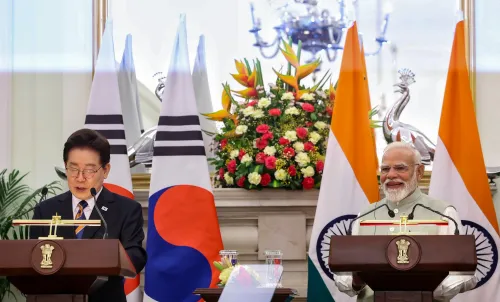
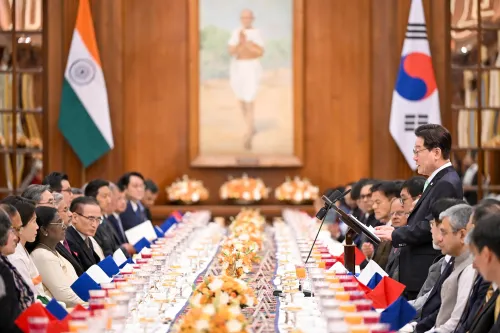
South Korean President Lee Jae Myung and Vietnamese General Secretary To Lam agreed on April 23, 2025 to advance nuclear energy cooperation during summit talks in Hanoi .
Vietnam had originally shelved its Ninh Thuan nuclear power plant project in 2016 due to financing constraints, but is now reconsidering nuclear power amid rising electricity demand.
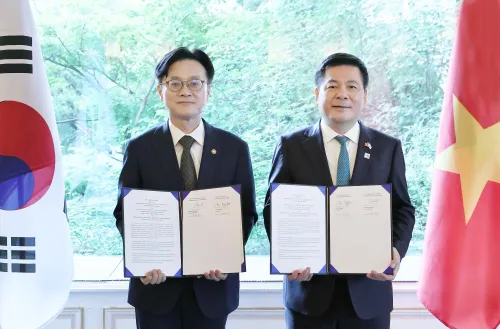
Korea Electric Power Corporation (KEPCO) and Vietnam National Industry-Energy Group signed two MoUs covering joint feasibility studies and financing for potential nuclear projects.
South Korea's Presidential Chief of Staff Kim Yong-beom confirmed Seoul will work with policy lenders and commercial banks to arrange financing packages for Vietnam's nuclear programme.
Both nations also agreed to establish a Technology Cooperation Centre for Critical Mineral Supply Chains , tapping Vietnam's significant rare earth reserves.
If realised, Vietnam could become the first ASEAN nation to operationalise nuclear power, with major implications for Southeast Asia's regional energy strategy.
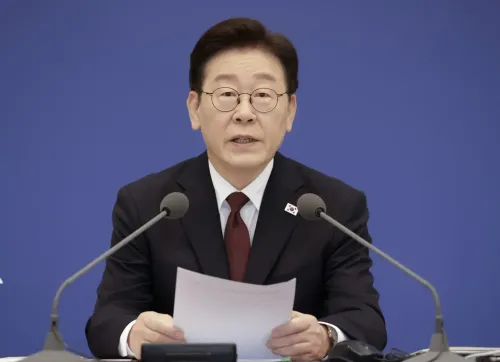
Hanoi, April 23: Vietnam's nuclear power programme is poised for a potential comeback as South Korean President Lee Jae Myung and Vietnamese General Secretary To Lam formally agreed on Wednesday, April 23, 2025, to deepen bilateral cooperation in energy and infrastructure — with nuclear power development at the centre of discussions. The announcement was confirmed by South Korea's National Security Adviser Wi Sung-lac in a press briefing on Thursday.
Summit Talks Spark Nuclear Energy Dialogue
During the high-level summit in Hanoi, General Secretary To Lam formally "welcomed" the participation of South Korean companies in Vietnam's energy transition, including the potential construction of a nuclear power plant, according to NSA Wi Sung-lac. The talks signal a significant shift in Vietnam's long-stalled nuclear ambitions, which were shelved nearly a decade ago.
Vietnam had originally planned to build its first nuclear power plant in the southeastern province of Ninh Thuan, but abandoned the project in 2016 due to severe financing constraints. Now, with surging electricity demand driven by rapid industrialisation and a growing population, Hanoi is reconsidering nuclear energy as a critical pillar of its power grid strategy.
When asked specifically about the Ninh Thuan nuclear project, Wi Sung-lac stated, "Discussions remain at an early stage, focusing on the feasibility and related risks."
Key MoUs Signed Between Korean and Vietnamese Energy Giants
On the sidelines of the summit, two landmark memorandums of understanding (MoUs) were signed between the state-run Korea Electric Power Corporation (KEPCO) and Vietnam National Industry-Energy Group. These MoUs cover joint feasibility studies and financing frameworks for potential nuclear power development projects in Vietnam.
The signing underscores that both nations are moving beyond diplomatic rhetoric toward concrete institutional groundwork. KEPCO, one of Asia's most experienced nuclear operators, brings technical credibility that Vietnam critically needs for this transition.
Financing Remains the Central Challenge
Kim Yong-beom, South Korea's Presidential Chief of Staff for Policy, acknowledged that the success of Vietnam's nuclear power programme will hinge largely on Seoul's ability to provide competitive financing packages. "With its sizable population and strong growth, Vietnam needs energy, but arranging the financing is something we should take on," Kim stated.
He confirmed that the South Korean government will explore financing solutions through consultations involving Korea Electric Power Corp, policy lenders, and commercial banks. This financing challenge was, notably, the exact reason Vietnam shelved the Ninh Thuan project in 2016 — making Seoul's commitment to solve it a potentially game-changing development.
This comes amid a global nuclear energy renaissance, with countries from Japan to Poland revisiting nuclear power as a clean, reliable baseload energy source amid the global push for net-zero carbon emissions. Vietnam, heavily dependent on coal and hydropower, faces acute energy security risks as its economy grows at over 6% annually.
Critical Minerals and Regional Security Also on the Agenda
Beyond nuclear energy, NSA Wi Sung-lac revealed that critical mineral supply chains were identified as another key area of bilateral cooperation. Seoul and Hanoi plan to establish a Technology Cooperation Centre for Critical Mineral Supply Chains, broadening the strategic depth of the partnership.
Vietnam is one of the world's largest holders of rare earth reserves, making this cooperation strategically significant for South Korea's semiconductor and battery industries. For Vietnam, Korean technology and investment could help it move up the value chain beyond raw mineral exports.
The two leaders also exchanged views on regional security, including the ongoing US-Iran conflict. Wi Sung-lac noted, "The two leaders agreed to bolster joint efforts for peace and prosperity in the international community," adding that both sides share an understanding that "peaceful coexistence on the Korean Peninsula serves the interests of the international community."
What This Means for Asia's Energy Landscape
The South Korea-Vietnam nuclear cooperation framework could reshape Southeast Asia's energy map. If the Ninh Thuan project or a similar initiative moves forward, Vietnam would become one of the first ASEAN nations to operationalise nuclear power, potentially influencing energy policy decisions across Indonesia, Thailand, and the Philippines.
For South Korea, this represents a major export opportunity for its APR-1400 reactor technology, which already powers plants in the UAE under the Barakah Nuclear Energy Project — Seoul's flagship nuclear export success story. Winning Vietnam would validate Korea's ambitions as a global nuclear technology exporter and reduce its dependence on domestic power markets.
With feasibility studies now underway and financing frameworks being explored, the next critical milestone will be Vietnam's formal policy decision on reintroducing nuclear power into its National Power Development Plan (PDP9), which is currently under revision. All eyes will be on Hanoi's regulatory and legislative moves in the coming months.
Point of View
Hanoi is diversifying away from traditional infrastructure partners like China and Russia, both of whom had previously been in the frame for the Ninh Thuan project. For Seoul, this is as much about strategic influence in Southeast Asia as it is about export revenues. The real test, however, lies in financing — the same wall that killed this project in 2016. If South Korea can crack that, it won't just power Vietnam; it will set a template for nuclear diplomacy across the entire Indo-Pacific.
NationPress
19 Sept 2026
Frequently Asked Questions
Why did Vietnam shelve its nuclear power programme in 2016?
Vietnam cancelled its first nuclear power plant project in the Ninh Thuan province in 2016 primarily due to financing constraints and concerns over project costs. The government decided it could not secure adequate funding to proceed with the development at that time.
What did South Korea and Vietnam agree on regarding nuclear energy in 2025?
During the April 2025 Hanoi summit, South Korean President Lee Jae Myung and Vietnamese General Secretary To Lam agreed to explore cooperation on nuclear power development, including a potential nuclear plant. KEPCO and Vietnam's energy group signed two MoUs for joint feasibility studies and financing frameworks.
What is the Ninh Thuan nuclear power project?
The Ninh Thuan nuclear power project was Vietnam's plan to build its first nuclear power plant in the southeastern Ninh Thuan province. It was scrapped in 2016 due to financial challenges but is now being reconsidered as Vietnam faces growing electricity demand.
How will South Korea finance Vietnam's nuclear power plant?
South Korea plans to explore financing solutions through consultations involving Korea Electric Power Corporation, policy lenders, and commercial banks. Presidential Chief of Staff Kim Yong-beom confirmed the government is committed to assembling a competitive financing package for Hanoi.
What other areas of cooperation did South Korea and Vietnam discuss at the summit?
Beyond nuclear energy, the two nations agreed to establish a Technology Cooperation Centre for Critical Mineral Supply Chains, leveraging Vietnam's vast rare earth reserves. Regional security issues, including the US-Iran conflict and Korean Peninsula stability, were also discussed.