Sacks Slams 'Woke' AI Models as Threat to US Edge

Synopsis
White House AI and Crypto Czar David Sacks amplified a user's switch from Anthropic's Claude to China's Kimi AI, calling overly restrictive 'woke' models an enemy of American competitiveness — a pointed signal from the Trump administration's top AI official.
Key Takeaways
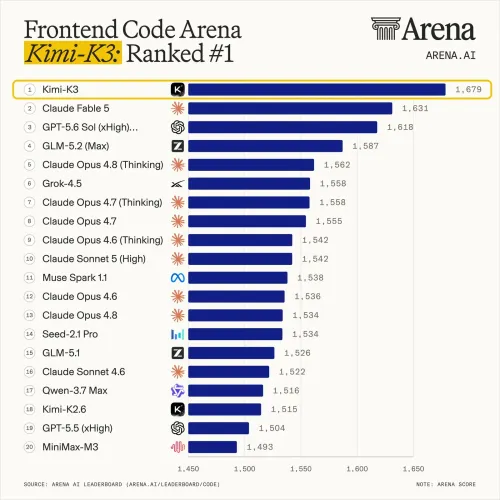
White House AI and Crypto Czar David Sacks posted on 18 July 2026 that 'woke lobotomized models are the enemy of American competitiveness.' He quoted a user who said they switched from Anthropic's Claude to Moonshot AI's Kimi because Kimi 'just does the thing instead of lecturing you.' Kimi is a large language model built by a Chinese startup , making the comparison geopolitically significant.
Anthropic built Claude around 'constitutional AI' principles that include refusal behaviours — the very feature Sacks and the quoted user criticise.
The post aligns with the Trump administration's broader push to deregulate AI and prioritise capability over alignment-driven restrictions.
The critique carries unusual institutional weight coming from the sitting White House AI policy chief , and may foreshadow formal pressure on US AI labs.
White House AI and Crypto Czar David Sacks on Saturday, 18 July 2026, amplified a user quote on X criticising Claude, the AI model developed by Anthropic, for being overly restrictive, and framed such behaviour as a direct threat to American competitiveness.
Context
Sacks quoted an overheard remark — prefaced with the shorthand 'OH' (meaning 'overheard') — in which a user said they had 'switched to Kimi from Claude for a bunch of work' because Kimi 'just does the thing instead of lecturing you.' Sacks then added his own pointed commentary: 'Woke lobotomized models are the enemy of American competitiveness.'
Kimi is a large language model developed by Moonshot AI, a Chinese startup. The comparison — a user preferring a Chinese AI product over a leading American one — gives Sacks's post a sharp geopolitical edge beyond the domestic culture-war framing.
Policy Backdrop
The post reflects a long-running tension in US AI policy between safety and alignment constraints on one hand, and raw capability and speed on the other. The Biden administration's October 2023 executive order directed federal agencies to address AI bias, safety testing, and equity considerations — an approach that critics in the Trump camp argued slowed American innovation.
The Trump administration, in which Sacks serves as the country's top AI and crypto policy official, has consistently pushed for deregulation of emerging technologies. Sacks's post is consistent with that posture, framing alignment-driven refusal behaviours in models like Claude not as safety features but as competitive liabilities.
Anthropic, the San Francisco-based company behind Claude, built its model family around 'constitutional AI' — a set of principles designed to make the model decline requests deemed harmful or inappropriate. Supporters argue this makes Claude safer and more trustworthy for enterprise use; critics, including Sacks, contend it makes the model less useful in practice.
Stakeholders and Impact
The post lands at a sensitive moment for US AI developers. If enterprise and individual users migrate toward less-restricted foreign models, the commercial and reputational stakes for American AI firms rise significantly. Sacks's amplification of that user anecdote — from the office of the White House's own AI policy chief — gives the critique unusual institutional weight.
For Moonshot AI and the broader Chinese AI ecosystem, the post is an inadvertent endorsement from a senior US official, highlighting how export controls and domestic regulatory pressure have not prevented Chinese models from gaining mindshare among American users. The US-China AI competition, already a focus of congressional hearings and semiconductor export debates, is now being argued at the level of day-to-day user experience.
Indian enterprises and developers, who are significant consumers of both Claude and emerging Chinese AI tools, are watching this debate closely as they evaluate which frontier models to integrate into their own products and workflows.
What's Next
The Trump administration is expected to advance actions on AI permitting reform and potential updates to semiconductor export rules in the coming months. Sacks's post may presage more formal pressure on American AI labs to loosen model restrictions in the name of competitiveness. Congressional hearings examining the trade-off between AI safety requirements and innovation speed are also anticipated. Whether Anthropic or other US AI developers respond publicly to the White House AI Czar's critique will be a key signal to watch.
Point of View
He is framing alignment-driven refusal behaviours as a national-security and economic competitiveness issue, not merely a product preference. This puts Anthropic and similar US labs in a difficult position: their safety-first branding, designed to attract cautious enterprise clients and regulators, is now being cast by the White House as a strategic vulnerability. The broader arc points toward a likely regulatory environment that rewards capability and penalises what the administration labels over-restriction — a dynamic that will reverberate across the global AI industry, including in India where adoption of frontier models is accelerating.
NationPress
17 Oct 2026
Frequently Asked Questions
Why did David Sacks criticise Claude AI?
David Sacks criticised Claude, made by Anthropic, for being overly restrictive and 'lecturing' users rather than completing tasks, calling such behaviour a threat to American competitiveness.
What is Kimi AI and who makes it?
Kimi is a large language model developed by Moonshot AI, a Chinese artificial intelligence startup, and has gained attention as an alternative to US-made models like Claude and GPT.
What is David Sacks's role in the US government?
David Sacks serves as the White House AI and Crypto Czar in the Trump administration, making him the United States' top official responsible for AI and cryptocurrency policy.
What does 'woke lobotomized models' mean in AI?
The phrase, used by Sacks, refers to AI models whose safety and alignment training causes them to refuse or hedge on requests that critics consider routine, making them less useful in practice.
How does this relate to US-China AI competition?
The post highlights that a Chinese AI model is gaining users at the expense of an American one, which Sacks frames as a competitiveness risk — reinforcing the broader geopolitical stakes of the US-China race in artificial intelligence.