Section 144 imposed across Balochistan amid terrorist threat alerts
Synopsis
Pakistan has imposed Section 144 across Balochistan for 30 days, banning public gatherings, pillion riding, and face coverings amid active terrorist threat alerts targeting Fitna al-Khawarij and Fitna al-Hindustan. The move follows the alleged abduction of Gwadar University officials and the killing of a professor — prompting the HRCP to warn that the state is losing its grip on basic civilian protection.
Key Takeaways
Section 144 imposed across Balochistan on 18 May 2025 for 30 days by the provincial Home Department .
Restrictions include a ban on weapons display , pillion riding , face coverings , and gatherings of five or more .
Security forces placed on high alert against Fitna al-Khawarij and Fitna al-Hindustan .
The vice-chancellor , pro-vice chancellor , and two Gwadar University employees were allegedly abducted in Mastung .
Professor Ghamkhwar Hayat was killed in Noshki ; the HRCP called it part of a pattern of targeted attacks on academics.
Militant attacks in Bannu , Bajaur , and Lakki Marwat in Khyber Pakhtunkhwa signal a widening security crisis.
Section 144 has been imposed across Pakistan's Balochistan province with immediate effect, as authorities cite precautionary measures against potential terrorist threats, local media reported on Monday, 18 May. The restrictions, notified by the Home Department, will remain in force for 30 days and cover a broad range of public activities.
Key Restrictions Under the Order
The notification bans the display of weapons, pillion riding on motorcycles, and gatherings of five or more individuals in public spaces. Notably, a ban has also been imposed on covering faces with masks, mufflers, or any other material in public places — a measure aimed at ensuring unhindered identification of individuals. All divisional commissioners, deputy commissioners, police officials, and relevant authorities have been ordered to enforce the restrictions strictly.
Security Forces on High Alert
Security forces across the province have been placed on high alert to counter any possible attack by Fitna al-Khawarij and Fitna al-Hindustan, according to reports. The move reflects the escalating threat perception in a province that has long been a flashpoint for militant activity and separatist violence.
HRCP Raises Alarm Over Deteriorating Security
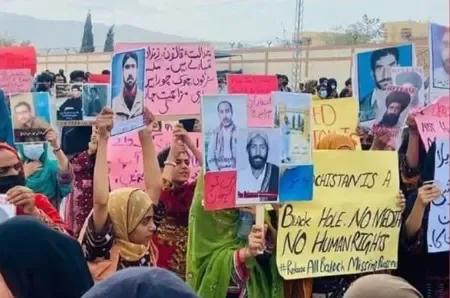
On 16 May, the Human Rights Commission of Pakistan (HRCP) expressed deep concern over what it described as a sharp deterioration in security across both Balochistan and Khyber Pakhtunkhwa. In a statement posted on X, the HRCP said residents were 'increasingly caught between enforced disappearances, targeted killings, and militant attacks.'
The HRCP specifically flagged the alleged abduction of the vice-chancellor, pro-vice chancellor, and two other employees of Gwadar University in Mastung while they were travelling from Gwadar to Quetta. The commission stated the incident 'raises serious questions about the state's ability to secure major highways and protect civilians.'
The HRCP also cited the killing of Professor Ghamkhwar Hayat in Noshki, warning that 'when teachers and academics are abducted or shot dead, the consequences extend far beyond individual tragedies.'
Violence Spreading to Khyber Pakhtunkhwa
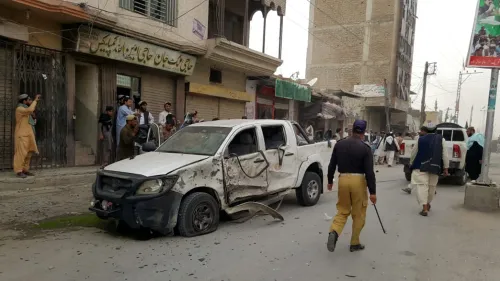
The HRCP's statement pointed to deadly attacks in Bannu, Bajaur, and Lakki Marwat in Khyber Pakhtunkhwa, including the bombing of a crowded market in Sarai Naurang, as evidence of a worsening pattern of militant violence. The commission called on the state to 'move beyond statements of condemnation' and take immediate action, including the recovery of the missing university officials and credible investigations into all such attacks.
What Comes Next
With the 30-day restriction order now active, the effectiveness of enforcement across Balochistan's vast and difficult terrain will be closely watched. The HRCP has demanded accountability for perpetrators and urged the government to demonstrate that public spaces can still be protected — a test that Pakistan's security apparatus has repeatedly struggled to pass in the region.
Point of View
And blanket restrictions on movement and assembly have historically done little to neutralise organised militant networks while significantly burdening ordinary residents. The HRCP's alarm about Gwadar University officials being abducted on a major highway — not a remote tribal track — is the more telling data point: it suggests the security vacuum is expanding, not contracting. Pakistan's dual challenge of Fitna al-Khawarij in the west and deepening unrest in Balochistan is stretching its security architecture at a moment when institutional credibility is already fragile.
NationPress
7 Oct 2026
Frequently Asked Questions
What is Section 144 and why has it been imposed in Balochistan?
Section 144 is a legal provision that allows authorities to prohibit public gatherings and certain activities to prevent a threat to public order or safety. It has been imposed across Balochistan for 30 days starting 18 May 2025 as a precautionary measure against potential terrorist attacks, according to the provincial Home Department.
What activities are banned under the Balochistan Section 144 order?
The order bans the display of weapons, pillion riding on motorcycles, gatherings of five or more people, and the covering of faces with masks, mufflers, or similar material in public places. All divisional commissioners, deputy commissioners, and police officials have been ordered to enforce the restrictions strictly.
Who are Fitna al-Khawarij and Fitna al-Hindustan?
These are militant groups that Pakistani security forces have been placed on high alert to counter in Balochistan. The Section 144 notification specifically names both groups as the threat actors prompting the current security measures.
What did the HRCP say about the security situation in Balochistan?
The Human Rights Commission of Pakistan stated it was 'deeply alarmed' by the deterioration in security across Balochistan and Khyber Pakhtunkhwa. It flagged the alleged abduction of Gwadar University officials in Mastung, the killing of Professor Ghamkhwar Hayat in Noshki, and militant attacks in Bannu, Bajaur, and Lakki Marwat as evidence of a worsening crisis.
What has happened to the Gwadar University officials who were allegedly abducted?
The vice-chancellor, pro-vice chancellor, and two other Gwadar University employees were allegedly abducted in Mastung while travelling from Gwadar to Quetta, according to the HRCP. The commission has demanded their immediate recovery and called for credible investigations into the incident.