National Seersucker Day: US Senators honour fabric with Indian roots
Synopsis
A fabric born in India, named from a Persian phrase, and popularised in New Orleans is now the subject of a formal US Senate resolution. Senators Warnock and Cassidy's National Seersucker Day push is a rare bipartisan moment — and a reminder that one of Washington's quirkiest traditions has its deepest roots thousands of miles away on the Indian subcontinent.
Key Takeaways
Senators Raphael Warnock and Bill Cassidy introduced a resolution designating 11 June as National Seersucker Day .
June 2026 has been declared Seersucker Appreciation Month ; every Thursday through late August is 'Seersucker Thursday'.
Seersucker traces its origins to India and its name to the Persian phrase 'shir-o-shakar' (milk and sugar).
The fabric was introduced to the US South in the mid-19th century and popularised by New Orleans businessman Joseph Haspel .
The Senate tradition was launched by Trent Lott in 1996 , revived by Cassidy and Dianne Feinstein in 2014 after a two-year lapse.
Georgia has roughly 3,500 family farms growing cotton, a primary ingredient in seersucker fabric.
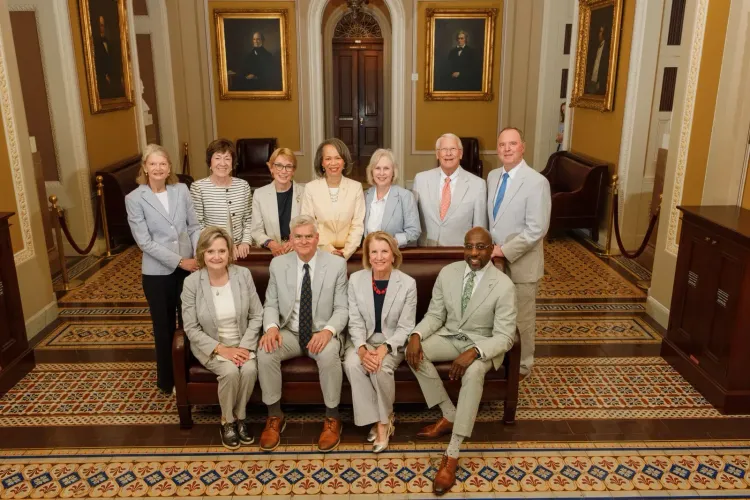
US Senators Raphael Warnock and Bill Cassidy on 11 June 2026 marked National Seersucker Day at the US Capitol, celebrating a fabric whose origins trace back to the Indian subcontinent — a little-known cultural thread woven into one of Washington's most enduring bipartisan traditions.
The Resolution and What It Declares
Warnock and Cassidy jointly introduced a Senate resolution formally designating 11 June as National Seersucker Day. The measure goes further, designating every Thursday through the last Thursday in August as 'Seersucker Thursday' and declaring June 2026 as 'Seersucker Appreciation Month'. The resolution encourages lawmakers, local governments, clothing industry groups, and ordinary Americans to participate in the annual observance.
'Seersucker is interwoven with the style and tradition of the South,' Warnock said. 'I'm proud to continue this storied bipartisan Senate tradition of Georgia cotton, Southern charm, and fashion alongside Senator Cassidy.'
Cassidy, for his part, framed the tradition as a rare unifying moment in a polarised capital. 'Seersucker is a New Orleans invention, a Senate tradition, and brings a welcome moment of unity to Washington every year,' he said. 'I look forward to seeing colleagues from both parties join in again this year.'
The Indian Origins of Seersucker
While seersucker is closely associated with the American South, its roots lie in the Indian subcontinent. According to Warnock's office, the fabric originally came from India before gaining popularity in the United States in the early 20th century as a practical solution to summer heat. The word 'seersucker' itself derives from the Persian phrase 'shir-o-shakar', meaning 'milk and sugar' — a reference to the fabric's alternating smooth and puckered textures.
The resolution notes that seersucker was introduced to the United States through the South during the mid-19th century and later popularised by New Orleans businessman Joseph Haspel. The fabric's characteristic weave — threads woven at different tensions to create alternating stripes — allows air to circulate more freely, making it especially suited to hot and humid climates.
A Senate Tradition With a Chequered History
The Capitol's seersucker tradition has its own storied arc. Former Senator Trent Lott brought Seersucker Thursday to Congress in 1996. The observance lapsed in 2012 and 2013, before then-Representative Cassidy, working alongside the late Senator Dianne Feinstein, revived it in 2014. This year's resolution seeks to cement the tradition more formally in the congressional calendar.
Cotton, Georgia, and the Fabric's Economic Dimension
The resolution also spotlights the agricultural backbone of seersucker production. Georgia alone is home to roughly 3,500 family farms that grow cotton, which remains one of the state's most significant agricultural products and a key ingredient in traditional seersucker fabric. The Senate resolution describes seersucker as 'the working person's uniform' during warm weather.
India-US Cultural Connection
The observance underscores a rarely discussed cultural link between India and an enduring American political tradition. What began as a lightweight fabric suited to South Asia's climate travelled westward, took root in the American South, and eventually became a fixture of summer attire in Washington, D.C. — particularly among lawmakers seeking relief from the capital's notoriously humid summers. All told, it is an unlikely journey from the bazaars of the subcontinent to the corridors of the US Capitol.
Point of View
But it carries a quietly significant subtext: a formal US Senate acknowledgement that one of its most recognisable traditions has subcontinental roots. At a moment when India-US relations are debated in strategic and trade terms, this cultural footnote — Persian etymology, Indian origin, American South adoption — is a reminder that the connections run older and stranger than any policy paper captures. Whether the resolution prompts any broader reflection on shared heritage, or simply remains a photo opportunity in striped suits, depends entirely on how seriously lawmakers take the history they are now on record endorsing.
NationPress
21 Sept 2026
Frequently Asked Questions
What is National Seersucker Day in the US Senate?
National Seersucker Day, observed on 11 June, is an annual US Senate tradition in which lawmakers wear seersucker suits as a symbol of bipartisan camaraderie and summer custom. A 2026 resolution by Senators Warnock and Cassidy formally designated the date and extended the observance to weekly 'Seersucker Thursdays' through August.
What are the Indian origins of seersucker fabric?
Seersucker originated in the Indian subcontinent before travelling westward. The word itself derives from the Persian phrase 'shir-o-shakar', meaning 'milk and sugar', describing the fabric's alternating smooth and puckered textures. It was introduced to the American South in the mid-19th century and later popularised by New Orleans businessman Joseph Haspel.
Who introduced the National Seersucker Day resolution?
Democratic Senator Raphael Warnock of Georgia and Republican Senator Bill Cassidy of Louisiana jointly introduced the resolution, making it a bipartisan effort. The measure also declares June 2026 as Seersucker Appreciation Month.
How long has the US Senate had a seersucker tradition?
The Senate's Seersucker Thursday tradition was started by former Senator Trent Lott in 1996. It lapsed in 2012 and 2013, before then-Representative Cassidy and the late Senator Dianne Feinstein revived it in 2014. The 2026 resolution seeks to institutionalise it further.
Why does Georgia feature prominently in the seersucker resolution?
Georgia is home to approximately 3,500 family farms that grow cotton, a primary raw material in traditional seersucker fabric. Senator Warnock, who represents Georgia, highlighted this agricultural connection as part of the state's cultural and economic tie to the fabric.