Forced Conversion Alert: Sarabjit Kaur's Pakistan Disappearance Raises Alarm
Synopsis
Sikh pilgrim Sarabjit Kaur from Kapurthala vanished during a Pakistan religious visit in November 2024, resurfacing as Noor Hussain — converted, married, and deployed as a pro-Pakistan spokesperson. Rights groups call it a scripted propaganda move masking a systemic forced-conversion pipeline targeting minority women.
Key Takeaways
Sarabjit Kaur , a Sikh woman from Kapurthala, Punjab , disappeared during a religious pilgrimage to Pakistan in November 2024 and resurfaced as Noor Hussain , reportedly converted and married to Nasir Hussain in Sheikhupura .
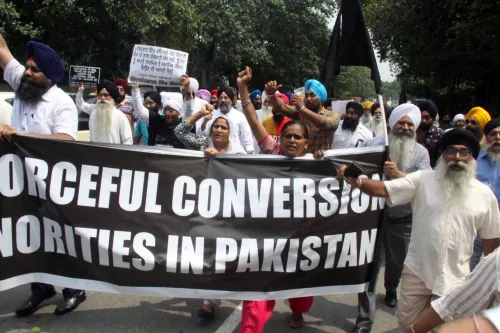
United Nations human rights reports document hundreds of cases annually of abduction, grooming, forced conversion, and coerced marriage of minority women in Pakistan.
The SGPC and Indian Sikh organizations have demanded a transparent independent investigation into the case, calling the narrative surrounding it deeply suspicious.
Rights groups allege the case bears hallmarks of Pakistan's ISI-linked propaganda strategy to whitewash minority persecution by deploying converts as public spokespersons.
The USCIRF estimates over 1,000 Hindu and Christian girls are forcibly converted in Pakistan each year, underscoring a systemic crisis rather than isolated incidents.
The episode raises urgent questions about the safety of Sikh pilgrims on religious routes including the Kartarpur Corridor and bilateral Gurdwara visit agreements.
Islamabad, April 24: A deeply alarming pattern of forced conversions targeting religious minorities in Pakistan has once again come under international scrutiny following the disappearance of Sarabjit Kaur, a Sikh woman from Kapurthala, Punjab, India, who traveled to Pakistan in November 2024 as part of a religious pilgrimage and never returned home. She later resurfaced under the name Noor Hussain, reportedly converted to Islam and married to a local man named Nasir Hussain in Sheikhupura. The case has reignited global concern over the systematic targeting of minority women in Pakistan, with human rights organizations including the United Nations documenting hundreds of such cases every year.
What Happened to Sarabjit Kaur
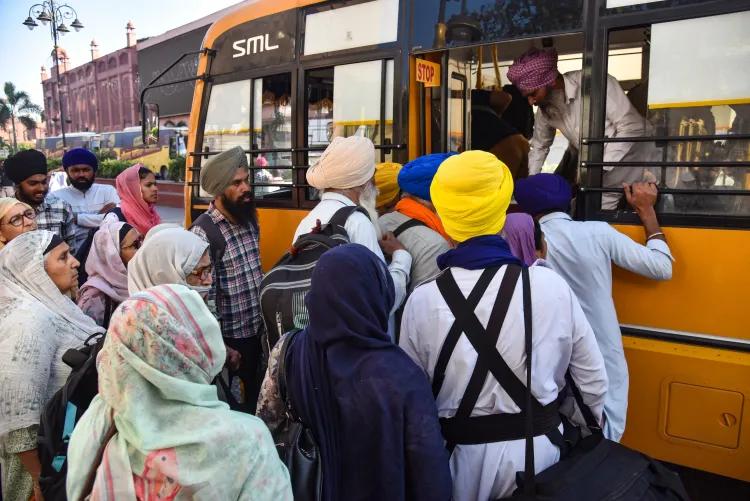
Sarabjit Kaur was part of a jatha — a group of Sikh pilgrims — visiting sacred Gurdwaras in Pakistan to commemorate Sri Guru Nanak Dev Ji's Prakash Purab. While the rest of the group returned to India, Sarabjit did not. Within days, she appeared in videos under her new identity as Noor Hussain, presenting herself as a willing convert who had married Nasir Hussain, a Pakistani national.
In a widely circulated video, she was seen warmly welcoming Indian Sikh devotees to Pakistan and asserting that conversions in the country are entirely a matter of personal choice with no coercion involved. The video was shared extensively on social media, drawing both outrage and skepticism from Indian Sikh organizations, human rights advocates, and diaspora communities worldwide.
A Scripted Narrative — Hallmarks of a Familiar Pattern
According to a detailed report by Khalsa Vox, the sequence of events — a pilgrim disappearing during a religious visit, an overnight conversion, a new identity, a swift marriage, and an immediate pivot to becoming a public advocate for Pakistan — follows a well-documented pattern used to obscure the reality of minority persecution.
The report stated that the timing and script are too polished to ignore. A middle-aged pilgrim disappears during a religious visit, converts overnight, adopts a new identity, marries, and promptly becomes a brand ambassador for the very state long accused of systemic minority persecution.
The report further linked the episode to what it described as Pakistan's Inter-Services Intelligence (ISI)-Khalistan nexus, suggesting that parading a so-called happy convert serves a dual propaganda purpose: whitewashing Pakistan's failures in protecting minorities while simultaneously projecting an image of religious tolerance to Sikh pilgrims whose visits sustain significant cultural and diplomatic ties.
Systemic Crisis: Hundreds of Cases Each Year
The Sarabjit Kaur case is far from isolated. United Nations human rights reports and local Pakistani activists have documented hundreds of cases annually involving the abduction, grooming, forced conversion, and coerced marriage of minority women — predominantly from Sikh and Hindu communities.
Many victims reportedly face intense pressure while in custody, with threats extended to their families to prevent them from speaking out or pursuing legal recourse. Sikh communities within Pakistan have repeatedly raised alarms over targeted harassment, while organizations like the Shiromani Gurdwara Parbandhak Committee (SGPC) have demanded transparent and independent investigations into such cases.
Notably, Pakistan's Sindh province — home to a significant Hindu minority — has been a recurring flashpoint for forced conversion cases, with activists estimating that over 1,000 Hindu and Christian girls are forcibly converted each year across the country, according to data cited by the United States Commission on International Religious Freedom (USCIRF).
India's Response and Diplomatic Implications
Indian Sikh organizations and Sarabjit Kaur's family have viewed the entire episode with deep suspicion. The SGPC has called for a transparent probe, while Indian diplomatic channels are reportedly monitoring the situation. The case has added fresh urgency to longstanding demands that Pakistan guarantee the safety and free passage of Sikh pilgrims visiting holy sites under the Kartarpur Corridor and other bilateral religious agreements.
Critics argue that allowing pilgrimage routes to be exploited as grooming and conversion pipelines fundamentally undermines the spirit of people-to-people cultural ties that these visits are meant to foster. The Khalsa Vox report emphasized that true interfaith respect cannot rest on scripted videos and overnight rebrandings, and that it requires accountability, safe passage, and an end to the abduction-conversion pipeline that has scarred countless families.
Broader Pattern: ISI, Propaganda, and Minority Persecution
Analysts and rights groups have long argued that Pakistan's state apparatus — including intelligence agencies — has a vested interest in projecting a narrative of religious harmony to the outside world, particularly toward the global Sikh diaspora, which wields considerable economic and political influence in countries like Canada, the United Kingdom, and the United States.
By deploying converts as public spokespersons, the strategy effectively deflects international criticism while simultaneously creating internal propaganda for domestic audiences. The Khalsa Vox report concluded that Sikhs have seen this script before and are not buying it.
As pressure mounts on Islamabad to address its minority rights crisis credibly, the Sarabjit Kaur case is expected to feature prominently in upcoming sessions of UN human rights review bodies and bilateral India-Pakistan diplomatic discussions. Unless Pakistan takes verifiable steps to dismantle what rights groups call the abduction-conversion pipeline, cases like this will continue to deepen mistrust and erode any prospects for genuine religious diplomacy.
Point of View
But if they are being systematically exploited as conversion pipelines, India must reassess the terms of religious diplomacy with Islamabad. The international community, especially the UN and USCIRF, must move beyond documentation to accountability.
NationPress
16 Sept 2026
Frequently Asked Questions
Who is Sarabjit Kaur and what happened to her in Pakistan?
Sarabjit Kaur is a Sikh woman from Kapurthala, Punjab, India, who traveled to Pakistan in November 2024 as part of a religious pilgrimage to Gurdwaras. She disappeared during the visit and later resurfaced as Noor Hussain, reportedly having converted to Islam and married a Pakistani man named Nasir Hussain in Sheikhupura.
How many forced conversion cases are reported in Pakistan each year?
According to United Nations human rights reports and the US Commission on International Religious Freedom, hundreds of cases of abduction, grooming, forced conversion, and coerced marriage of minority women are documented in Pakistan annually. Estimates suggest over 1,000 Hindu and Christian girls alone are forcibly converted each year.
What has the SGPC said about Sarabjit Kaur's case?
The Shiromani Gurdwara Parbandhak Committee has demanded a transparent and independent investigation into Sarabjit Kaur's disappearance and reported conversion. The organization, along with other Indian Sikh bodies, has expressed deep suspicion over the circumstances surrounding the case.
What is the ISI-Khalistan nexus mentioned in connection with this case?
Rights groups and analysts allege that Pakistan's Inter-Services Intelligence has historically used forced conversion narratives and propaganda to serve geopolitical objectives, including influencing the global Sikh diaspora. The Sarabjit Kaur episode is seen by some analysts as fitting a pattern of ISI-linked operations designed to project Pakistan as tolerant while undermining Indian Sikh unity.
Are Sikh pilgrims safe traveling to Pakistan for religious visits?
While thousands of Sikh pilgrims visit Pakistan annually under bilateral agreements like the Kartarpur Corridor, human rights organizations have raised serious concerns about the safety of minority pilgrims, particularly women. Cases like Sarabjit Kaur's have prompted demands for stronger safety guarantees and independent oversight of pilgrimage routes.