South Korea Chief Justice Cho rejects presidential bid to overturn court nominee
Synopsis
South Korea's top judge and its presidential office are locked in a rare constitutional standoff: Chief Justice Cho Hee-dae has flatly refused to re-recommend a Supreme Court nominee as demanded by President Lee Jae Myung's office, saying no constitutional basis exists for the request. With one vacancy still unfilled and the executive accusing the judiciary of overreach, the dispute could redefine the limits of both branches' powers.
Key Takeaways
Chief Justice Cho Hee-dae on 22 September 2026 refused to comply with the presidential office's demand to re-recommend a Supreme Court justice nominee.
The dispute centres on the nomination of Son Bong-kie of the Daegu District Court , which the presidential office had objected to.
Cho submitted his recommendations in writing after both sides failed to agree on Son 's nomination, departing from the usual face-to-face protocol.
The presidential office called Cho 's refusal unconstitutional, warning that bench vacancies would harm the public.
Kim Sung-soo , the second nominee, was already confirmed by the National Assembly and appointed last week.
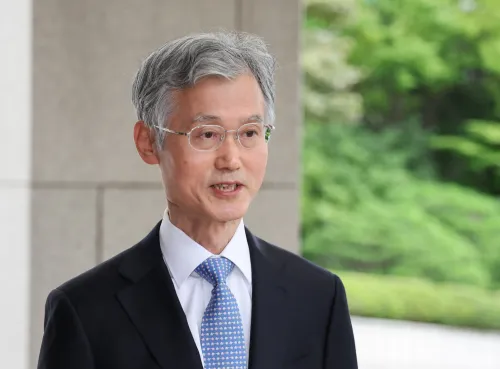
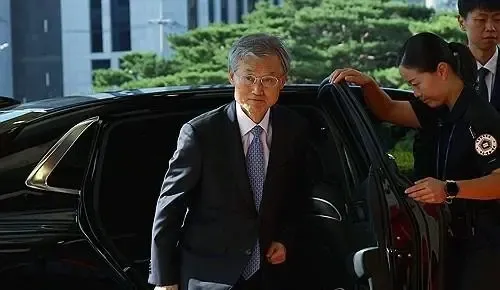
South Korea's Supreme Court Chief Justice Cho Hee-dae on Tuesday, 22 September 2026, publicly refused to comply with a presidential office request to re-recommend a candidate for a vacant Supreme Court justice post, stating he could identify no constitutional basis for the demand. The standoff marks a rare and open rupture between the judiciary and the executive in Seoul.
Background to the Dispute
The confrontation traces back to last month, when the presidential office objected to Chief Justice Cho's written recommendation of two nominees — Son Bong-kie of the Daegu District Court and Kim Sung-soo, then a judge at the Seoul High Court — for appointment as new Supreme Court justices by President Lee Jae Myung. Notably, the two sides had failed to reach prior agreement on Son's nomination, which prompted Cho to submit his recommendation in writing rather than through the customary face-to-face meeting with the president.
What Chief Justice Cho Said
Addressing reporters, Cho stated that the presidential office's document 'does not specify the reasons for requesting a re-recommendation or the constitutional grounds for the request.' He was unequivocal in his conclusion: 'I cannot find any other specific constitutional grounds or reasons to justify the request for re-recommendation. I therefore state that I cannot comply with the request.' His position is that the chief justice's authority to recommend candidates is constitutionally distinct from the president's authority to make appointments.
Presidential Office Pushes Back
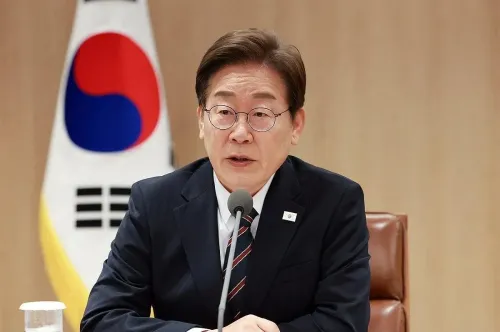
The presidential office responded with a statement expressing 'deep regret,' characterising Cho's refusal as unconstitutional. 'The chief justice's statement reflects a perception that his authority to recommend Supreme Court justices takes precedence over the president's authority to appoint them, which is contrary to the Constitution,' the office said. It also warned that prolonged vacancies on the bench would ultimately harm the public, urging Cho not to allow the standoff to continue.
One Nominee Already Confirmed
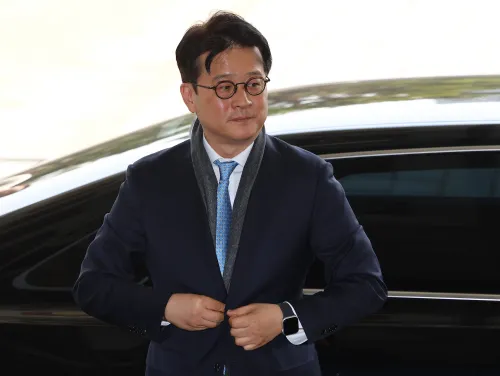
Amid the dispute, one of the two original nominees has been seated. Kim Sung-soo was formally appointed as a new Supreme Court justice last week following approval by the National Assembly. The fate of Son Bong-kie's nomination, however, remains unresolved and sits at the heart of the constitutional argument.
What Happens Next
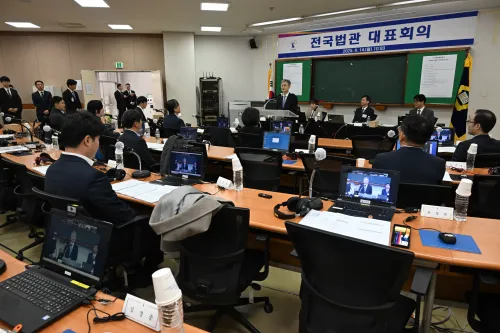
The stand-off sets up a potential constitutional test over the precise boundaries of judicial and executive power in South Korea's appointment process. Legal scholars will likely scrutinise whether the president possesses any formal authority to reject or demand revision of a chief justice's recommendation, or whether that power is confined solely to the act of appointment. The outcome could reshape how judicial vacancies are filled for years to come.
Point of View
A claim with no clear textual basis in South Korean constitutional law. President Lee Jae Myung, himself a figure who has navigated legal battles, may be testing the boundaries of executive influence over the bench at a politically sensitive moment. If the standoff is not resolved through legal channels, it risks normalising executive pressure on judicial appointments — a precedent with consequences well beyond this vacancy.
NationPress
22 Sept 2026
Frequently Asked Questions
Why did South Korea's Chief Justice refuse the presidential office's request?
Chief Justice Cho Hee-dae refused because the presidential office's request did not specify any constitutional grounds for demanding a re-recommendation of a Supreme Court justice nominee. He stated he could find no legal basis that would require him to comply.
Who are the Supreme Court nominees at the centre of the dispute?
The two nominees recommended by Chief Justice Cho were Son Bong-kie of the Daegu District Court and Kim Sung-soo, then a Seoul High Court judge. Kim Sung-soo has since been confirmed by the National Assembly and appointed; Son Bong-kie's nomination remains contested.
What is the presidential office's argument against Chief Justice Cho?
The presidential office argues that Cho's refusal reflects an unconstitutional belief that his recommendation authority overrides the president's appointment authority. It has also warned that prolonged court vacancies will harm the public.
How does the Supreme Court appointment process normally work in South Korea?
Typically, the chief justice visits the president in person to recommend candidates for Supreme Court vacancies, following prior coordination between both offices. In this case, Cho broke from tradition by submitting recommendations in writing after the two sides failed to agree on Son Bong-kie's nomination.
What are the broader implications of this standoff?
The dispute could become a landmark constitutional case over whether the South Korean executive branch can reject or demand revision of a chief justice's formal nominee recommendation. Legal scholars are likely to scrutinise the case, and its outcome may reshape judicial appointment norms for years.