South Korea floods: 805 mm rain kills 1, triggers landslides in Geoje
Synopsis
More than 805 mm of rain fell on Geoje in under 48 hours — triggering a pre-dawn landslide that struck an apartment building and killed one resident. With 100 mm per hour still falling and 150 mm more forecast, South Korea's South Gyeongsang Province faces a deepening crisis that has already flooded 12 schools and drawn a national emergency response.
Key Takeaways
Geoje recorded 805.7 mm of rainfall between Saturday and 8 a.m.
A landslide at 4:42 a.m.
Monday struck an apartment building in Geoje, killing one resident ; three were rescued.
12 schools and kindergartens were flooded across Geoje and Tongyeong by Monday morning.
Firefighters responded to more than 20 emergency calls overnight in Geoje alone.
Rainfall of up to 100 mm per hour continued Monday morning, with a further 150 mm forecast for the day.
Interior Minister Yun Ho-jung and Prime Minister Han Seong-sook both issued emergency directives; a Level 1 national response was activated.
A devastating weekend of rainfall has left South Gyeongsang Province in southwestern South Korea reeling, with the city of Geoje recording 805.7 mm of rain between Saturday and 8 a.m. Monday — one of the heaviest accumulations in the region in recent memory. A landslide triggered by the downpours struck an apartment building, killing one resident and prompting a government emergency response.
The Landslide and Casualties
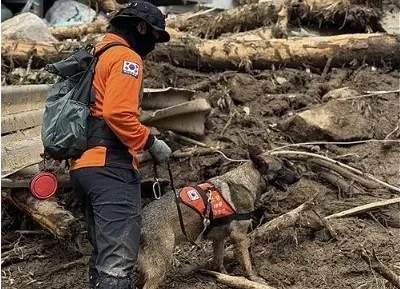
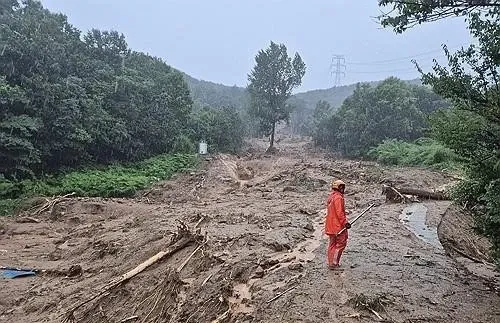
At 4:42 a.m. Monday, a landslide tore through a neighbourhood in Geoje, slamming into an apartment building. Police and firefighters pulled three residents from the debris, but one was found in cardiac arrest and was later pronounced dead at a hospital. A separate landslide struck a house in another neighbourhood after streams overflowed, though no casualties were reported in that incident.
Scale of the Rainfall
Neighbouring Tongyeong received 671.9 mm of rain over the same period, while other parts of the province recorded between 240 mm and 340 mm. As of Monday morning, both Geoje and Tongyeong were experiencing rainfall of up to 100 mm per hour, with forecasters projecting an additional 150 mm across parts of the province through the day. Heavy rain warnings remained in effect across five areas of the province, including Geoje and Tongyeong, with lower-level advisories covering much of the wider region.
Damage on the Ground
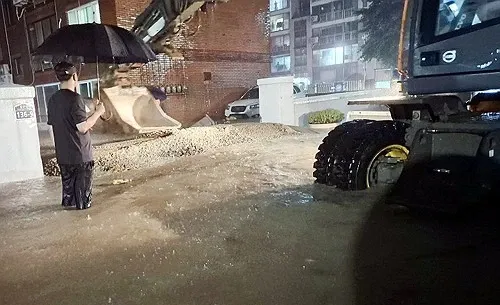
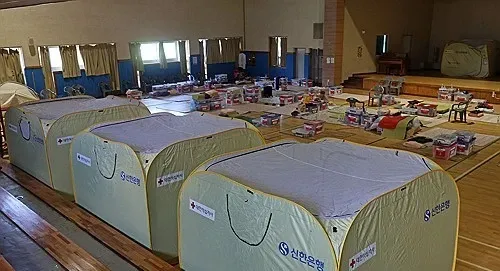
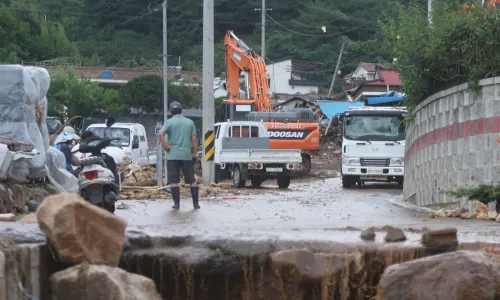
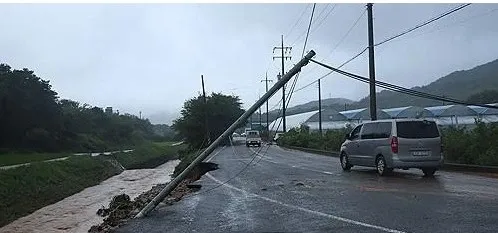
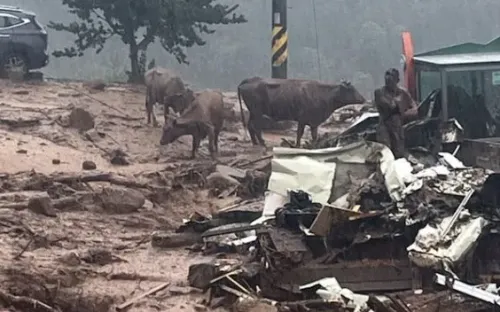
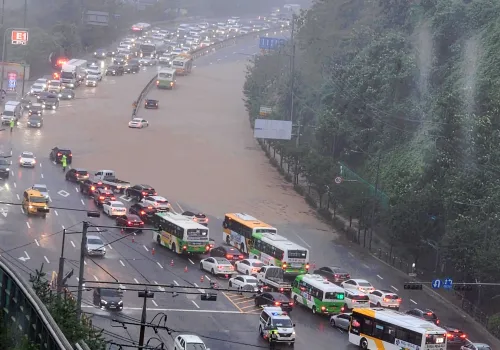
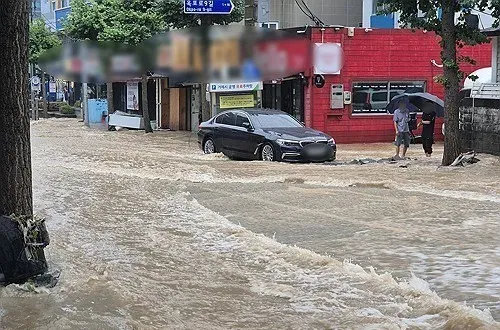
The floods inundated 12 schools and kindergartens in Geoje and Tongyeong by Monday morning. Firefighters in Geoje responded to more than 20 emergency calls overnight from residents reporting rain-related accidents and damage. Several streams burst their banks, flooding roads and compounding the disruption across the province.
Government Response
The interior ministry activated a Level 1 emergency response — the lowest tier — at the Central Disaster and Safety Countermeasures Headquarters. Interior Minister Yun Ho-jung called for all-out efforts to protect lives, while Prime Minister Han Seong-sook directed police, firefighters, and other authorities to prioritise rescuing stranded residents and those at risk. The activation signals a coordinated federal response, even as local teams remain the primary line of defence on the ground.
What Comes Next
With rainfall forecast to continue through Monday and warnings still active, authorities are on high alert for further landslides and flash flooding. The full extent of infrastructure damage — to roads, drainage systems, and residential structures — is expected to become clearer once the rain subsides and assessment teams can safely access affected areas.
Point of View
Compressed rainfall events that overwhelm urban drainage and hillside stability within hours. A Level 1 emergency activation — the lowest tier — raises questions about whether the response threshold matched the scale of a storm that delivered over 800 mm in under two days. With climate projections pointing to more intense monsoon-adjacent rainfall events on the Korean Peninsula, the gap between early-warning capability and last-mile evacuation readiness deserves sharper scrutiny than a post-disaster review typically provides.
NationPress
1 Oct 2026
Frequently Asked Questions
What caused the landslide in Geoje, South Korea?
The landslide was triggered by extreme rainfall that exceeded 805 mm over the weekend in Geoje, South Gyeongsang Province. The downpours saturated hillside soil, causing a slide at 4:42 a.m. Monday that struck an apartment building, killing one resident.
How much rain fell in South Gyeongsang Province?
Geoje received 805.7 mm of rain from Saturday through 8 a.m. Monday, while Tongyeong recorded 671.9 mm over the same period. Other parts of the province received between 240 mm and 340 mm, with rainfall of up to 100 mm per hour continuing on Monday morning.
What emergency measures did the South Korean government activate?
The interior ministry activated a Level 1 emergency response at the Central Disaster and Safety Countermeasures Headquarters. Interior Minister Yun Ho-jung called for all-out efforts to protect lives, and Prime Minister Han Seong-sook directed rescue agencies to prioritise stranded residents.
How many schools were affected by the floods?
At least 12 schools and kindergartens in Geoje and Tongyeong were flooded as of Monday morning, according to authorities.
Is more rain expected in South Gyeongsang Province?
Yes. As of Monday morning, forecasters projected up to an additional 150 mm of rainfall across parts of the province through the day, with heavy rain warnings still active in five areas including Geoje and Tongyeong.