South Korea highways choked on Labour Day as 6 million vehicles hit roads
Synopsis
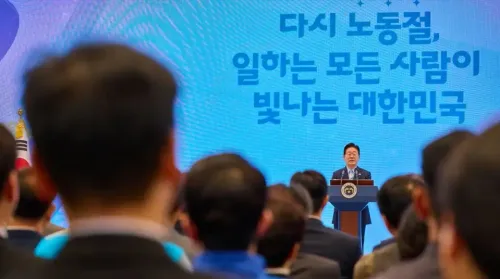
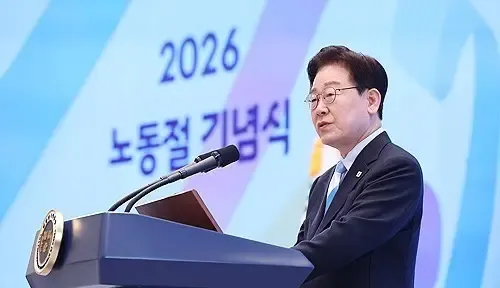
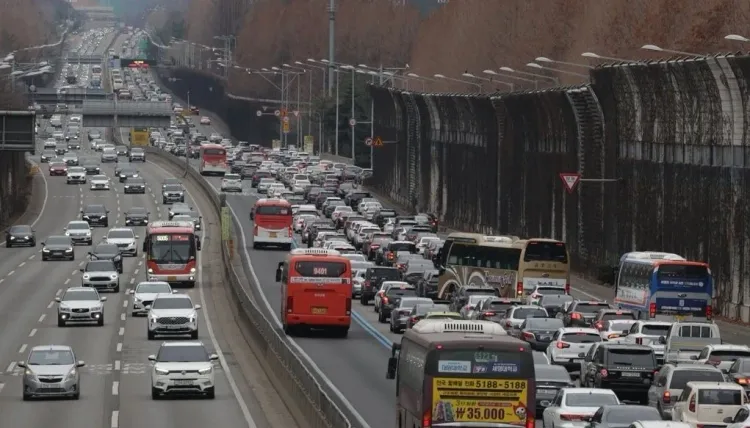
Over 6 million vehicles flooded South Korea's highways on Labour Day 2025, with Seoul-to-Busan drives stretching past 9 hours — the most congested opening day of an extended holiday in recent years. The gridlock coincided with President Lee Jae Myung's landmark Labour Day address at Cheong Wa Dae, the first ever held there, where he vowed zero compromise on workplace safety and pushed back against AI-driven job displacement.
Key Takeaways
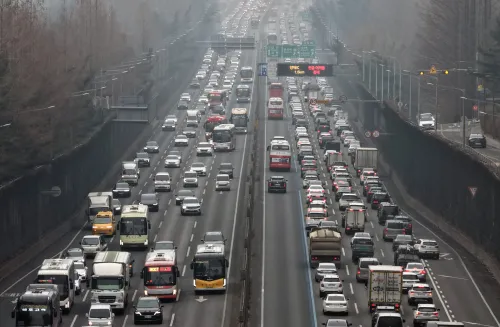
More than 6 million vehicles were estimated on South Korea's roads on 1 May 2025 , the first day of an extended Labour Day holiday.
The Seoul-to-Busan drive was projected at up to 9 hours and 10 minutes at peak times.
An estimated 1.3 million passengers were expected to pass through Incheon International Airport from Thursday through Tuesday.
President Lee Jae Myung held the first-ever Labour Day event at Cheong Wa Dae , attended by 130 participants including representatives from both major umbrella unions.
The government designated Labour Day as a national public holiday earlier this year , extending the break for all workers.
South Korea's Labour Day was renamed
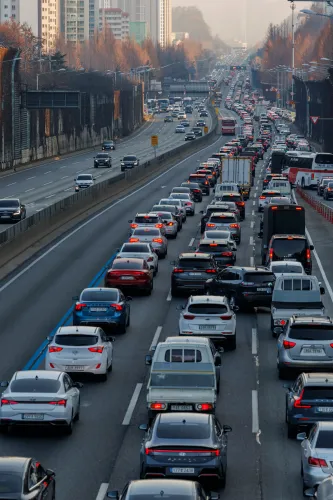
Highways across South Korea were heavily congested on Friday, 1 May 2025, as outbound traffic surged on the first day of an extended public holiday that began with Labour Day. More than 6 million vehicles were estimated to travel nationwide, with drive times from Seoul stretching to record highs, according to the state-run Korea Expressway Corp, as reported by Yonhap News Agency.
Road Congestion at Peak Levels
A drive from Seoul to the southeastern port city of Busan was expected to take up to 9 hours and 10 minutes at peak times — one of the longest estimated journey durations on that corridor in recent memory. A trip to the southwestern city of Gwangju was projected at 7 hours and 30 minutes, while the eastern coastal city of Gangneung was estimated at 6 hours and 20 minutes. The Korea Expressway Corp expected outbound traffic to ease from around 9 to 10 pm and inbound traffic returning to Seoul to ease from 10 to 11 pm.
Air Travel Also Surges
The holiday rush extended beyond the roads. An estimated 1.3 million people were expected to take flights departing from or arriving at Incheon International Airport, west of Seoul, from the previous day through Tuesday, according to industry data. The spike reflects a broader rise in demand for international travel during extended holiday windows — a trend that has accelerated in the post-pandemic period as South Korean consumers prioritise leisure spending.
Why the Holiday Is Longer This Year
The extended break stems from a confluence of calendar and policy factors. The South Korean government earlier this year designated Labour Day as a full national holiday, allowing all workers — not just unionised employees — to take the day off. With Children's Day, another national holiday, falling on Tuesday, 6 May, workers who take Monday off can enjoy up to five consecutive days of rest including the weekend. South Korea had originally observed Labour Day on 1 May before renaming it
Point of View
Visible consequences — 6 million vehicles on the road and 1.3 million airport passengers in a single extended window. But the more significant story is political: President Lee Jae Myung's choice to host the first-ever Labour Day event at Cheong Wa Dae, and to bring both major — and ideologically opposed — umbrella unions to the same table, signals a deliberate rebranding of his administration as labour-first. His pushback against AI-driven job displacement, while reassuring in tone, raises the harder question of policy specifics: what concrete protections are being legislated? Optics and oratory are easier to deliver than structural reform.
NationPress
19 Sept 2026
Frequently Asked Questions
Why are South Korea's highways so congested on 1 May 2025?
South Korea is experiencing an extended public holiday that began with Labour Day on 1 May 2025. With Children's Day falling on Tuesday, 6 May, workers who take Monday off can enjoy up to five consecutive days off, prompting a surge of over 6 million vehicles on national highways.
How long does the Seoul to Busan drive take during the Labour Day holiday?
According to the Korea Expressway Corp, the drive from Seoul to Busan was expected to take up to 9 hours and 10 minutes at peak times on 1 May 2025, significantly longer than the usual travel duration on that route.
What did South Korean President Lee Jae Myung say on Labour Day 2025?
President Lee Jae Myung pledged unwavering commitment to workplace safety, stating he would make no compromises on the issue. He also addressed AI-driven job concerns, arguing that growth which leaves workers behind is not growth at all, and called workers the backbone of the South Korean economy.
What is significant about the Labour Day event held at Cheong Wa Dae?
It was the first time a Labour Day event has been held at Cheong Wa Dae, the former presidential Blue House. The event brought together 130 participants, and notably saw both major umbrella labour unions — the Federation of Korean Trade Unions and the Korean Confederation of Trade Unions — attend together for the first time despite their differing political views.
When did South Korea restore the name Labour Day and make it a public holiday?
South Korea restored the name Labour Day from Workers' Day last year, and the government designated it as a national public holiday earlier in 2025, allowing all workers — not just union members — to take the day off.