Did South Korea's Defence Minister Protest USFK Over US-China Aircraft Standoff?
Synopsis
Tensions rise as South Korea's Defence Minister lodges a complaint with the US over a standoff with China. This incident during a military exercise raises questions about USFK's role and regional security dynamics. Explore the implications of this standoff and what it means for US-South Korea relations.
Key Takeaways
South Korea's Defence Minister lodged a protest with USFK regarding a standoff with Chinese jets.
Incident occurred during a rare military exercise over the Yellow Sea.
USFK had notified South Korea about the exercise but lacked detail on its purpose.
US National Defence Strategy indicates a potential shift in US military posture.
Brunson emphasized the need for flexibility in USFK operations.
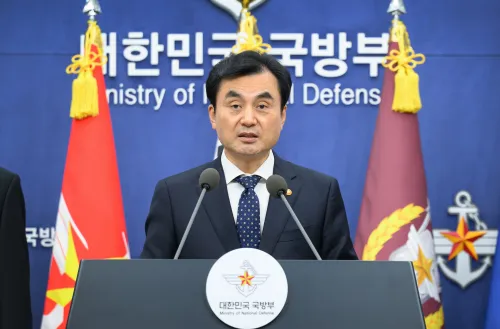
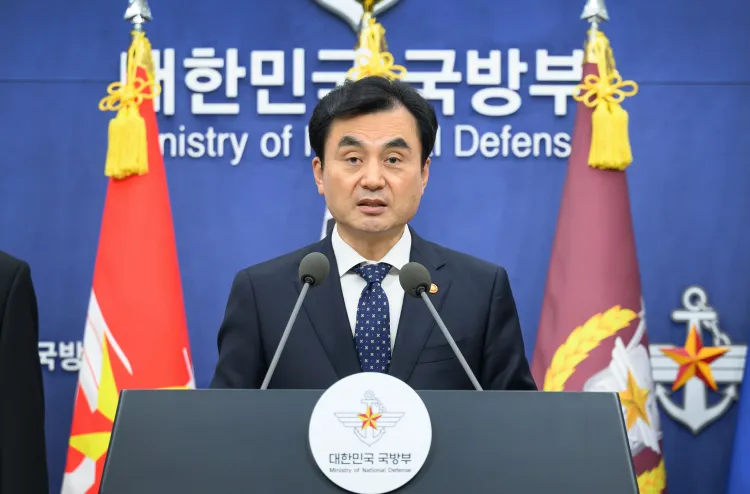
Seoul, February 21 (NationPress) - South Korea's Defence Minister Ahn Gyu-back has formally expressed dissatisfaction to the United States Forces Korea (USFK) earlier this week regarding a brief standoff involving Chinese fighter jets during a rare aerial exercise, according to military sources on Saturday.
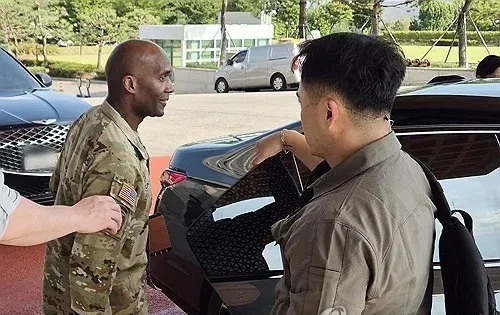
Minister Ahn Gyu-back conveyed his concerns during a call with Gen. Xavier Brunson, the commander of the Combined Forces Command and USFK, shortly after receiving a report of the incident that occurred on Wednesday, as indicated by the sources.
Gen. Jin Young-sung, the chairman of the Joint Chiefs of Staff, also raised a complaint during a conversation with Gen. Brunson, the sources added.
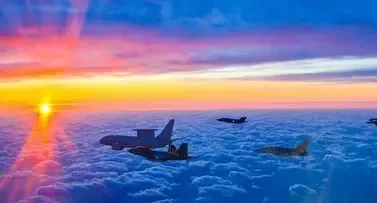
On Wednesday, US and Chinese fighter jets were involved in an unusual standoff over the Yellow Sea amidst a training operation of the US Air Force, which included approximately 10 USFK F-16 fighter jets, as reported by Yonhap news agency.
The F-16s reportedly entered an area situated between the respective air defense identification zones of South Korea and China, prompting the Chinese military to deploy its own aircraft to the location, although no confrontation ensued.
Although the USFK had informed the South Korean military of the exercise plan beforehand, they allegedly did not provide detailed information regarding the purpose of the drills, officials noted.
The current exercises arise amidst speculation that Washington aims to redefine the role of USFK as it focuses on countering Chinese threats while encouraging allies to assume greater security responsibilities.
The US National Defence Strategy released last month hinted at a potential change in US military posture in South Korea, stating that South Korea is capable of taking primary responsibility for deterring North Korea, supported by critical but limited US assistance. This shift aligns with America's interest in 'updating' its military presence on the Korean Peninsula.
USFK Commander Gen. Xavier Brunson has also emphasized the need for flexibility within USFK, presenting a map that positions the east at the top instead of the conventional north-up mapping.
"Forces already stationed on the Korean Peninsula are not merely distant assets needing reinforcement; they are troops positioned within the geographical perimeter that the US would need to penetrate in a crisis or emergency," he stated while unveiling the map on November 17 of last year.
Point of View
It is critical to recognize the delicate balance of power in the region. While the protest from South Korea signifies an important diplomatic stance, it is imperative to navigate these tensions carefully to maintain stability and security. Our commitment remains with the nation and its strategic interests in addressing regional challenges.
NationPress
2 Oct 2026
Frequently Asked Questions
Why did South Korea's Defence Minister protest?
South Korea's Defence Minister protested due to a brief standoff between US and Chinese fighter jets during a military exercise, which raised concerns about the implications for regional security.
What was the role of the US Forces Korea in the incident?
The US Forces Korea were conducting a training operation involving F-16 fighter jets, which inadvertently led to a standoff with Chinese military aircraft over the Yellow Sea.
What does the US National Defence Strategy indicate?
The US National Defence Strategy suggests a potential shift in military posture in South Korea, emphasizing South Korea's capacity to take primary responsibility for deterring threats from the North.
What was the response from the USFK Commander?
USFK Commander Gen. Xavier Brunson highlighted the need for flexibility within USFK and introduced a new map perspective to emphasize the positioning of US forces in the region.
What are the implications of this standoff?
The standoff raises questions about US-South Korea relations and the evolving dynamics of security in the region, especially in light of increasing Chinese military activities.