South Korean President Lee Affirms USFK Asset Relocation Won't Diminish Deterrence Against North Korea
Synopsis
In a recent Cabinet meeting, South Korean President Lee Jae Myung reassured that any potential relocation of US military assets will not hinder the country's deterrent capabilities against North Korea. He emphasized the importance of self-reliant defense amid shifting global security dynamics.
Key Takeaways
President Lee asserts USFK asset relocations won't weaken deterrence against North Korea.
South Korea is among the top five countries in military spending.
Lee emphasizes the importance of self-reliance in defense strategies.
Current military capabilities show a significant gap between South Korea and North Korea.
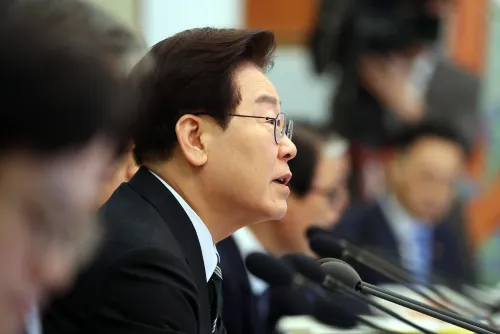
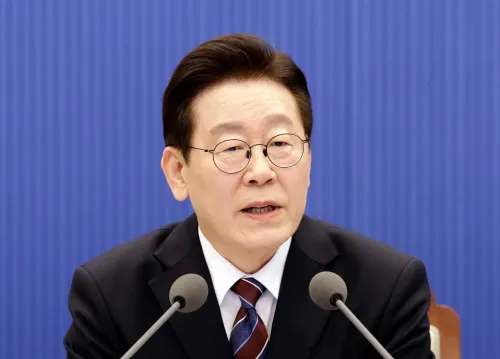
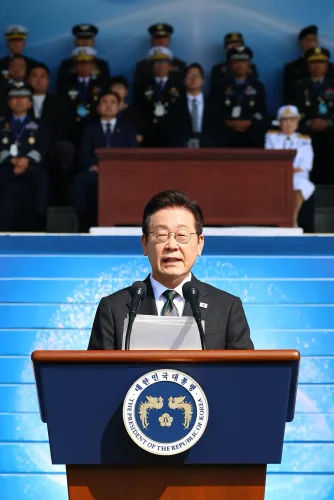
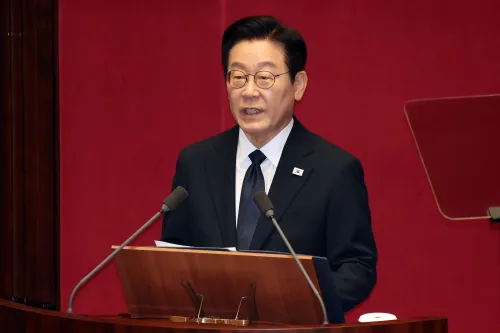
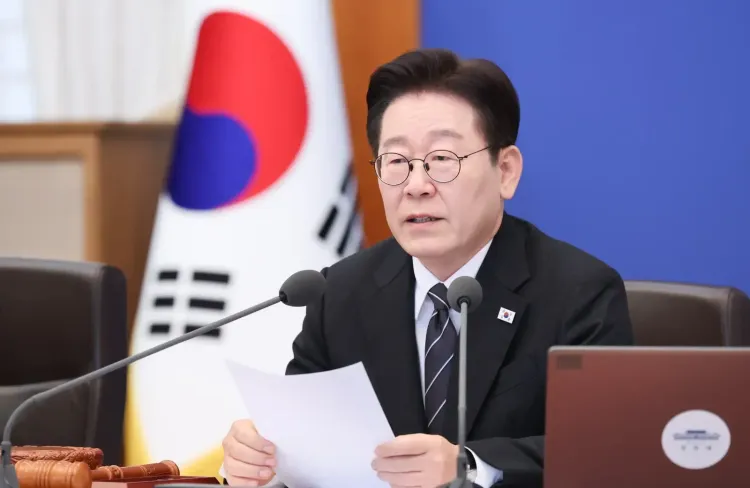
Seoul, March 10 (NationPress) South Korean President Lee Jae Myung stated on Tuesday that any potential transfer of military assets held by the US military in South Korea will not compromise the deterrence strategy against North Korea.
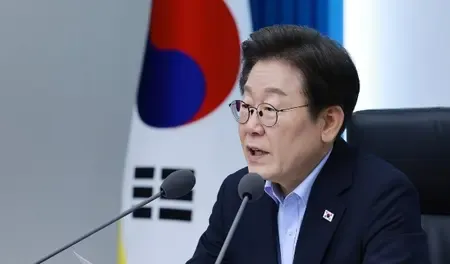
In response to reports suggesting that the US Forces Korea (USFK) may have relocated some equipment, including an anti-missile defense system, Lee addressed a Cabinet meeting, asserting, "If you inquire whether our deterrence framework against North Korea would be significantly undermined by such asset relocations, my answer is a definitive no."
While Lee's comments did not directly address the specifics of the potential asset movements, he acknowledged South Korea's opposition to any such actions, noting that it is a "stark reality" that the U.S. might not fully heed South Korea's views.
Lee emphasized, "Our administration anticipates that the USFK will play a crucial role in maintaining stability and peace on the Korean Peninsula, a role it has performed effectively thus far."
However, he acknowledged that the USFK might be required to deploy certain air defense systems internationally based on its own military necessities. "Although we have expressed our opposition, we must recognize that we cannot entirely impose our stance," he remarked.
Furthermore, Lee highlighted that South Korea's military expenditure ranks among the top five globally, approximately 1.4 times larger than North Korea's gross domestic product, underscoring the significant disparity in military strength between the two nations, as reported by Yonhap.
He insisted on the necessity for South Korea to take a proactive role in its defense strategy to brace for any worst-case scenarios in light of the evolving global security environment.
"We must consistently prepare for the possibility of conflict, despite its low likelihood. There may be instances where external support diminishes due to shifts in the international order. In such situations, we must develop our self-sufficient defense capabilities to ensure our own protection," he concluded.
Point of View
It is clear that President Lee's comments reflect South Korea's ongoing commitment to a robust defense strategy, despite challenges posed by the US military's asset management. His emphasis on self-reliance indicates a proactive approach in the face of geopolitical uncertainties.
NationPress
26 Sept 2026
Frequently Asked Questions
What did President Lee say about USFK's military assets?
President Lee stated that any possible relocation of USFK assets will not compromise South Korea's deterrence strategy against North Korea.
How does South Korea's military spending compare to North Korea's?
South Korea's military expenditure is among the world's top five and is approximately 1.4 times larger than North Korea's gross domestic product.
What is the stance of South Korea regarding USFK's asset relocation?
South Korea has expressed opposition to the potential relocation of USFK assets, though it acknowledges that its views may not be fully accepted by the US.