How is South Korea Planning to Achieve Self-Reliant Defence and Engage North Korea?
Synopsis
In a significant address, South Korean President Lee Jae Myung outlines ambitious plans for a self-reliant military while advocating for renewed dialogue with North Korea. His vision includes leveraging artificial intelligence to enhance defence capabilities and fostering economic growth through strategic partnerships and innovative investments.
Key Takeaways
Strengthening National Defence: South Korea focuses on self-reliance in military capabilities.
AI Integration: Utilization of AI technologies is crucial for modernizing defense.
Economic Partnerships: New tariff agreements aim to stabilize the economy.
Regional Diplomacy: Efforts to engage North Korea continue amidst military enhancements.
Investment in Future Growth: Significant funding is directed towards strategic industries.
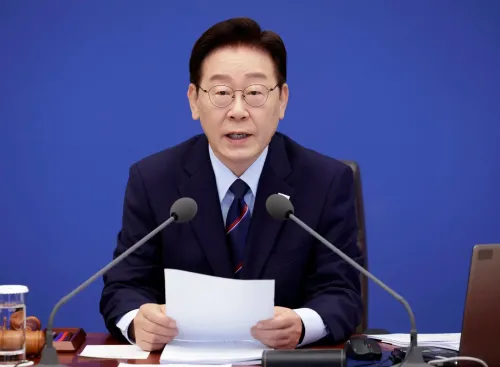
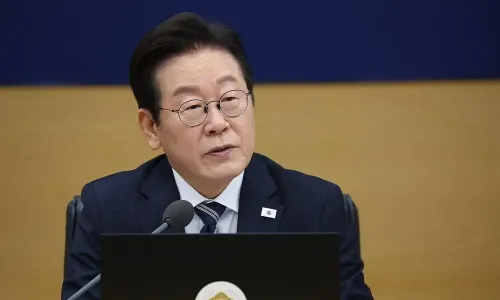
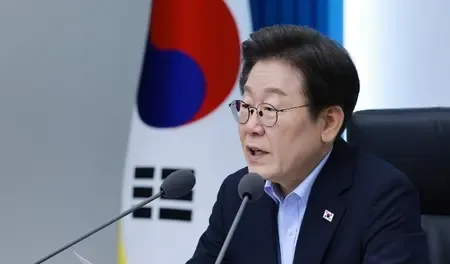
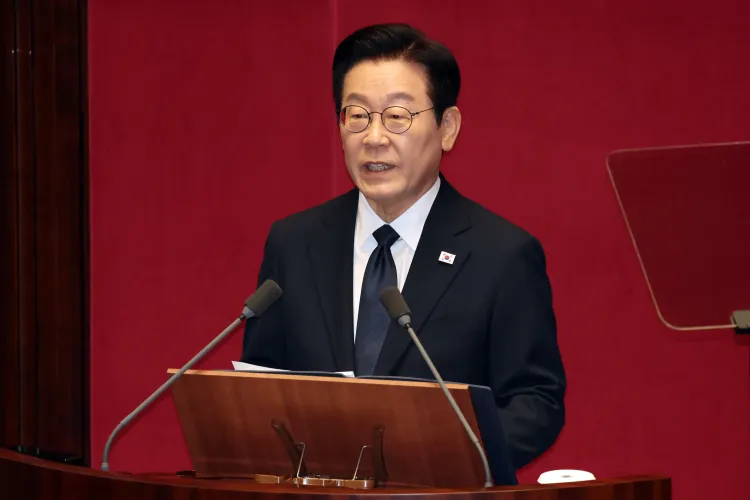
Seoul, Nov 4 (NationPress) South Korean President Lee Jae Myung announced on Tuesday that the nation will accelerate its initiative to develop a self-sufficient military by enhancing its defence capabilities, while also pursuing opportunities to restart dialogue with North Korea.
"We will significantly bolster our national defence capabilities and strive to realize our aspiration for self-reliant defence," Lee expressed during a budget address, emphasizing that reliance on foreign support for defence undermines national pride.
Specifically, Lee highlighted South Korea's objective to evolve its defence force into a smart and powerful military through the integration of artificial intelligence (AI) technologies.
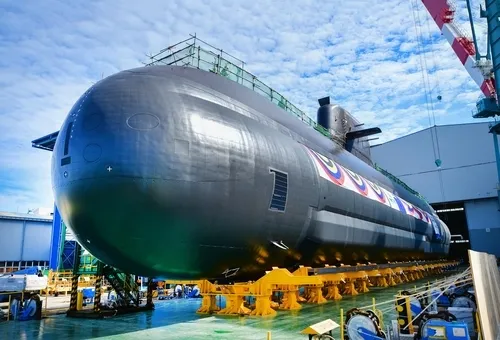
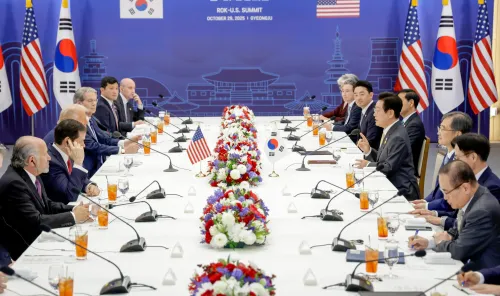
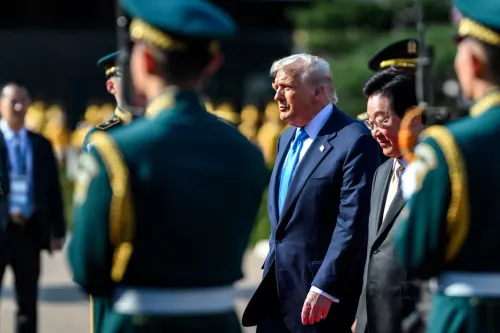
Last week, Lee approached Trump for permission to acquire fuel for nuclear-powered submarines. In response, Trump authorized South Korea to construct nuclear submarines at a US shipyard operated by Hanwha Ocean, as reported by Yonhap.
Although Lee did not directly reference Trump’s approval, he remarked on the advancements in discussions with the US regarding the nuclear fuel supply.
"The progress in negotiations for the supply of nuclear fuel for submarines has reinforced the groundwork for self-reliant defence," Lee stated.
A recent tariff agreement with the US has alleviated economic uncertainties, according to Lee.
He noted that the tariff arrangement secured rates comparable to those of rival nations in critical export sectors like automobiles and semiconductors, fostering fair competition on a level playing field.
During his initial summit with Chinese President Xi Jinping, Lee declared that Seoul and Beijing have fully restored their bilateral relationship and agreed to collaborate as strategic partners for pragmatism and mutual benefit.
At the summit, South Korea and China formalized a currency swap line valued at up to 70 trillion won ($48.6 billion) along with six additional memoranda of understanding, including economic agreements and collaborative efforts against transnational crimes.
During the recent Asia-Pacific Economic Cooperation (APEC) summit, Lee asserted that comprehensive diplomatic efforts yielded optimal results under challenging conditions.
"We dedicated ourselves fully to achieving the best possible outcomes even amidst adverse circumstances," Lee proclaimed.
Looking ahead, he emphasized that the government will continue to enhance the nation's power and elevate its status through pragmatic diplomacy focused on national interests.
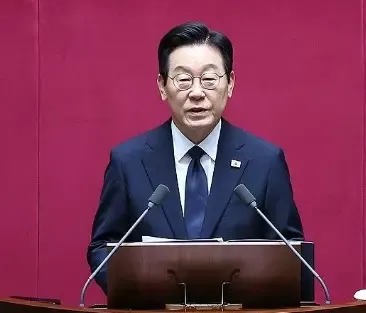
In his address on the administration's inaugural annual budget, Lee presented a spending plan of 728 trillion won for 2026, marking an 8.1 percent increase from the previous year, with a strong emphasis on investment in the AI sector.
"The government will significantly increase investments to usher in the AI era and lay the foundation for future growth," he remarked.
Lee specified that 10.1 trillion won has been allocated for AI transformation, aiming to position South Korea among the world's top three AI leaders, a substantial increase from 3.3 trillion won this year.
Investment in research and development across pivotal industries—including AI, content, and defence—rose 19.3 percent from this year to a historic high of 35.3 trillion won.
Lee noted that the government plans to acquire an additional 15,000 graphics processing units (GPUs), essential for training and operating AI models, to achieve its goal of 35,000 units ahead of schedule.
Aiming to nurture strategic industries that drive economic growth, the government intends to establish a 150 trillion won public-private fund over the next five years.
For defence, the government allocated 66.3 trillion won, reflecting an 8.2 percent increase from this year, to upgrade conventional weapon systems and hasten the realization of self-reliant defence.
"Relying on outside forces for our defence is a matter that undermines our national pride," stated Lee, who has committed to reclaiming wartime operational control from Washington by the end of his term in 2030.
Lee called for bipartisan cooperation to pass the annual budget by the legal deadline set for December 2.
However, the main opposition People Power Party boycotted Lee's address in protest of a special counsel's attempt to seek an arrest warrant for one of its lawmakers involved in the former President Yoon Suk Yeol's martial law proposal.
Point of View
It is crucial to recognize the strategic shifts in South Korea’s defence policy under President Lee Jae Myung. His commitment to a self-reliant military reflects a growing sentiment of national pride and independence, while the push for dialogue with North Korea indicates a nuanced approach to regional stability. It is essential to monitor how these developments unfold.
NationPress
20 Sept 2026
Frequently Asked Questions
What are President Lee's main objectives for South Korea's defence?
President Lee aims to enhance South Korea's defence capabilities to become self-reliant, utilizing technologies such as AI. He also seeks to foster dialogue with North Korea for regional stability.
How will the new tariff deal with the US impact South Korea's economy?
The recent tariff agreement with the US is expected to reduce economic uncertainties and provide a fair competitive environment for South Korean exports, particularly in automobiles and semiconductors.
What investments are being made in AI and defence?
The South Korean government plans to invest significantly in AI, with a budget increase for AI transformation from 3.3 trillion won to 10.1 trillion won, and an overall defence budget increase to upgrade capabilities.
What is the significance of the currency swap line with China?
The currency swap line worth up to 70 trillion won ($48.6 billion) enhances financial stability between South Korea and China, promoting economic cooperation and strategic partnership.
What challenges does President Lee face in passing the budget?
President Lee faces challenges from the opposition, particularly the People Power Party, which has boycotted his speech due to political tensions surrounding a special counsel's investigation.