Will South Korean Prez be an Active Supporter in North Korea-US Talks This Year?
Synopsis
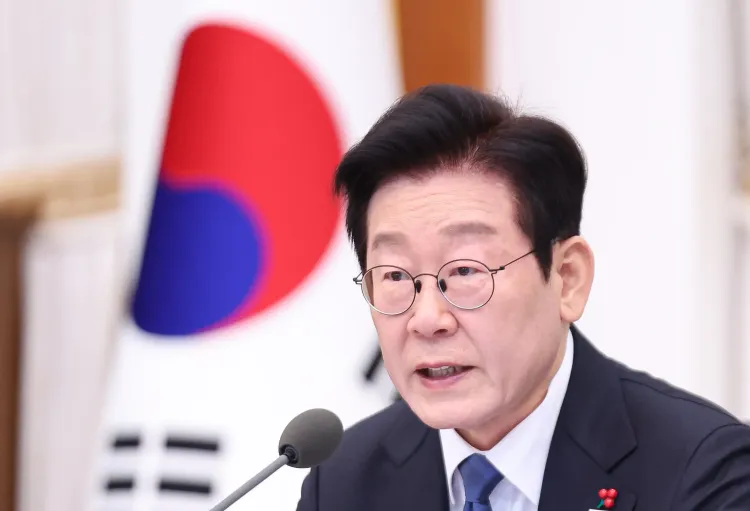
In a bold New Year's address, South Korean President Lee Jae Myung pledged to act as a pacemaker in fostering dialogues between North Korea and the United States, emphasizing the importance of diplomacy as tensions rise. His vision for peace aims to reshape inter-Korean relations while addressing economic and cultural growth.
Key Takeaways
Lee Jae Myung emphasizes diplomacy as vital for peace.
He aims to restore relations with North Korea and facilitate US talks.
South Korea is shifting towards sustainable development.
Cultural investment is viewed as key for economic growth.
The government seeks to distribute economic opportunities more evenly.
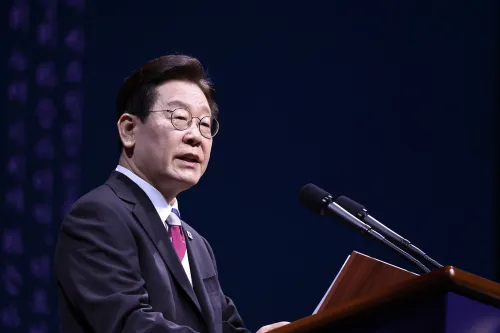
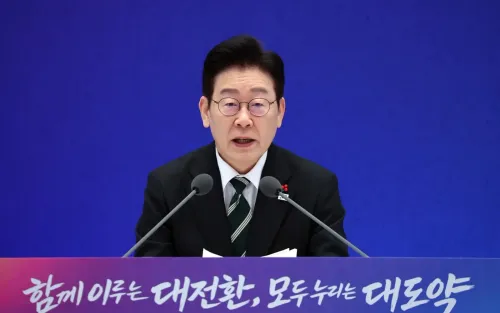
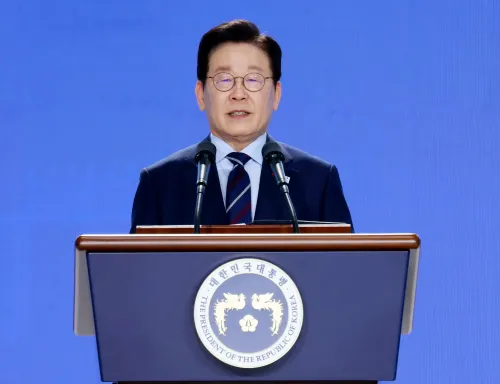
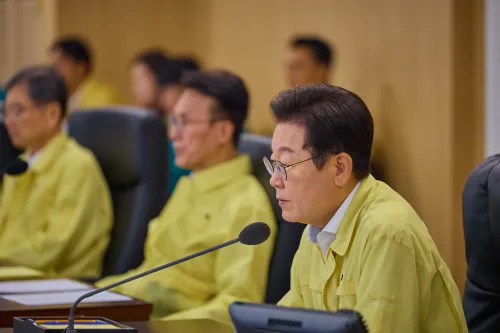
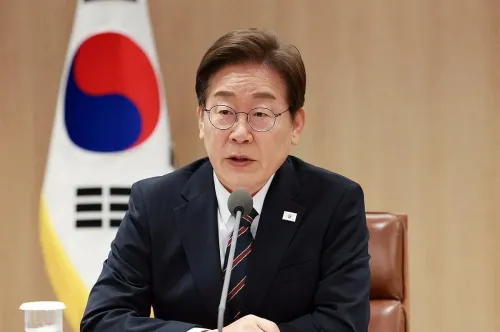
Seoul, Jan 1 (NationPress) South Korean President Lee Jae Myung declared on Thursday his commitment to actively facilitate potential discussions between North Korea and the United States this year, positioning himself as a "pacemaker." He emphasized his ongoing efforts to restore relations with Pyongyang.
In his annual New Year's address, Lee expressed that he "will actively support the resumption of North Korea-US talks and continue pursuing the restoration of inter-Korean relations this year."
Last year, Lee engaged in summit discussions with US President Donald Trump, who voiced a desire to meet with North Korean leader Kim Jong-un—a move that Lee backed, pledging to serve as a "pacemaker" to aid Trump in acting as a "peacemaker."
Despite this, North Korea has demonstrated limited willingness to return to negotiations, though analysts speculate that Pyongyang may seek diplomatic engagement following a significant party congress early this year, as reported by Yonhap news agency.
Inter-Korean tensions have persisted, especially as North Korea has disregarded Seoul's peace initiatives and has bolstered its military collaboration with Russia, particularly after dispatching troops to support Moscow's conflict in Ukraine.
Lee underscored the significance of diplomacy, even amidst stalled communications with North Korea.
He highlighted that the government is enacting measures to alleviate military tensions and rebuild trust between the two Koreas while fostering consensus with the international community, including the US and China, to ensure peace and stability on the Korean Peninsula.
"We aim to replace unpredictable growth hindered by the threat of war with stable growth fostered by peace," he stated. "Steadfast peace equates to growth, and robust security fuels prosperity."
In his agenda for 2026, Lee committed to pursuing his vision for peace based on what he termed a "comprehensive strategic alliance" with the US and a vigorous "self-reliant" national defense.
He mentioned that Seoul's recent trade agreement with Washington has alleviated economic uncertainties, asserting that the Korea-US alliance is entering a "new renaissance." Lee expressed optimism that Washington's endorsement of Seoul's initiative to develop nuclear-powered submarines and enhance uranium enrichment and spent nuclear fuel reprocessing capabilities would provide a solid foundation for the nation's economic resurgence.
Domestically, Lee stated his administration would move away from a growth model focused solely on the Seoul metropolitan area and work towards balanced and sustainable development nationwide.
Custom-tailored strategies are planned across five regional hubs—the Seoul metro area, southeast, northeast, central, and western regions—alongside three special self-governing provinces: Jeju, Gangwon, and North Jeolla.
Lee asserted that this transition to a new development framework is "not a favour to the provinces" but an "essential strategy for national resurgence."
He added that the government will seek methods to distribute economic opportunities beyond a select few large conglomerates, promoting start-ups, venture firms, and small to mid-sized enterprises.
In addressing the high incidence of fatal industrial accidents, Lee promised to bolster workplace safety and increase investment in the cultural sector to elevate various forms of Korean content globally.
"Culture is the economy and a future growth engine, and it has become a linchpin of national competitiveness," he stated.
Point of View
It is imperative that we remain committed to fostering peace and stability in the region. The South Korean government’s proactive stance in dialogue with North Korea, despite ongoing tensions, signifies a determination to pursue diplomacy. As the international community watches closely, it is crucial that South Korea navigates these complex dynamics with a focus on national interests and regional security.
NationPress
23 Sept 2026
Frequently Asked Questions
What is the significance of President Lee's remarks?
President Lee's commitment to act as a pacemaker highlights South Korea's proactive role in facilitating dialogue between North Korea and the United States, which is crucial for regional peace.
How does the current relationship between North Korea and South Korea affect regional stability?
The ongoing tensions and lack of dialogue between North Korea and South Korea contribute to instability in the region, making diplomatic efforts essential for peace.
What measures is the South Korean government taking to improve relations with North Korea?
The government is working on diplomatic initiatives, easing military tensions, and building consensus with the international community to restore trust and foster dialogue.
Why is cultural investment important for South Korea's economy?
Investing in cultural sectors can promote Korean content globally, serving as both an economic driver and a means to enhance national competitiveness.
What are the expected outcomes of the proposed North Korea-US talks?
The anticipated talks aim to reduce tensions, restore diplomatic relations, and potentially lead to agreements that benefit both nations and the broader region.