South Sudan army orders Agwelek militia integration into national forces
Synopsis
South Sudan's national army has ordered Agwelek militia fighters to report to designated assembly points beginning 15 September 2026, in the most concrete operational step yet toward fulfilling a January 2022 peace deal. At the same time, UNICEF is warning that humanitarian access to conflict-affected communities in Jonglei State remains critically constrained — underscoring that the path to stability in South Sudan remains uneven at best.
Key Takeaways
The SSPDF issued a directive on 14 September 2026 ordering all Agwelek militia combatants to report to designated assembly points.
Agwelek fighters in Juba must report to Terekeka assembly area in Central Equatoria State, effective 15 September 2026 .
Forces in Warrap State and Twic East County, Jonglei State , are on standby for an SSPDF screening and integration committee.
The directive applies to all Agwelek forces under Johnson Olony Thabo , assistant chief of defence forces for disarmament and mobilisation.
UNICEF simultaneously called for sustained humanitarian access, having restored aid to communities in Wiechjol and Waat in Jonglei State after months of disruption.
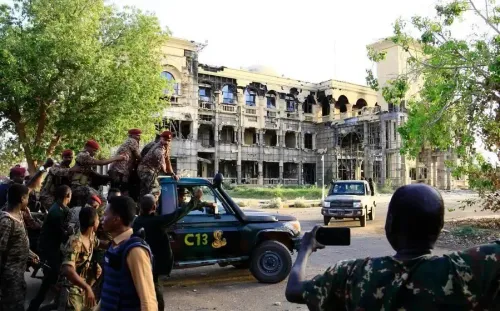
The South Sudan People's Defence Forces (SSPDF) on Monday, 14 September 2026, issued a formal directive ordering all combatants of the Agwelek militia to report to designated assembly points for integration into the national army. The order marks a significant operational milestone in implementing the peace agreement struck between the government and the armed group in January 2022.
Key Developments
SSPDF spokesperson Lul Ruai Koang confirmed that the directive, effective Tuesday, 15 September 2026, applies to Agwelek forces stationed in Juba, Greater Tonj in Warrap State, and Twic East County in Jonglei State. Agwelek fighters currently present in Juba have been ordered to report specifically to the Terekeka assembly area in Terekeka County, Central Equatoria State, with reporting commencing immediately.
Meanwhile, militia forces in Warrap State and those at Nyakeen in Jonglei State's Twic East County have been instructed to remain on standby, pending the arrival of the SSPDF general headquarters screening and integration committee.
In an official statement, Koang said: 'The above orders are for immediate execution and are specifically applicable to all Agwelek forces under the overall command of Johnson Olony Thabo, assistant chief of defence forces for disarmament and mobilisation.'
Background: Who Are the Agwelek
The Agwelek militia was formerly aligned with the Sudan People's Liberation Movement/Army-in-Opposition (SPLM/A-IO), led by First Vice President Riek Machar. The group actively fought against the SSPDF following the outbreak of civil conflict in December 2013 — a war that claimed hundreds of thousands of lives and displaced millions across the country.
The group's subsequent breakaway from the SPLM/A-IO and its peace accord with the government set the stage for the current integration process. Notably, this move is part of a broader effort to dismantle non-state armed groups and consolidate a unified national command structure — a central demand of international peace monitors.
UNICEF Raises Humanitarian Access Alarm
In a parallel development on the same day, the United Nations Children's Fund (UNICEF) called for safe, predictable and sustained humanitarian access to conflict-affected communities across South Sudan. In a statement issued from Juba, UNICEF said it and its partners had restored life-saving aid to communities in Wiechjol and Waat in Jonglei State, areas that had been cut off from assistance for months.
Noala Skinner, UNICEF Representative to South Sudan, said: 'For many families, this was the first help they had seen in months. But what we found shows how much more is needed, and how quickly conditions can deteriorate if access continues to be constrained in these areas.'
According to UNICEF, escalating conflict, mass displacement and unsafe travel routes have severely disrupted services across the region since January 2026. Health facilities have been forced to close, leaving vulnerable communities without reliable access to healthcare, clean water, protection and nutrition support.
What Comes Next
The successful integration of the Agwelek militia will be closely watched by regional observers and international peace guarantors. Analysts note that South Sudan has previously struggled to sustain ceasefire and integration commitments, making the screening committee's role critical. Whether the process proceeds without incident could shape confidence in the country's fragile peace architecture going forward.
Point of View
But South Sudan's peace process has a documented history of commitments that stalled at implementation. The Agwelek integration tests whether the January 2022 accord has genuine enforcement teeth — or whether it will join the long line of agreements that looked credible on paper and fractured in the field. The simultaneous UNICEF alert on humanitarian access is not a coincidence: it signals that military consolidation and civilian protection remain dangerously out of sync. If the screening committee's arrival is delayed or politicised, the window for voluntary compliance could close quickly.
NationPress
15 Sept 2026
Frequently Asked Questions
What is the SSPDF order regarding the Agwelek militia?
The South Sudan People's Defence Forces ordered all Agwelek militia combatants to report to designated assembly points for formal integration into the national army, effective 15 September 2026. The directive covers fighters in Juba, Warrap State, and Twic East County in Jonglei State.
What is the Agwelek militia and why does its integration matter?
The Agwelek militia was formerly aligned with the SPLM/A-IO opposition group and fought against the SSPDF after South Sudan's civil conflict erupted in December 2013. Its integration into the national army is a key requirement of the January 2022 peace agreement and represents a step toward consolidating a unified national command.
Who is leading the Agwelek forces being integrated?
The directive specifically names Johnson Olony Thabo, assistant chief of defence forces for disarmament and mobilisation, as the overall commander of Agwelek forces covered by the integration order.
What is UNICEF's concern about South Sudan?
UNICEF has called for safe, predictable and sustained humanitarian access to conflict-affected communities. It has warned that escalating conflict, mass displacement and unsafe travel routes have severely disrupted services since January 2026, forcing health facilities to close and cutting families off from healthcare, clean water and nutrition support.
Where will the Agwelek fighters in Juba be sent?
Agwelek combatants currently in Juba have been ordered to report to the Terekeka assembly area in Terekeka County, Central Equatoria State, with the reporting period commencing on 15 September 2026.