Starmer brands parliamentary probe vote a 'political stunt' amid Mandelson vetting row

Synopsis
UK Prime Minister Keir Starmer is facing a parliamentary vote on whether he should be investigated for allegedly misleading the House of Commons over Peter Mandelson's denied security vetting — a clearance that was overruled by the Foreign Office before Mandelson took up his Washington post, and which Starmer says he only learned of on 14 April.
Key Takeaways
PM Keir Starmer called the parliamentary vote on his potential investigation a "political stunt" on 28 April .
House of Commons Speaker Lindsay Hoyle confirmed a debate and vote on referring Starmer to the Committee of Privileges .
Peter Mandelson was denied security clearance in January 2025 , a decision overruled by the Foreign Office .
Starmer says he only learned of the vetting denial on 14 April ; Kemi Badenoch accuses him of breaching the Ministerial Code .
Mandelson was sacked as UK Ambassador to the US in September 2025 over his ties to convicted sex trafficker Jeffrey Epstein .
Mandelson was also briefly arrested in 2025 over alleged misconduct in public office, including possible disclosure of market-sensitive information.
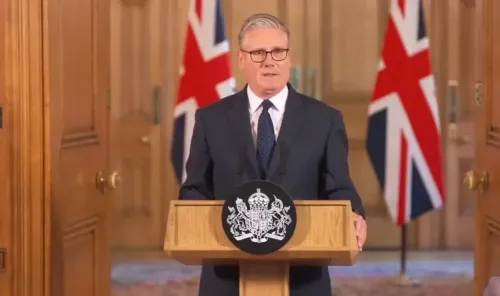
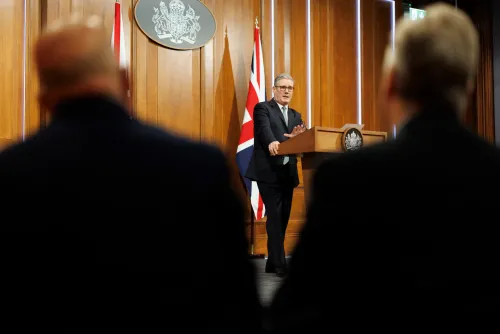
British Prime Minister Keir Starmer on 28 April dismissed an imminent parliamentary vote on whether he should face a formal investigation as a "political stunt" orchestrated by his opponents, as the House of Commons prepared to debate a motion referring him to the Committee of Privileges. The controversy centres on allegations that Starmer misled parliament over the security vetting of former British Ambassador to the United States Peter Mandelson.
What the Vote Is About
House of Commons Speaker Lindsay Hoyle announced earlier on 28 April that parliament would hold a debate and vote on whether the matter should be referred to the Committee of Privileges for further investigation. The motion was tabled by Conservative Party leader Kemi Badenoch, who accused Starmer of repeatedly misleading the House over Mandelson's appointment.
Starmer was unequivocal in his response. "What my political opponents are doing tomorrow is a political stunt," he said. "Having a political stunt adds absolutely nothing to the transparency we've got. It's not good use of parliament's time."
The Mandelson Vetting Scandal
It was revealed in mid-April that before Mandelson took up his ambassadorial role, he had been denied a security clearance in January 2025 following a developed vetting process — a confidential background check conducted by security officials. That decision was subsequently overruled by Britain's Foreign Office.
Starmer acknowledged he became aware of the vetting denial only on 14 April, describing the situation as "completely unacceptable." However, Badenoch argued that by failing to inform parliament in a timely manner, Starmer had breached the Ministerial Code.
Badenoch's Accusations
Badenoch did not mince words in presenting her motion. "The prime minister misled the House of Commons repeatedly. He appointed a national security risk and friend of a convicted pedophile to be our ambassador in Washington, a sensitive diplomatic post," she said. "He pretended that full due process was followed for this appointment. It was not."
This comes amid a broader controversy surrounding Mandelson's personal associations and professional conduct.
Mandelson's Fall from Grace
Mandelson was sacked as Britain's chief diplomat in Washington in September 2025 following revelations about his friendship with convicted sex trafficker Jeffrey Epstein. Earlier in 2025, he was briefly arrested as part of a criminal investigation into his alleged misconduct in public office, including the possible disclosure of market-sensitive information, according to reports.
Notably, the vetting denial — which preceded his appointment — was not disclosed publicly until mid-April, raising questions about the timeline of the government's internal communications and the degree to which parliament was kept informed.
What Happens Next
The debate and vote in the House of Commons will determine whether the matter is formally escalated to the Committee of Privileges, which has the power to investigate and recommend sanctions against members, including the prime minister. Should the committee take up the case, it would mark a significant constitutional moment for the Starmer government, which has been in office since 2024. The outcome of the vote is expected to reflect the current parliamentary arithmetic, with the opposition united behind the motion.
Point of View
But it sidesteps the substantive constitutional issue: did the prime minister have an obligation to inform parliament sooner? The Ministerial Code exists precisely for moments like this, and the privileges committee process — however politically motivated — is the legitimate mechanism to answer that question.
NationPress
19 Sept 2026
Frequently Asked Questions
Why is Keir Starmer facing a parliamentary vote on an investigation?
Keir Starmer is facing a House of Commons vote on whether he should be referred to the Committee of Privileges over allegations that he misled parliament about the security vetting of Peter Mandelson, who was denied clearance in January 2025 before the Foreign Office overruled the decision. Conservative leader Kemi Badenoch tabled the motion, accusing Starmer of breaching the Ministerial Code.
What was the Peter Mandelson vetting scandal?
Peter Mandelson was denied a security clearance in January 2025 through a developed vetting process, but that decision was overruled by Britain's Foreign Office, allowing him to take up his role as UK Ambassador to the United States. The denial was not disclosed publicly until mid-April 2025, prompting accusations that parliament was misled.
Why was Peter Mandelson sacked as UK Ambassador to the US?
Peter Mandelson was sacked as Britain's chief diplomat in Washington in September 2025 following revelations about his friendship with convicted sex trafficker Jeffrey Epstein. He was also briefly arrested in 2025 as part of a criminal investigation into alleged misconduct in public office, including the possible disclosure of market-sensitive information.
What is the Committee of Privileges and what can it do?
The Committee of Privileges is a House of Commons body that investigates whether members of parliament, including ministers, have breached parliamentary rules or misled the House. If it finds against Starmer, it could recommend sanctions, making the referral a significant constitutional step.
What has Starmer said in his defence?
Starmer has said he only became aware of Mandelson's denied vetting on 14 April, calling the situation 'completely unacceptable.' He has dismissed the parliamentary vote as a 'political stunt' that 'adds absolutely nothing to the transparency we've got' and is 'not good use of parliament's time.'