Taiwan Coast Guard repels Chinese research vessel Xiang Yang Hong 22 from restricted waters
Synopsis
Taiwan's Coast Guard deployed two patrol vessels to physically flank and disrupt the Chinese research ship Xiang Yang Hong 22 after it entered restricted waters near Su'ao — using wave-generating manoeuvres to force it out. The incident, coinciding with President Lai Ching-te's direct call for China to halt military expansion, signals a sharper Taiwanese operational posture at sea.
Key Takeaways
Chinese oceanographic vessel Xiang Yang Hong 22 entered Taiwan's restricted waters off Su'ao, Yilan County at 11:35 pm on Thursday, 19 June .
Taiwan deployed the 600-tonne Lanyu patrol vessel and patrol boat PP-10077 to shadow the ship and issue radio warnings.
Taiwanese crews flanked the Chinese vessel and conducted wave-generating manoeuvres to disrupt its operations.
The Xiang Yang Hong 22 exited Taiwan's restricted waters at 4:20 am on Friday .
The CGA accused China of using research vessels as a 'pretext for hegemonic expansion' in Taiwan's EEZ .
President Lai Ching-te simultaneously urged China to stop military expansion in the Taiwan Strait and South China Sea .
Taiwan's Coast Guard Administration (CGA) on Friday, 20 June 2025 confirmed it had warned off a Chinese oceanographic research vessel, the Xiang Yang Hong 22, after it entered Taiwan's restricted waters off the coast of Su'ao in Yilan County late Thursday night. The incident marks the latest flashpoint in an escalating pattern of Chinese maritime activity around the island.
How the Interception Unfolded
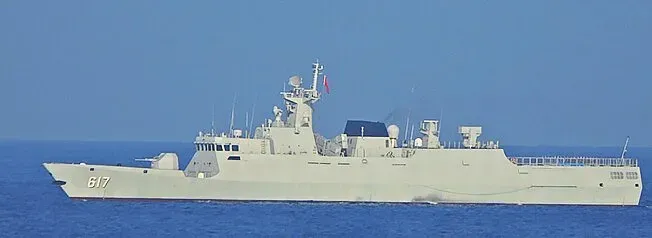
The Xiang Yang Hong 22 entered Taiwan's restricted waters at 11:35 pm local time on Thursday. The CGA deployed two vessels in response — the 600-tonne-class Lanyu patrol vessel and the 100-tonne-class patrol boat PP-10077 — to shadow the Chinese ship and broadcast radio warnings ordering it to withdraw immediately.
The crew aboard the Lanyu radioed the Chinese vessel, asserting that China has no sovereignty over waters off Taiwan's east coast and demanding it leave at once. The two Taiwanese patrol vessels then flanked the Xiang Yang Hong 22 and executed manoeuvres designed to generate waves and disrupt the ship's operations, according to the CGA statement.
The Chinese vessel eventually departed Taiwan's restricted waters at 4:20 am local time on Friday. Earlier in the night, the Lanyu had also detected the Xiang Yang Hong 22 approximately 41 nautical miles east of Hualien and issued similar warnings to exit Taiwan's Exclusive Economic Zone (EEZ).
Taiwan's Official Position
The CGA accused China of using government and research vessels to navigate Taiwan's EEZ 'as a pretext to engage in hegemonic expansion.' In a pointed statement, the agency asserted that Taiwan holds 'sovereign rights and jurisdiction in its eastern exclusive economic zone' and that China's attempts to harass Taiwan through maritime navigation or scientific research 'cannot change this indisputable fact.'
President Lai Ching-te Urges China to Stand Down
The maritime confrontation coincided with remarks by Taiwanese President Lai Ching-te, who on Thursday urged China to halt its military expansion in the South China Sea, the East China Sea, the Taiwan Strait, and to refrain from any use of force against the island.
Speaking at a reception for foreign correspondents in Taipei, Lai expressed Taiwan's willingness to engage in 'exchanges and cooperation based on equality and dignity, in pursuit of peaceful and mutually beneficial development.' He noted that 2026 marks the 30th anniversary of Taiwan's first direct presidential election — an event that took place, he recalled, despite missile threats from China, and which sent a message to the international community that 'sovereignty rests with the people.'
Lai also stated unequivocally that China and Taiwan are not subordinate to each other and that Taiwan is not part of China. He expressed gratitude to G7 leaders, at their summit in Evian, France, for reiterating their opposition to any unilateral attempt to change the status quo across the Taiwan Strait by force or coercion.
Broader Context: A Pattern of Pressure
The incident is not isolated. China has steadily increased the frequency and scale of its military and maritime exercises around Taiwan in recent years. Beijing maintains that Taiwan is an inalienable part of its territory and has not ruled out the use of force to achieve reunification.
This comes amid a broader trend of Chinese vessels — both military and nominally civilian — operating in waters Taiwan considers within its sovereign jurisdiction. Critics argue that deploying research ships into disputed zones serves a dual purpose: gathering hydrographic intelligence while testing Taiwan's response thresholds.
Taiwan, backed by strong domestic public support for its democratic governance, continues to assert its sovereignty and has consistently responded to Chinese incursions. The CGA's deployment of wave-generating manoeuvres signals a more assertive operational posture from Taipei's maritime forces.
Point of View
Suggesting Taipei is deliberately raising the operational cost of such probes. What mainstream coverage underplays is the dual-use nature of Chinese 'research' vessels: hydrographic data collected in Taiwan's EEZ has direct military applications for submarine navigation and missile targeting. The timing alongside President Lai's G7-referencing speech is unlikely to be coincidental — Taipei is coordinating its diplomatic and maritime messaging. The real question is whether Beijing treats this assertiveness as a deterrent or as justification to escalate further.
NationPress
19 Sept 2026
Frequently Asked Questions
What happened with the Chinese research vessel near Taiwan on 19 June 2025?
The Chinese oceanographic vessel Xiang Yang Hong 22 entered Taiwan's restricted waters off Su'ao in Yilan County at 11:35 pm on Thursday, 19 June. Taiwan's Coast Guard deployed two patrol vessels, issued radio warnings, and used wave-generating manoeuvres to disrupt the ship's operations before it departed at 4:20 am on Friday.
What is the Xiang Yang Hong 22?
The Xiang Yang Hong 22 is a Chinese oceanographic research vessel operated under China's government maritime programme. Taiwan's Coast Guard Administration has accused China of using such research ships as a pretext for intelligence-gathering and asserting maritime presence in Taiwan's Exclusive Economic Zone.
What did Taiwan's Coast Guard say about China's actions?
The CGA accused China of using government and research vessels to navigate Taiwan's EEZ 'as a pretext to engage in hegemonic expansion.' It asserted that Taiwan holds sovereign rights and jurisdiction in its eastern EEZ and that Chinese harassment 'cannot change this indisputable fact.'
What did President Lai Ching-te say about China's military activities?
President Lai Ching-te, speaking at a reception for foreign correspondents in Taipei on Thursday, urged China to stop its military expansion in the South China Sea, East China Sea, and Taiwan Strait, and to refrain from any use of force against Taiwan. He also thanked G7 leaders for opposing any unilateral change to the Taiwan Strait status quo.
Why has China increased maritime activity around Taiwan?
China maintains that Taiwan is part of its territory and must be reunified with the mainland, by force if necessary. Beijing has progressively increased the frequency and scale of military and maritime exercises around Taiwan in recent years as part of sustained pressure on Taipei.