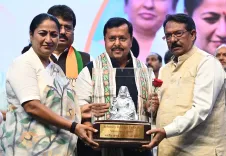
Local currency trade a game-changer for BRICS and Africa: Mauritius Minister Jyoti Jeetun

Synopsis
Mauritius's Finance Minister says a rupee-based clearing system with India — if extended to BRICS and Africa — could reshape how the Global South trades. With a DTAA update, an Indian Oil fuel deal, and a push to make Mauritius the India-Africa bridge, this interview maps out a quietly ambitious bilateral agenda.
Key Takeaways
Mauritius Minister Jyoti Jeetun says local currency trade across BRICS and Africa could be a 'game-changer' for participating economies.
The Bank of Mauritius and RBI signed an MoU last year to establish a rupee clearing system , currently under implementation.
Mauritius — a member of the African Union , SADC , and COMESA — is positioning itself as a trade gateway between India and Africa .
A revised DTAA protocol has been ratified, aimed at improving investor certainty in the bilateral relationship.
An energy MoU and a fuel sale-and-purchase deal between Indian Oil and Mauritius's State Trading Corporation were signed during Petroleum Minister Hardeep Singh Puri's visit.
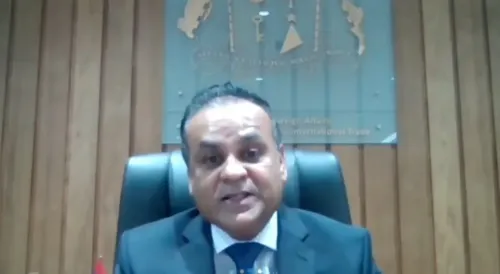
Mauritius Minister of Financial Services and Economic Planning Jyoti Jeetun has said that introducing trade in local currencies — not only between India and Mauritius but across BRICS nations and the African continent — could prove transformative for all these economies. Speaking in an exclusive interview in New Delhi on 24 August, Jeetun described the shift as increasingly urgent given the current geopolitical climate.
'At the current time, when there is considerable debate about geopolitics and the Global South, this is becoming a very important issue,' she said.
Rupee Clearing System in the Works
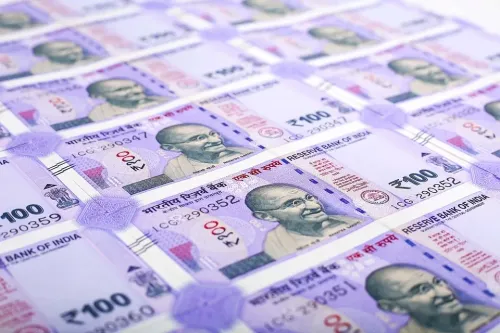
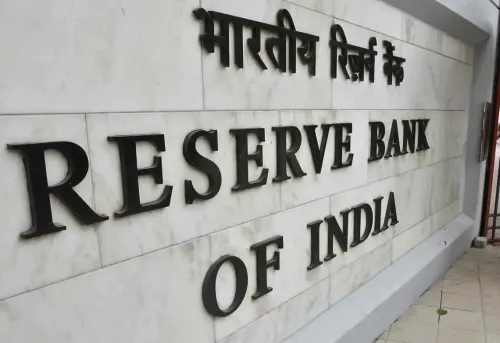
Jeetun confirmed that the Bank of Mauritius signed a Memorandum of Understanding with the Reserve Bank of India (RBI) last year to establish a clearing mechanism for the Indian rupee and the Mauritian rupee. The arrangement is aimed at enabling direct bilateral trade without reliance on hard currencies such as the US dollar.
'Instead of using hard currencies, this would allow us to trade directly in our own local currencies. I know that the Bank of Mauritius is working with the RBI to implement this. It would allow us to trade in our local currencies and reduce our dependence on hard currencies. This would significantly help our economies, particularly in the current global and geopolitical context,' she said.
This comes amid a broader global push — particularly among BRICS members — to reduce dollar dependency in cross-border settlements. India has already activated rupee trade frameworks with several countries, and the Mauritius arrangement fits into that expanding architecture.
India's Growth Story as Inspiration
Jeetun also expressed admiration for India's economic trajectory and Prime Minister Narendra Modi's vision of Viksit Bharat 2047, describing it as a model for Mauritius.
'When it was launched, I believe India was the 10th or 11th-largest economy in the world. It is now the fourth-largest and is soon expected to become the third-largest global economy. The growth story speaks for itself,' she noted.
She acknowledged that trade under the Comprehensive Economic Cooperation and Partnership Agreement (CECPA) has grown, though she noted that Mauritius — with a population of around 1.2 million — remains a small domestic market. The minister argued that the real opportunity lies in leveraging Mauritius as a bridge to the wider African market.
Mauritius as a Gateway to Africa
'I think the bigger opportunity lies in the broader India-Mauritius-Africa ecosystem, which can provide much wider opportunities for trade and commercial relations. Mauritius is part of the African Union and is a member of both SADC and COMESA. Africa is experiencing significant economic growth and attracting investment, while its large population represents a major market, much like India,' Jeetun said.
She added that Mauritius is actively working to position itself as a platform for deeper India-Africa trade integration — a role that would amplify its economic weight well beyond its island size.
DTAA Protocol and Energy Partnership
On the recently ratified Double Taxation Avoidance Agreement (DTAA) protocol between the two countries, Jeetun said the development brings much-needed clarity. 'We now feel strongly that we can move forward and provide certainty, predictability and confidence to investors regarding the Mauritius-India treaty and economic relationship,' she said.
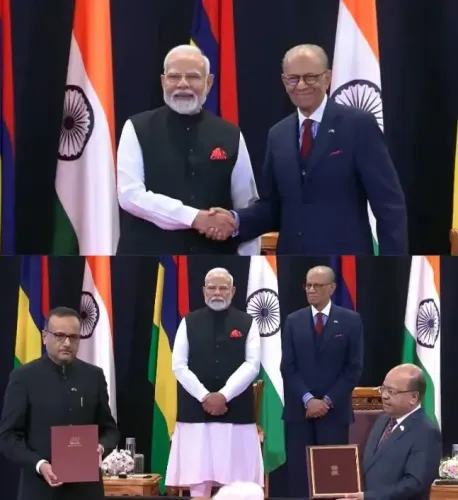
On the energy front, Jeetun confirmed that an MoU was signed between the two governments during Petroleum Minister Hardeep Singh Puri's visit to Mauritius. A sale and purchase agreement has also been executed between Indian Oil and the State Trading Corporation of Mauritius, which handles fuel imports for the island nation.
'We view this not simply as a trade relationship but as an economic partnership that provides enormous energy-security guarantees to Mauritius,' she said. The minister flagged the disruption caused by geopolitical tensions — including the conflict involving Iran — as a key reason why the government-to-government fuel arrangement with India holds strategic value. 'Supply chains have been disrupted, and costs have increased. This is a government-to-government arrangement being executed by Indian Oil, and we greatly value it as an important component of the Mauritius-India relationship,' Jeetun added.
As India deepens its economic outreach across the Global South, the Mauritius relationship is increasingly seen as a model for combining financial architecture, trade facilitation, and energy security into a single bilateral framework.
Point of View
And whether it can scale to BRICS-wide settlement before momentum stalls. Mauritius's pitch as an India-Africa gateway is strategically coherent, but it competes with Dubai, Singapore, and increasingly Nairobi for that role. The energy deal with Indian Oil is the most immediately tangible deliverable here, and its government-to-government structure insulates it from the supply-chain shocks Jeetun describes. What this interview signals, read together, is that Mauritius is quietly repositioning from a tax-treaty jurisdiction to a multi-vector economic partner — a shift India has reason to encourage, but one that needs follow-through beyond MoUs.
NationPress
24 Aug 2026
Frequently Asked Questions
What is the India-Mauritius rupee clearing system?
It is a bilateral payment mechanism under an MoU signed between the Bank of Mauritius and the Reserve Bank of India , designed to allow trade to be settled directly in Indian and Mauritian rupees rather than in hard currencies like the US dollar. The system is currently being implemented by the two central banks.
Why does Mauritius want to expand local currency trade to BRICS and Africa?
Mauritius Minister Jyoti Jeetun argues that reducing dependence on hard currencies would benefit smaller economies in the Global South, particularly amid geopolitical uncertainty. Extending the model to BRICS nations and the African continent could lower transaction costs and insulate trade from dollar volatility.
How is Mauritius positioning itself as an India-Africa trade gateway?
Mauritius is a member of the African Union , SADC , and COMESA , giving it preferential access to African markets. The government is actively working to connect Indian businesses with African counterparts using Mauritius as a financial and logistical hub, building on the existing CECPA framework with India.
What did the India-Mauritius DTAA protocol update change?
The ratified Double Taxation Avoidance Agreement (DTAA) protocol is intended to provide greater certainty, predictability, and investor confidence in the bilateral economic relationship. The minister said the update allows both sides to move forward with a clearer legal framework for cross-border investment.
What is the India-Mauritius energy deal about?
An MoU on energy cooperation was signed during Petroleum Minister Hardeep Singh Puri's visit to Mauritius, alongside a sale and purchase agreement between Indian Oil and Mauritius's State Trading Corporation . The government-to-government arrangement is designed to secure Mauritius's fuel supply amid global disruptions linked to geopolitical tensions, including the conflict involving Iran .