How is the US Increasing Scrutiny on Non-Immigrant Visas?
Click to start listening
Synopsis
Recent changes in US visa policies are causing significant delays and increased scrutiny, particularly affecting Indian nationals. Immigration experts advise caution for travelers, highlighting the potential for travel disruptions and employment issues. This article explores the implications of these new regulations on foreign professionals.
Key Takeaways
- Increased visa scrutiny could disrupt travel and employment for foreign professionals.
- Visa holders are advised to minimize international travel unless necessary.
- Social media accounts may be subject to government review.
- Employers will face a new $100,000 application fee for H-1B visa sponsorships.
- Indians remain the largest group among US visa holders.
Washington, Dec 21 (NationPress) The United States has implemented stricter measures on non-immigrant visa holders, leading to delays in visa interviews, limitations on where applicants can obtain visa stamps, and increased social media scrutiny. An immigration expert warns that these changes could significantly impact the travel and employment prospects of thousands of foreign professionals, especially many from India.
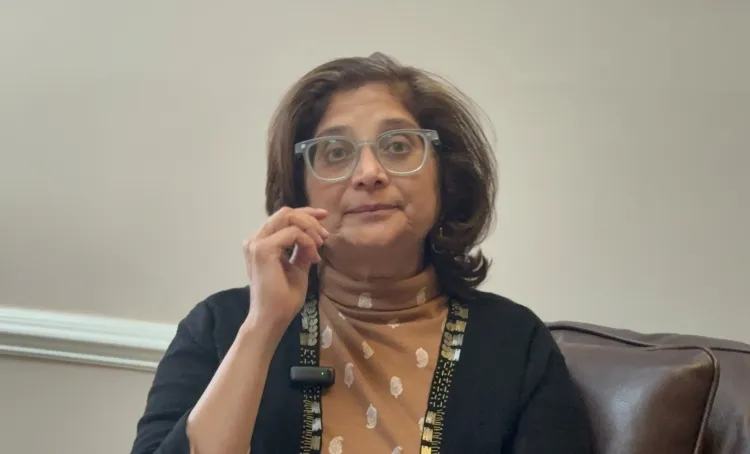
According to noted immigration attorney Aparna Dave, these modifications have already started to influence applicants across various visa categories, including H-1B, F-1, and J-1, with US consulates postponing interviews to conduct more thorough background checks.
“If you can avoid traveling, especially if it's not an emergency, it's advisable to stay in the United States,” Dave stated in an interview with IANS, indicating that the current international travel landscape presents increased risks even for individuals holding valid visas.
She pointed out that the new regulations have effectively put an end to the previous norm of obtaining US visa stamps in third-party countries.
“The requirement now is to either obtain your visa in your country of residence or your country of citizenship,” she explained, noting that applicants who previously relied on appointments in Canada or Mexico may encounter significant challenges.
Furthermore, she emphasized the heightened scrutiny of visa applicants' online activities. “The government has asserted its right to review individuals' social media,” Dave remarked, adding that applicants might need to make their accounts public. “All social media will be under surveillance.”
This has already led to disruptions in visa processing timelines. “Many interviews scheduled for December and January have been postponed,” she noted, indicating that consulates now require additional time for vetting applicants.
Dave also warned that the risks do not cease at visa interviews. “At the port of entry, CBP officers have the authority to check your phone and social media,” she stated. While travelers may eventually be admitted, she cautioned that delays and secondary screenings could have serious repercussions on employment or other statuses. “Such delays can impact your job or current status. It's simply not worth the risk.”
Additionally, she addressed the common misunderstanding among visa holders regarding the distinction between visa validity and lawful stay. “A visa grants entry to the United States,” Dave explained, while the I-94 record dictates how long one can remain in the country. “Even if your visa has expired, you may stay based on that I-94, provided your status has been properly extended.”
Only those leaving the country and seeking re-entry require a valid visa stamp, she added. “You don't have to leave the country for a visa stamp unless absolutely necessary.”
On the enforcement of social media checks, she mentioned there is still limited clarity regarding how these evaluations will be conducted and what content might be considered problematic. “We still lack clarity on this, as this has only recently begun,” she added, noting that definitions of national security concerns remain vague.
For Indian nationals and families, she recommended exercising caution and restraint. “Keep a low profile,” Dave advised. “Avoid posting anything on social media that could be political or religious… it might not be worth it.”
In response to inquiries regarding the new $100,000 application fee for H-1B visas, she clarified: “The H-1B visa process now involves an executive order mandating a $100,000 fee for every new visa application.” She specified that this fee applies only to first-time workers entering the United States and obtaining their visa stamps abroad.
“This fee is only relevant for those coming to the US for the first time,” she stated. “If you are already in the United States, then the $100,000 fee does not pertain to you.”
However, employers sponsoring candidates from outside the US will incur this expense. “If you are filing for someone abroad, the employer must cover the $100,000 fee for that application,” Dave explained.
While discussions about higher prevailing wages for H-1B workers are ongoing, no formal changes have been enacted yet, with more information anticipated ahead of the March H-1B lottery.
Indians represent the largest demographic of H-1B and F-1 visa holders in the United States, particularly in sectors like technology, healthcare, and higher education. In recent years, visa backlogs, security checks, and travel disruptions have increasingly affected Indian professionals and students.
The H-1B program, which Congress caps annually, remains a crucial pathway for skilled foreign workers, particularly from India. Any tightening of travel processes, vetting, or fee structures is closely monitored in both Washington and New Delhi due to its potential effects on employment, education, and family mobility.
Point of View
It is imperative to present the facts surrounding the recent changes in US visa policies with clarity and objectivity. The heightened scrutiny and new regulations are significant developments that could impact many lives. We strive to keep our audience informed and equipped to navigate these evolving circumstances.
NationPress
21/12/2025
Frequently Asked Questions
What are the new rules for US non-immigrant visas?
The US has tightened scrutiny on non-immigrant visas, resulting in delays, restricted stamping locations, and expanded social media checks.
How will these changes affect Indian visa holders?
Many Indian nationals may face travel disruptions and employment challenges due to increased visa scrutiny and processing delays.
What should visa holders do during this transition?
Experts recommend that if there's no urgent need, it may be best for visa holders to remain in the US to avoid complications.
What is the $100,000 application fee for H-1B visas?
This fee applies to first-time applicants outside the US and must be paid by employers sponsoring these candidates.
What is the significance of the I-94 record?
The I-94 record determines how long an individual can stay in the US, regardless of visa expiration, provided status is extended properly.