Why Are Journalists in Bangladesh Protesting Against Attacks on Media Outlets?
Synopsis
In a striking display of unity, journalists across Bangladesh are protesting against alarming attacks on media outlets. Their urgent demands for justice echo a deeper concern for press freedom and public safety that resonates throughout the nation.
Key Takeaways
Protests by journalists highlight serious concerns for press freedom.
Demands for accountability and justice are being voiced.
Political parties are responding to the violence with condemnation.
Implications for democracy and international relations are significant.
Continued impunity could threaten public safety.
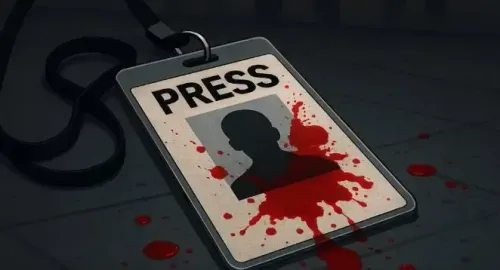
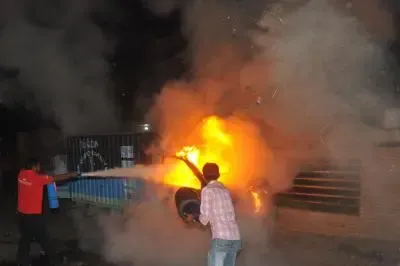
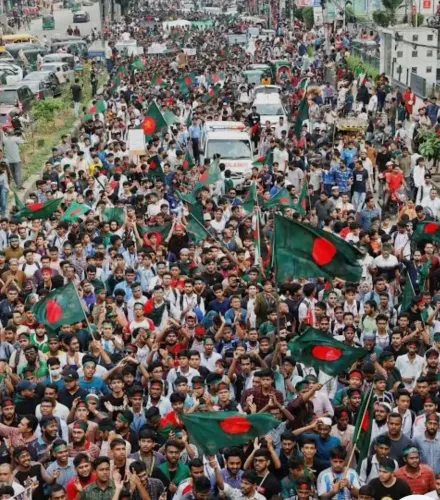
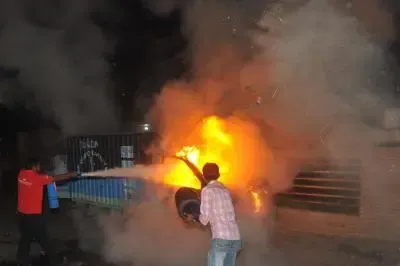
Dhaka, Dec 21 (NationPress) Journalists in Bangladesh organized protests in response to arson incidents and destruction at the media offices of Prothom Alo and The Daily Star. They are demanding the swift arrest and punishment of those responsible for these acts. Protesters warned that ongoing impunity could threaten both press freedom and public safety, according to reports from local media on Sunday.
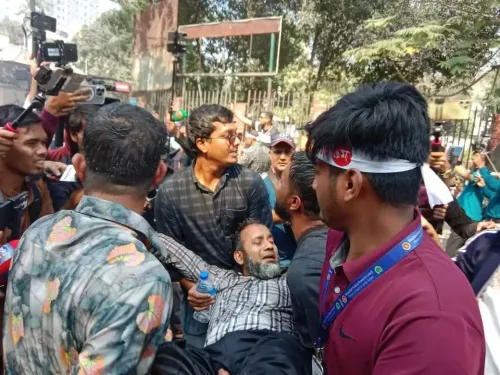
In Gazipur, hundreds of journalists formed a human chain to express their outrage over the attacks and the assault on journalist Nurul Kabir. Speakers at the protest called for the apprehension of the assailants and issued a 24-hour ultimatum, threatening to escalate their actions if no measures were taken by the deadline, as reported by Bangladesh's prominent daily, The Daily Star.
Similarly, journalists in Satkhira also created a human chain, seeking justice for those responsible for the assaults on media outlets and the murder of Imdadul Haqueb, President of the Dumuria Sholua Press Club, in Khulna.
The Electronic Media Journalists Association (EMJA) in Sylhet denounced the violence against media professionals and institutions in Bangladesh. In a statement, EMJA President Ashraful Kabir and General Secretary Sakib Ahmed Mithu condemned the attacks on media outlets, the killing of a journalist in Khulna, and the harassment faced by journalists from 71 Television in Sylhet.
This unrest was triggered by the death of Sharif Osman Hadi, spokesperson for the radical group Inqilab Mancha. Following his demise, various media offices, cultural institutions, and diplomatic missions were targeted across Bangladesh.
The assaults focused on the offices of the country's leading newspapers, Prothom Alo and The Daily Star; the national cultural institution Chhayanaut; the Indian Assistant High Commission offices in Chattogram and Khulna; the Indian Cultural Centre; and the remaining structures of the Bangabandhu memorial museum, a significant symbol of the nation's history.
On December 20, the Awami League party in Bangladesh condemned the series of nationwide attacks targeting media establishments, cultural institutions, and foreign diplomatic missions, labeling them as a “planned terrorist attack”. The party asserted that such incidents demonstrate a decline in the essential characteristics of a modern, civilized state in the country.
“These barbaric attacks and killings represent a direct and severe assault on Bangladesh’s secular ethos, the ideals of the Liberation War, pluralism, cultural heritage, and media freedom. As an independent, sovereign, and pluralistic state, Bangladesh has become a haven for terrorists. Targeting cultural institutions and the diplomatic missions of another country is a gross violation of decency and state security, and a blatant breach of diplomatic norms and international law,” stated the Awami League.
Criticizing the interim government led by Muhammad Yunus, the party remarked, “The entire state machinery has succumbed to extremist communal frenzy, with the committee referring to itself as a government acting as an active supporter.”
Point of View
I believe the recent protests by journalists in Bangladesh highlight a critical juncture for press freedom in the country. The violence against media institutions not only undermines the safety of journalists but also threatens the very essence of democracy. It is imperative that the state responds decisively to restore trust and protect the rights of the press. We stand firmly with our journalists in demanding accountability and justice.
NationPress
2 Oct 2026
Frequently Asked Questions
What triggered the protests by journalists in Bangladesh?
The protests were triggered by arson attacks and vandalism at the offices of media outlets Prothom Alo and The Daily Star, along with the assault on journalist Nurul Kabir.
What demands are the journalists making?
Journalists are demanding the immediate arrest and punishment of those involved in the attacks and are warning of further actions if their demands are not met.
What has been the response from political parties regarding these attacks?
The Awami League party condemned the attacks, labeling them as a planned terrorist assault and expressing concern over the deterioration of state characteristics.
How do these events affect press freedom in Bangladesh?
The ongoing violence and lack of accountability threaten press freedom and the safety of journalists, highlighting a serious concern for democracy in the nation.
What international implications do these attacks have?
The attacks on diplomatic missions and cultural institutions reflect a breach of diplomatic norms and could strain international relations.