White House Correspondents' Association calls reporter removal retaliation
Synopsis
After President Trump publicly berated The Independent's Andrew Feinberg during an Oval Office fraud-incentive event, the reporter was quietly removed from a White House travel-pool assignment — prompting the Correspondents' Association to call it retaliation and warn that press access cannot be a tool of presidential punishment.
Key Takeaways
Andrew Feinberg of The Independent was reportedly removed from a press-pool assignment for President Trump's trip to Sioux City, Iowa after clashing with Trump at an Oval Office event on 22 October 2026 .
The White House Correspondents' Association , led by President Jacqui Heinrich , called the removal 'retaliation' and said access cannot be conditioned on a reporter's line of questioning.
During Tuesday's event, Trump asked Feinberg, 'What's wrong with you?
Are you a sick person?' after repeatedly cutting off his questions.
The reported action affects a specific travel-pool assignment; Feinberg's White House credential has not been confirmed as revoked.
The same event saw Trump propose giving informants one per cent of recovered government funds, going beyond the Justice Department's $10,000–$30,000 programme for fraud tips.
The White House Correspondents' Association has accused the Trump administration of retaliation after Andrew Feinberg, The Independent's White House correspondent, was reportedly removed from a presidential press-pool assignment — a day after President Donald Trump publicly rebuked him during an Oval Office event on 22 October 2026. The move has reignited a long-running battle between the current administration and the independent press corps.
How the Confrontation Unfolded
Feinberg had been scheduled to serve as the print-pool reporter for Trump's Thursday trip to Sioux City, Iowa. According to reports citing Semafor's Maxwell Tani, Feinberg confirmed that the White House removed him from the assignment without explanation.
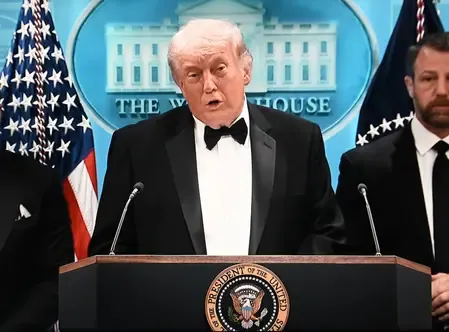
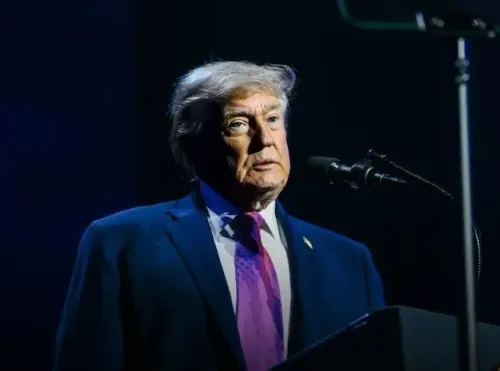
The confrontation that preceded his removal occurred on Tuesday during an Oval Office event in which the administration announced incentives for people who expose government fraud. Trump snapped at Feinberg several times as he attempted to ask questions. Later, when Feinberg began asking about planned changes involving a Washington golf course, Trump cut him off and repeatedly ordered him to be quiet.
'What's wrong with you? Are you a sick person?' Trump asked. 'Not that I know of, sir,' Feinberg replied.
Association's Response
Jacqui Heinrich, President of the White House Correspondents' Association, issued a strongly worded statement circulated to reporters. 'The White House Correspondents' Association strongly objects to the decision to restrict a journalist's coverage simply because the President didn't care for their questioning. That is retaliation,' she said.
Heinrich added: 'The American public's right to an independent press depends on reporters being able to do their jobs without fear that challenging the president will cut off their access.'
Notably, the Association's statement did not name the journalist or specify the scope or duration of the restriction. The reported action concerns a specific travel-pool assignment; available reporting does not establish that Feinberg's White House credential has been revoked.
The Fraud Incentive Programme at the Centre of the Row
The event itself carried an unusual element: Trump had appealed directly to journalists to help identify misuse of public money. He proposed giving informants one per cent of government funds recovered through fraud investigations, saying journalists could qualify subject to applicable laws and approval from their news organisations.
His proposal went further than the Justice Department's separately announced programme, which offers payments of $10,000 to $30,000 for qualifying information leading to criminal fraud charges. Vice President JD Vance said the administration intended to reward assistance in recovering money, rather than limiting the initiative solely to criminal prosecutions. A complete written framework explaining how the proposed recovery-based payments would work alongside existing whistleblower arrangements had not been provided by the administration.
Broader Context: Press Freedom and Access
This is not the first time the Trump administration has faced accusations of restricting press access to journalists deemed adversarial. Critics argue that using pool-assignment access as a lever against questioning reporters sets a damaging precedent for the independence of the White House press corps. This comes amid an already fraught relationship between the administration and several mainstream outlets. Press-freedom advocates have warned that selective access — even at the pool-assignment level — can have a chilling effect on coverage.
What Happens Next
The White House had not issued a formal response to the Association's statement at the time of reporting. Whether Feinberg will be reinstated to future travel-pool assignments, or whether this marks the start of a broader access restriction, remains to be seen. The Association's public pushback signals that the press corps intends to resist any normalisation of punitive access decisions.
Point of View
But the Correspondents' Association is right to treat it as a precedent question. If access to presidential travel can be withdrawn after adversarial questioning — without explanation — every pool reporter faces a structural disincentive to press hard. What makes this episode sharper is the irony: it happened at an event where Trump simultaneously asked journalists to serve as fraud informants, effectively asking the press to be useful to the administration while punishing one for being independent of it. The administration's failure to provide even a pro-forma explanation for Feinberg's removal suggests it is comfortable with the chilling-effect message this sends.
NationPress
22 Oct 2026
Frequently Asked Questions
Why was Andrew Feinberg removed from the White House press pool?
Andrew Feinberg, The Independent's White House correspondent, was reportedly removed from a press-pool assignment for President Trump's trip to Sioux City, Iowa, after publicly clashing with Trump during an Oval Office event on 22 October 2026. The White House did not provide an explanation for the removal.
What did the White House Correspondents' Association say?
Association President Jacqui Heinrich said in a statement that removing a journalist from coverage 'simply because the President didn't care for their questioning' constitutes retaliation. She stressed that the American public's right to an independent press requires reporters to work without fear of access cuts.
Was Feinberg's White House press credential revoked?
No. Available reporting indicates the action was limited to a specific travel-pool assignment — Feinberg's Thursday trip to Sioux City, Iowa. There is no confirmed report that his White House credential has been revoked.
What happened during Trump's Oval Office event on 22 October 2026?
Trump announced incentives for people who expose government fraud, including a proposal to give informants one per cent of recovered funds. During the event, Trump repeatedly cut off Feinberg's questions and asked him, 'What's wrong with you? Are you a sick person?'
How does Trump's fraud-informant proposal differ from the Justice Department programme?
Trump proposed giving informants one per cent of government funds recovered through fraud investigations, and said journalists could qualify. The Justice Department's separate programme offers flat payments of $10,000 to $30,000 for information leading to criminal fraud charges — a narrower and smaller-scale arrangement.