Trump Labels White House Dinner Attacker 'Sick', Hails Secret Service Heroics
Synopsis
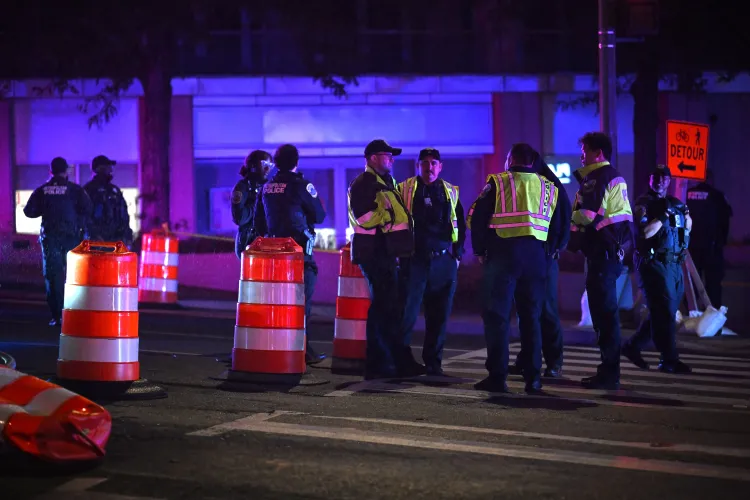
President Trump called the suspect in the foiled White House Correspondents' dinner attack 'a sick guy' whose own family had warned law enforcement. A Secret Service agent took a bullet stopping the attacker, who Trump said 'ran like an NFL running back.' Prior alerts from London reportedly never reached US authorities in time.
Key Takeaways
President Donald Trump called the White House Correspondents' dinner attacker 'a sick guy' in a Fox News interview on April 27, 2025 .
The suspect's own family had reportedly raised concerns with law enforcement prior to the attack, according to Trump.
A Secret Service agent was shot in the chest during the incident but immediately moved to neutralise the attacker.
White House Press Secretary Karoline Leavitt alleged the suspect sought to assassinate President Trump and kill top administration officials.
Trump revealed that prior warnings from London about the suspect did not reach US authorities in time to prevent the attack.
Trump announced plans to build a new, drone-proof secure ballroom on White House grounds for future high-profile events.
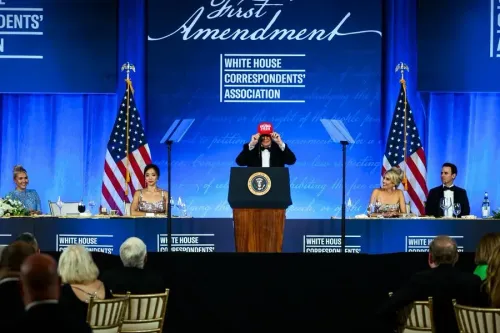
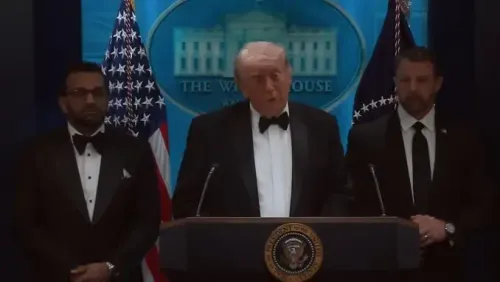
Washington, April 27, 2025 — US President Donald Trump publicly condemned the suspect behind the thwarted attack at the White House Correspondents' Association (WHCA) dinner, labelling him 'a sick guy' and crediting swift action by the Secret Service for preventing what could have been a catastrophic assault on senior American officials. Speaking in a Fox News interview, Trump revealed that prior warnings about the attacker may not have reached authorities in time to act preventively.
Trump's Reaction: 'He Hates Christians, He Was Very Troubled'
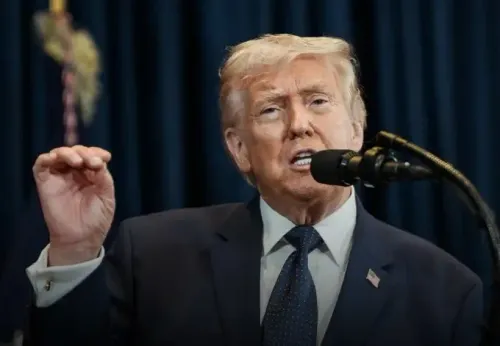
President Trump described the suspect in stark terms, pointing to the attacker's written manifesto as evidence of deeply disturbed beliefs. 'The guy is a sick guy, when you read his manifesto. He hates Christians, that's one thing for sure,' Trump said during the interview.
Trump further revealed that the attacker's own family had raised red flags with law enforcement. 'I think his sister or his brother actually was complaining about it. They were even complaining to law enforcement. He was a very troubled guy,' the President stated, underscoring a pattern seen in numerous past mass-casualty attempts in the United States — where family members reported concerns but warnings failed to trigger decisive pre-emptive action.
Trump also disclosed that he had only learned of prior alerts originating from London after the incident had already unfolded. 'I heard about the London situation, and I wish they would have told us about it a little bit, but... it is what it is,' he said, suggesting a possible intelligence-sharing gap between UK and US authorities ahead of the event.
Secret Service Response: 'Stopped Him Cold'
President Trump lavished praise on the Secret Service and other security agencies for their rapid, decisive intervention. 'They stopped them cold. And there was no games being played, that I can tell you,' he said.
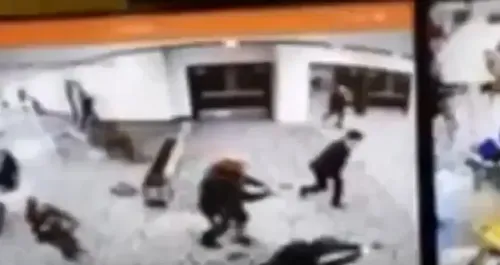
Trump painted a vivid picture of the attacker's approach, noting the suspect moved at exceptional speed toward the venue. 'He came in running like he was an NFL running back. Frankly, he was very fast, and they just stopped him cold. He never even came close to getting by the doors or getting through the doors,' Trump said.
The President also highlighted the event's multi-layered security architecture, emphasising that even a breach of the outer perimeter would have been met with additional personnel inside. 'There were so many people in there, too, also security. And you have to go through a lot of layers,' he noted. 'They did really a good job. I was very satisfied with it. So were most other people,' Trump added.
Press Secretary Leavitt: 'Political Violence Must End'
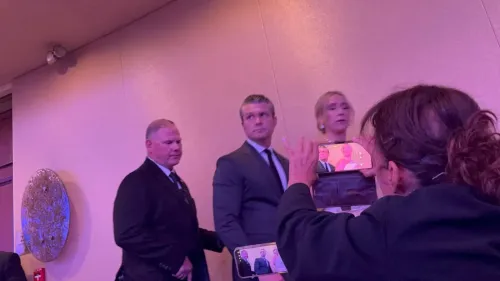
White House Press Secretary Karoline Leavitt provided an eyewitness account of the chaotic moments backstage. She confirmed she was with President Trump and First Lady Melania Trump when the couple were quickly escorted to safety by Secret Service agents.
Leavitt characterised the incident as a deliberate, targeted assassination attempt, alleging the suspect 'sought to assassinate the President and kill as many top Trump administration officials as possible.' She called the evening, which was meant to celebrate free speech and press freedom, a night that was 'supposed to be a fun night' before being disrupted by violence.
Leavitt specifically praised 'the brave agent who took a bullet to the chest and immediately moved to neutralise the shooter,' a moment that has drawn widespread attention and is likely to renew debate around the physical risks borne by Secret Service personnel during high-profile public events.
Plans for a New Secure White House Ballroom
Trump expressed hope that the WHCA dinner could be rescheduled in the near future, framing it as a matter of national resolve. 'I hope that we can have it within a short period of time... because we can't let these criminals, and these really bad people change the course of events in our country,' he said.
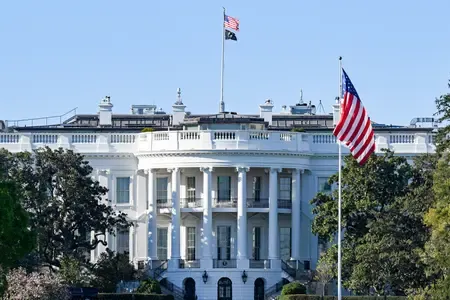
The President also unveiled plans for a new, fortified event venue on White House grounds, describing it as a long-term infrastructure investment. 'We're building a big, beautiful, very, very secure ballroom... You need drone-proofing, you need everything... The location's on the White House grounds, which is the most secure, probably, in the world... and this is mostly for future presidents,' Trump said.
This comes amid a broader trend of escalating security concerns around senior US officials at public gatherings — a pattern that critics argue demands a comprehensive review of threat assessment and inter-agency intelligence sharing protocols.
Broader Implications: Intelligence Failures and Security Overhaul
The White House Correspondents' Association dinner is among Washington DC's most prominent annual events, drawing together journalists, senior government officials, diplomats, and public figures — making it a high-value symbolic target. The fact that prior warnings existed but reportedly did not reach the right authorities in time raises serious questions about the effectiveness of current domestic threat-monitoring systems.
Notably, the mention of a London connection suggests the suspect may have had an international footprint or that foreign intelligence services had flagged the individual before US agencies were alerted — a scenario reminiscent of past cases where allied nations held critical threat data that was not acted upon swiftly enough.
Going forward, security analysts and Congressional oversight committees are expected to scrutinise the communication breakdown between foreign intelligence partners and domestic law enforcement, as well as the adequacy of pre-event vetting procedures for attendees of high-profile Washington gatherings.
Point of View
Yet the information failed to reach the right hands in time. This is not an isolated failure; it echoes patterns seen in past domestic attacks where warning signs were present but systemic silos prevented action. Trump's announcement of a drone-proof White House ballroom is politically savvy optics, but the harder accountability question — why London intelligence was not shared proactively — demands a Congressional answer, not just a construction contract.
NationPress
16 Sept 2026
Frequently Asked Questions
What happened at the White House Correspondents' dinner in April 2025?
A suspect attempted an attack at the White House Correspondents' Association dinner in Washington DC, seeking to assassinate President Trump and kill senior administration officials. The Secret Service stopped the attacker before he could breach the venue, with one agent sustaining a gunshot wound to the chest.
What did Trump say about the White House dinner attacker?
President Trump called the suspect 'a sick guy' and said the attacker's manifesto revealed hatred toward Christians. Trump also revealed that the suspect's own family had reported concerns to law enforcement before the incident.
Was President Trump in danger at the White House Correspondents' dinner attack?
President Trump and First Lady Melania Trump were backstage at the time and were quickly escorted to safety by Secret Service. Press Secretary Karoline Leavitt confirmed she was with them when they were moved to a secure location.
What is the London connection to the White House dinner attack?
President Trump mentioned a 'London situation,' suggesting foreign intelligence — possibly from UK authorities — had flagged the suspect prior to the attack. Trump indicated this information did not reach US authorities in time to prevent the incident.
Will the White House Correspondents' dinner be rescheduled after the attack?
President Trump expressed hope that the dinner would be rescheduled within a short period, saying America cannot allow criminals to alter the course of national events. He also announced plans to build a new, highly secure, drone-proof ballroom on White House grounds for future events.