Trump questions US, Brazil election integrity, declines to name Brazil winner
Synopsis
Trump cast doubt on elections in three jurisdictions in a single press exchange — Alaska, California, and Brazil — declining to name a winner in Brazil, alleging millions of fraudulent ballots in California without evidence, and suggesting Alaska's race would be dishonest if a naming dispute goes uncorrected. The remarks signal a widening of Trump's election-integrity narrative beyond US borders.
Key Takeaways
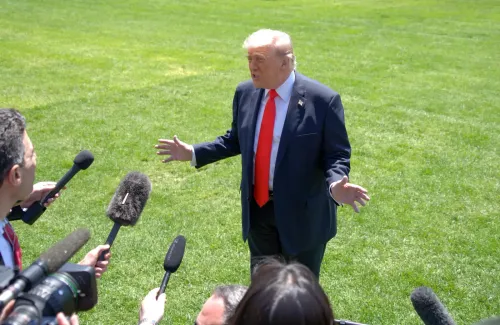
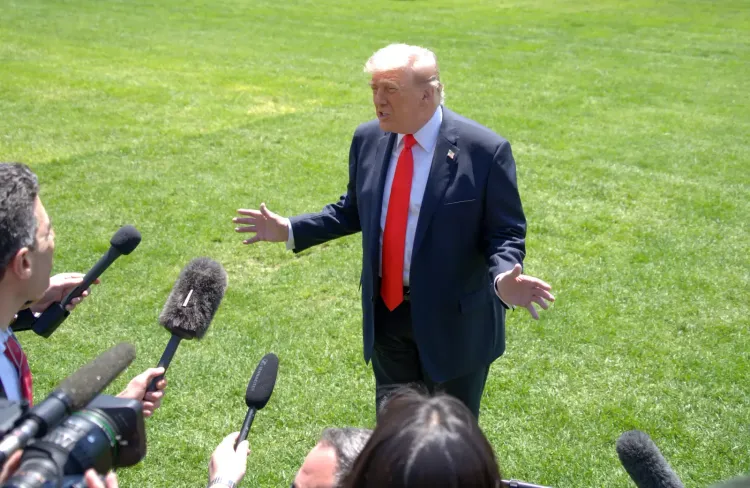
President Trump on 30 October questioned the integrity of elections in Alaska , California , and Brazil in remarks to reporters before boarding Air Force One .
He alleged a second Dan Sullivan was placed on the Alaska ballot to confuse voters, and said the race would be 'dishonest' if the dispute went uncorrected.
Trump claimed 'millions' of invalid ballots exist in California , offering no supporting documentation; a judge had already rejected a challenge involving 20,000 votes .
He declined to recognise Luiz Inácio Lula da Silva as Brazil's election winner, calling the vote 'a disgrace' without citing specific irregularities.
Trump defended Defence Secretary Pete Hegseth against Democratic impeachment discussions, praising his performance.
US President Donald Trump on 30 October cast doubt on the integrity of elections in Alaska, California, and Brazil, stopping short of recognising a legitimate winner in Brazil and asserting that an unresolved ballot dispute in Alaska would render that election dishonest. The remarks were made to reporters before Trump departed on Air Force One.
The Alaska Ballot Dispute
Trump alleged that a candidate sharing the name Dan Sullivan had been deliberately placed on the Alaska ballot to siphon votes from Republican Senator Dan Sullivan, who is seeking re-election. He claimed, without identifying the source, that studies showed voters would struggle to distinguish between the two candidates. When asked whether Republicans should refuse to seat Mary Peltola if she won, Trump did not give a direct answer, saying only, 'Well, you're going to have to see what happens.' He added, 'It's hard to believe that she could even be allowed to run,' but offered no legal basis for questioning her eligibility.
Trump also accused Senate Democratic leader Chuck Schumer and others of involvement in what he characterised as voter fraud, though he provided no evidence during the exchange to support the claim that they had organised a fraudulent scheme.
California: Claims of 'Millions' of Bad Ballots
Responding to a question about a judge's decision that rejected a challenge involving 20,000 votes in California, Trump said the ruling would be appealed and alleged — without providing supporting documentation — that the actual number of invalid ballots was far larger. 'We found 20,000, but there are hundreds of thousands of bad ballots, bad votes in California, millions. In my opinion millions,' he said. He further claimed he would have won California had ballots been counted honestly, again without citing evidence.
Brazil: 'A Disgrace' but No Named Winner
On Brazil, Trump said he would speak to Luiz Inácio Lula da Silva but declined to explicitly recognise him as the winner when pressed by reporters. 'I'll talk to him. I think the election was a disgrace in Brazil,' he said. Asked whom he considered the legitimate winner, Trump replied: 'I don't want to comment right now, but I thought the election was a very great embarrassment to the people of Brazil.' He did not identify specific electoral irregularities and cited a fall in Brazil's financial markets without naming an index, specifying a time period, or providing figures. He gave no date for a planned conversation with Lula.
Hegseth Impeachment Talk
In a separate exchange, Trump defended Defence Secretary Pete Hegseth amid Democratic discussion of impeachment proceedings. Trump praised Hegseth's performance and accused Democrats of repeatedly pursuing impeachment as a political tactic. No new details on the impeachment effort were provided.
What Happens Next
The Alaska ballot dispute remains unresolved, and legal challenges in California are reportedly set to proceed. Trump's refusal to recognise a winner in Brazil adds an element of diplomatic ambiguity to US-Brazil relations at a sensitive political moment. How these remarks shape Republican strategy — and US foreign policy posture toward Brasília — will be closely watched in the days ahead.
Point of View
Not an exceptional response to a close result. The Brazil remarks are particularly striking; declining to name a winner in a foreign election is an unusual diplomatic posture that could complicate bilateral relations without a clear upside. The California 'millions of bad ballots' claim, made without documentation before cameras, follows a now-familiar pattern where the assertion itself becomes the headline, regardless of evidentiary support. Mainstream coverage tends to fact-check the claims in isolation; the underreported story is the cumulative institutional cost of normalising unsubstantiated election challenges across multiple jurisdictions.
NationPress
30 Oct 2026
Frequently Asked Questions
What did Trump say about the Alaska election?
Trump alleged that a candidate sharing the name Dan Sullivan had been placed on the Alaska ballot to draw votes away from Republican Senator Dan Sullivan, and said the election would be 'dishonest' if the dispute was not corrected. He cited unidentified studies claiming voter confusion but did not provide evidence that any fraud had been organised.
Did Trump recognise Lula as Brazil's election winner?
No. Trump declined to explicitly name Luiz Inácio Lula da Silva as the legitimate winner when pressed by reporters, calling the Brazilian election 'a disgrace' and 'a very great embarrassment.' He said he would speak to Lula but did not identify specific electoral irregularities or give a date for the call.
What claims did Trump make about California's election?
Trump alleged there were 'millions' of invalid ballots in California, going beyond a court-rejected challenge that had focused on 20,000 votes. He said the ruling would be appealed and claimed he would have won California had ballots been counted honestly, but offered no supporting documentation during the exchange.
Who is Pete Hegseth and why was he mentioned?
Pete Hegseth is the US Defence Secretary, whom Trump defended against Democratic discussions of impeachment proceedings. Trump praised Hegseth's performance and accused Democrats of using impeachment as a recurring political tactic.
What evidence did Trump provide for his election integrity claims?
Trump provided no documentary evidence during the exchange for his claims about Alaska, California, or Brazil. He referenced unidentified studies on Alaska voter confusion, made no specific allegations of electoral irregularities in Brazil, and offered no supporting data for the California 'millions of bad ballots' assertion.