Trump warns communism is biggest US threat at North Dakota event
Synopsis
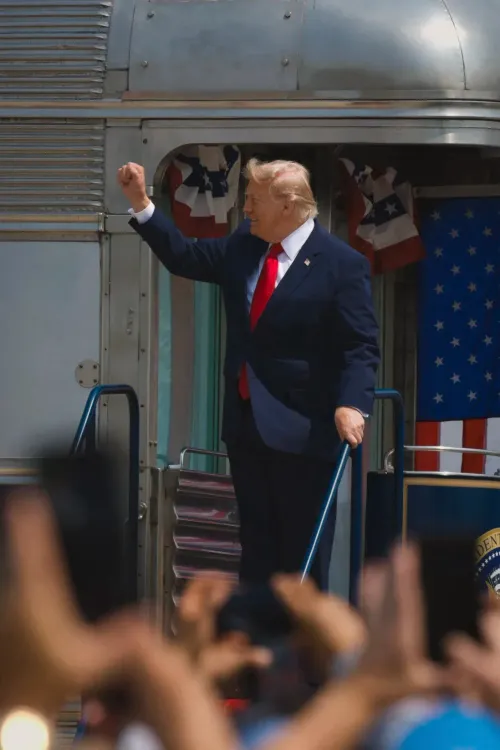
At the dedication of the Theodore Roosevelt Presidential Library in Medora, North Dakota, President Trump declared communism a greater long-term threat to America than World War II, Pearl Harbor, and 9/11 combined — invoking Roosevelt's own writings to make the case. The remarks, delivered days before the US marks its 250th anniversary, signal that anti-communism has become a central organising theme of Trump's second-term political identity.
Key Takeaways
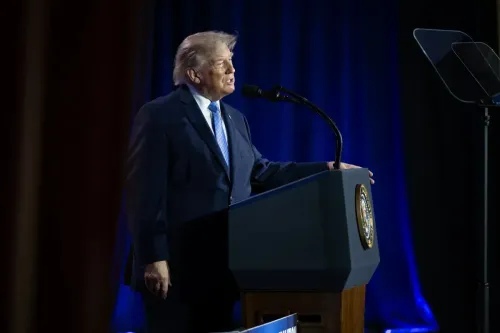
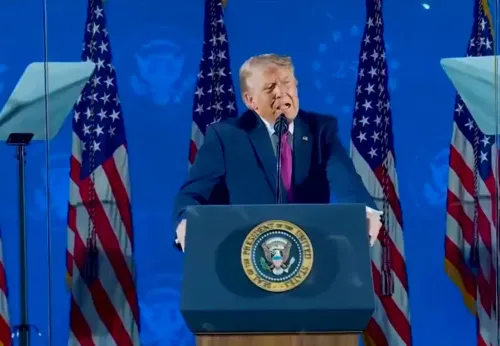
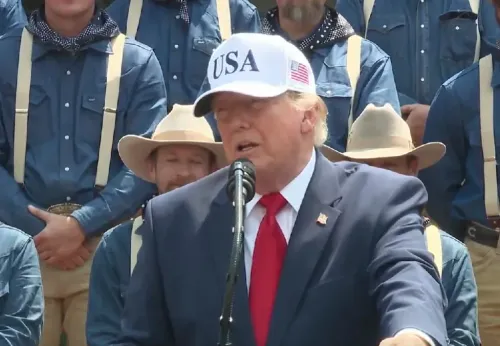
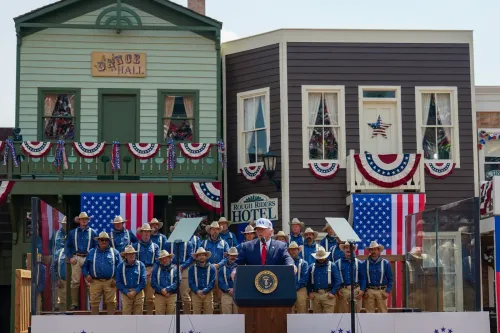
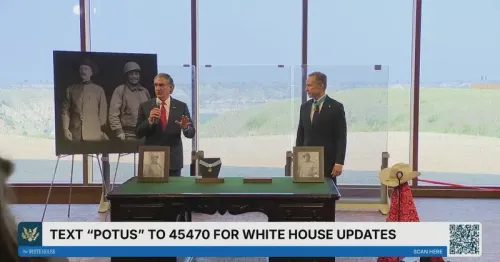
President Donald Trump spoke at the Theodore Roosevelt Presidential Library dedication in Medora, North Dakota on Wednesday, 2 July .
Trump called communism 'the greatest threat' to the US, claiming it is potentially more dangerous than World War I, World War II, Pearl Harbor, and the September 11 attacks .
He quoted Roosevelt's writing that communist socialism, 'if consistently followed, mean the ultimate annihilation of civilisation.' Trump linked Roosevelt's 'New Nationalism' to his own 'America First' agenda, arguing both prioritise the nation over special interests.
The library opened ahead of the US's 250th independence anniversary on 4 July , which the Trump administration has designated a major national observance.
President Donald Trump declared on Wednesday that communism poses the greatest long-term threat to the United States, invoking the writings of former President Theodore Roosevelt during a speech at the dedication of the Theodore Roosevelt Presidential Library in Medora, North Dakota. The address, timed to the library's opening ahead of America's 250th independence anniversary, ranged across immigration, energy, the economy, and national identity.
Roosevelt as Anti-Communist Icon
Trump drew heavily on Roosevelt's own words to anchor his argument, citing a Roosevelt passage that read: 'The doctrines of Communistic Socialism, if consistently followed, mean the ultimate annihilation of civilisation.' He described Roosevelt as 'a staunch and ferocious opponent of Communism' whose views remain relevant as the country approaches its semiquincentennial.
The framing allowed Trump to present his ideological warnings not as partisan rhetoric but as a continuation of a century-old American tradition — one rooted in the North Dakota badlands where Roosevelt spent formative years before entering national politics.
Communism 'Bigger Than Pearl Harbor, 9/11'
Trump escalated his rhetoric during the address, arguing that communist ideology represents a more dangerous long-term threat than some of the country's most traumatic historical episodes. 'I think it's a bigger threat, potentially a bigger threat than' World War I, World War II, Pearl Harbor and the September 11 attacks, he said, 'because it's like a cancer that spreads and you'd better stop it fast.'
He added an unequivocal pledge: 'We will never let the United States become a communist country; it won't happen.' The remarks drew on themes Trump has returned to repeatedly, though the explicit comparison to Pearl Harbor and the September 11 attacks represents a sharper formulation than previous statements on the subject.
Roosevelt's Legacy and the 'America First' Frame
Beyond the anti-communism theme, Trump used Roosevelt's record to buttress his own governing philosophy. He highlighted Roosevelt's concept of 'New Nationalism' — which Roosevelt defined as placing the needs of the whole nation above partisanship, lobbyists, identity politics, and special interests — as a precursor to his own 'America First' agenda.
'If our Declaration of Independence means anything at 250 years, it is surely that the duty of our government is to serve the American people, and only the American people,' Trump said. He also quoted Roosevelt's line that 'Freedom is not a gift that lasts long in the hands of cowards' to underscore what he described as a national requirement for courage and ambition.
The Library and the 250th Anniversary Context
The Theodore Roosevelt Presidential Library opened this week in Medora, the small North Dakota town near the Badlands where Roosevelt ranched in the 1880s and which historians regard as central to his political formation. Roosevelt served as the 26th President from 1901 to 1909, and is remembered for expanding the national parks system, strengthening federal conservation policy, and projecting American power internationally.
The Trump administration has designated the 250th anniversary of the Declaration of Independence on 4 July as a major national observance, using it to foreground themes of patriotism, national history, and American identity. Wednesday's event in North Dakota was one of several commemorative engagements tied to that framing.
Broader Policy Signals
While Roosevelt's legacy provided the ceremonial centrepiece, Trump also touched on immigration, energy policy, the Panama Canal, and Iran during the address — signalling that the administration views the anniversary period as an opportunity to restate its policy priorities in historical terms. Analysts note that the anti-communism framing has become a recurring rhetorical device for Trump, used across domestic and foreign policy contexts.
Point of View
He lends it historical legitimacy while sidestepping the question of which specific contemporary actor or movement he is targeting. The 250th anniversary setting is not incidental: the administration is systematically using patriotic milestones to embed its ideological priorities in national memory. Whether the anti-communism framing resonates beyond the base — or whether it reads as abstract to voters focused on cost-of-living pressures — will be a test of its durability as a second-term political theme.
NationPress
1 Oct 2026
Frequently Asked Questions
What did Trump say about communism at the North Dakota event?
Trump declared communism the greatest threat facing the United States, calling it potentially more dangerous than World War I, World War II, Pearl Harbor, and the September 11 attacks. He described it as 'like a cancer that spreads' and pledged the US would never become a communist country.
Where did Trump's North Dakota speech take place?
The speech was delivered at the dedication of the Theodore Roosevelt Presidential Library in Medora, North Dakota, on Wednesday, 2 July. Medora is the small Badlands town where Roosevelt ranched in the 1880s, a period widely regarded as formative to his political philosophy.
How did Trump connect Theodore Roosevelt to his anti-communism message?
Trump cited Roosevelt's own writing — 'The doctrines of Communistic Socialism, if consistently followed, mean the ultimate annihilation of civilisation' — to present anti-communism as a longstanding American tradition rather than a contemporary partisan position. He also linked Roosevelt's 'New Nationalism' to his own 'America First' agenda.
Why was the Theodore Roosevelt Presidential Library opening significant?
The library opened days before the United States marks the 250th anniversary of the Declaration of Independence on 4 July — a milestone the Trump administration has elevated into a major national observance. The timing allowed the administration to frame its ideological messaging within a patriotic, historical context.
What other topics did Trump address in the North Dakota speech?
Beyond communism and Roosevelt's legacy, Trump touched on immigration, energy policy, the economy, the Panama Canal, and Iran. The wide-ranging address reflected the administration's use of the 250th anniversary period to restate its broader policy priorities in historical terms.