Trump warns communism bigger threat to US than World Wars or 9/11
Synopsis
At the NATO summit in Ankara, Trump escalated his anti-communist rhetoric to a new register — arguing the ideological threat now surpasses Pearl Harbor, the World Wars, and September 11 combined. By taking the message international and invoking TikTok in the same breath as Lenin, Trump is signalling that this framing is no longer just domestic campaign fodder.
Key Takeaways
President Donald Trump declared communist ideology the greatest threat facing the United States , surpassing the World Wars and September 11 attacks.
Remarks were made at a news conference after the NATO summit in Ankara on 8 July .
Trump argued terms like 'social Democrat' and 'radical socialist' were repackaged forms of communism.
He cited support among Hispanic Americans as rooted in their direct experience of communist or socialist governance.
Trump said he has taken the anti-communist message to international audiences, including on TikTok .
The President criticised unnamed domestic opponents for allegedly promoting communist ideas.
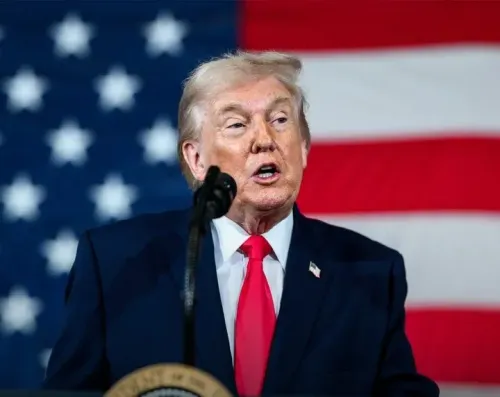
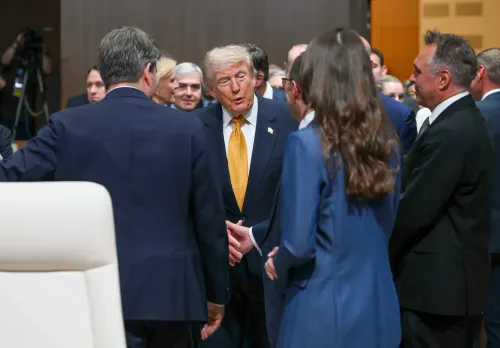
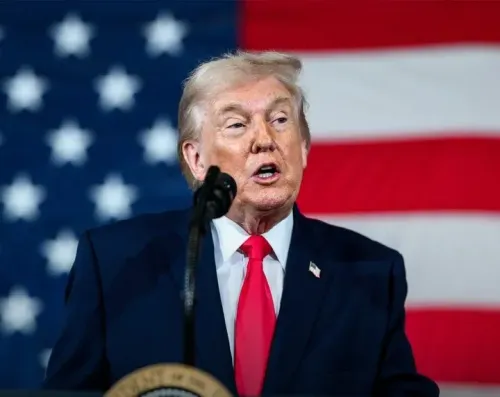
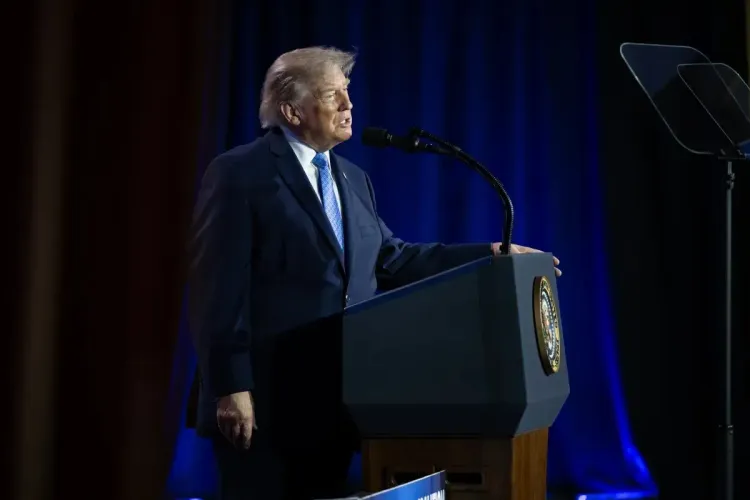
President Donald Trump on Wednesday, 8 July declared that the spread of communist ideology posed a greater danger to the United States than either the World Wars or the September 11 attacks — framing it as an internal ideological threat more corrosive than any external military assault the country has faced. The remarks came at a news conference following the NATO summit in Ankara.
What Trump Said
Trump argued that communist ideas were being repackaged under softer political labels to make them more palatable, but that the underlying ideology remained destructive. 'Communism is a disaster. It's been proven to be for thousands of years under different names,' he said.
In a striking rhetorical flourish, Trump suggested he could himself have been a highly effective communist propagandist — precisely because the ideology is easy to sell before its consequences become apparent. 'I would be the greatest communist in history. I'd be right up there with Lenin,' he said. 'You've got free rent for the rest of your life. What they don't say is that you'll be living in squalor in 12 months.'
The Ideological Framing
Trump drew a direct line between labels such as 'radical socialist', 'communist', and 'social Democrat', arguing the distinctions were cosmetic. 'When they say social Democrats... it sounds so nice. It's not nice. It's a very dangerous term,' he said.
He also noted that he had taken the anti-communist message to international audiences, including on social media platform TikTok. 'I do talk about it, and I talk about it on TikTok, and I talk about it everywhere. I talk about it here, and you're right, it has become international,' Trump said.
Hispanic Americans and the Communist Experience
Trump cited his support among Hispanic Americans as evidence that lived experience of communist or socialist governance shapes political outlook. 'One of the reasons I do so well with Hispanic people... is because a lot of them came from countries that were essentially communist,' he said, arguing that personal or family exposure to such regimes made voters more receptive to his warnings.
Domestic Political Targets
The President also directed criticism at domestic political opponents he accused of advancing communist ideas, describing them as 'very dangerous in many ways.' He did not name specific individuals at the news conference.
Throughout his presidency, Trump has increasingly framed domestic political debates as a binary contest between free-market capitalism and socialism, often citing what he described as record investment and strong economic performance under his administration as evidence that capitalism delivers where communism fails.
Broader Context
The Ankara remarks represent an escalation in Trump's ideological rhetoric, which has grown more pointed since his return to the White House. This is not the first time he has invoked communism as a frame for domestic politics — the language has appeared consistently in his rally speeches and social media posts — but the NATO summit setting gave the warnings an explicitly international dimension. The comments arrive as the administration continues to position itself as the global standard-bearer of free-market democracy against what it characterises as a rising tide of socialist governance.
Point of View
Not just Republican talking points. The rhetorical conflation of 'social Democrat', 'radical socialist', and 'communist' is a well-worn political strategy, but attaching it to a severity claim — greater than Pearl Harbor or 9/11 — raises the stakes considerably. What mainstream coverage underplays is the TikTok reference: a president warning about communist ideology while simultaneously using a platform owned by a Chinese company to spread that warning is a contradiction worth scrutinising. The framing also serves a structural purpose — by casting domestic opposition as existentially dangerous rather than merely wrong, it pre-emptively delegitimises political disagreement.
NationPress
7 Oct 2026
Frequently Asked Questions
What did Trump say about communism at the NATO summit?
Trump said communist ideology posed a greater danger to the United States than the World Wars or the September 11 attacks, describing it as an internal threat that, once entrenched, cannot be reversed. He made the remarks at a news conference following the NATO summit in Ankara on 8 July.
Where did Trump make these anti-communism remarks?
Trump made the remarks at a news conference in Ankara, Turkey, held after the NATO summit. He noted that he has also been taking the anti-communist message to international audiences, including on social media platforms such as TikTok.
Why did Trump mention Hispanic Americans in the context of communism?
Trump argued that his strong support among Hispanic Americans stems from the fact that many of them or their families emigrated from countries he described as 'essentially communist.' He cited this lived experience as making them more receptive to warnings about socialist and communist ideology.
How does Trump distinguish between socialism and communism?
Trump argued the distinctions between labels like 'radical socialist', 'communist', and 'social Democrat' are largely cosmetic, saying they all lead to the same economic hardship and political repression. He described 'social Democrat' as sounding nice but being 'a very dangerous term.'
Is Trump's anti-communism rhetoric new?
No. Throughout his presidency, Trump has framed domestic political debates as a contest between free-market capitalism and socialism. The Ankara remarks represent an escalation in severity of the claim — and a deliberate shift to an international stage — but the underlying message has been a consistent feature of his political communication.