Trump declares Iran 'decimated', warns of fresh strikes after NATO summit
Synopsis
At the NATO summit in Ankara, Trump declared Iran effectively 'denuclearised' and its military destroyed — then warned that a funeral truce collapsed when Iran resumed rocket attacks on ships, triggering a retaliatory strike he described as '20 times tougher.' With diplomacy all but written off and a maritime blockade back on the table, the conflict's next move now rests with whoever is leading Iran.
Key Takeaways
President Trump declared the US had 'denuclearised Iran' at a press conference after the NATO summit in Ankara on 8 July .
Trump claimed Iran's air force, 159 ships , radar systems, and successive leadership tiers had been destroyed — claims that could not be independently verified.
Defence Secretary Pete Hegseth confirmed overnight US strikes on Iranian small craft, drone and missile storage facilities, coastal defence and radar sites in the Strait of Hormuz .
Trump said Iran violated a funeral-period truce by firing rockets at ships, triggering a retaliatory strike he described as ' 20 times tougher .' Trump cast serious doubt on the ceasefire framework — 'To me, I think it's over' — but stopped short of formally ending talks, citing envoys Steve Witkoff and Jared Kushner .
NATO Secretary General Mark Rutte backed the strikes, calling them 'necessary' and 'a very strong response.'
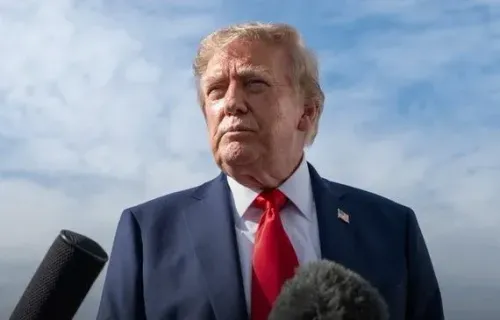
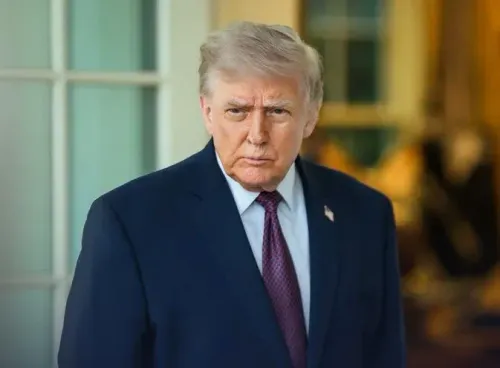
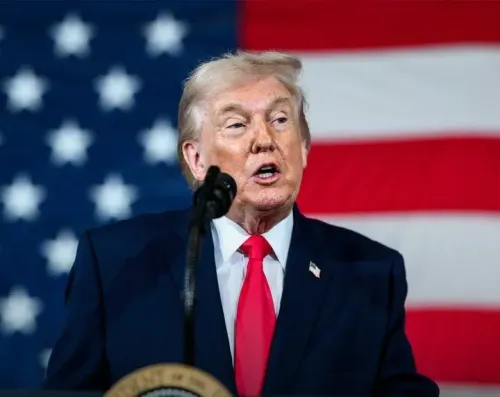
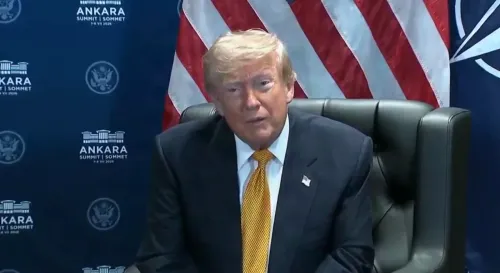
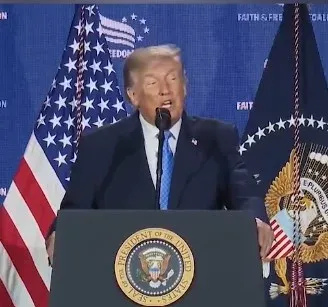
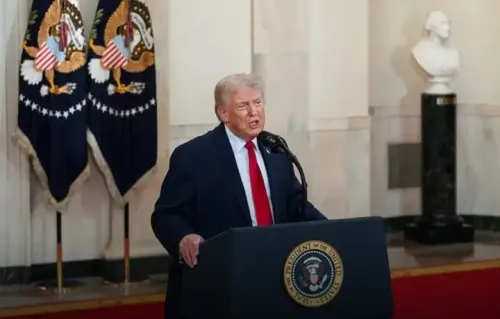
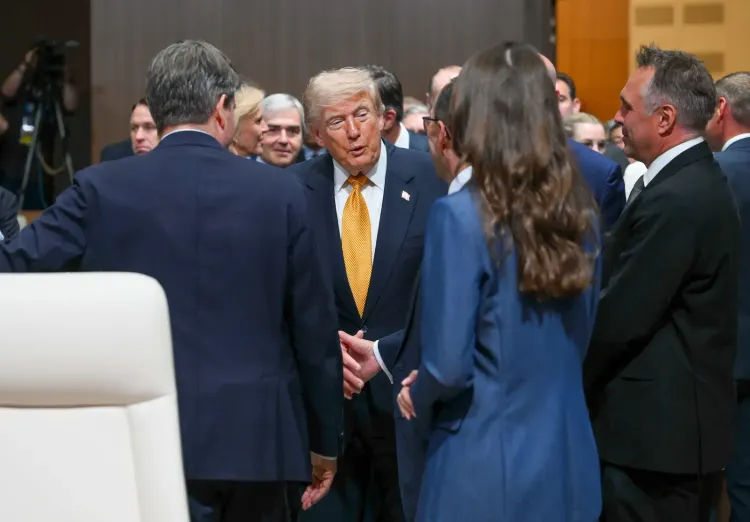
President Donald Trump on Wednesday, 8 July declared that the US military campaign against Iran had crippled Tehran's military and nuclear capabilities, warned of further strikes if Iran attacked again, and signalled deep scepticism about renewed diplomacy — even as his envoys remained authorised to continue talks. Trump made the remarks at a news conference following the NATO summit in Ankara.
Trump's Assessment of Iran's Military
'The Iran war has been a tremendous military success,' Trump told reporters. 'I was there for one reason — that Iran cannot have a nuclear weapon. I call it, we denuclearised Iran. And that's happened. They will never have a nuclear weapon.'
Trump claimed Iran's conventional forces had been effectively destroyed. 'They have no military left,' he said. 'Their air force is gone. Their ships are gone. One hundred and fifty-nine ships are gone. They're at the bottom of the sea. Their radars are gone. Everything's gone.' He added that successive layers of Iranian leadership and missile capability had also been 'severely hit,' though the claims could not be independently verified.
The Strait of Hormuz Strikes
Defence Secretary Pete Hegseth confirmed that US forces struck Iranian assets used to threaten shipping in the Strait of Hormuz the previous night. 'A lot of small craft that they were trying to harass shipping with — that was a big part of what we targeted,' Hegseth said. He listed additional targets including 'underground facilities where they were storing drones or missiles, coastal defence sites, radar sites, surveillance sites, anything used to harass shipping in the Strait of Hormuz.'
Hegseth added: 'Tonight, if we need to, on your order, Mr. President, we will hit even more.'
The Strait of Hormuz is one of the world's most critical energy corridors, carrying a significant share of global oil shipments. Any sustained escalation there risks rippling through energy prices, shipping insurance costs, and regional security calculations across the Gulf.
The Funeral Truce That Collapsed
Trump said Iran had sought a pause in hostilities to conduct funeral proceedings, and the US had agreed — only for Iran to resume attacks. 'We said, 'Go and do your funeral stuff.' And instead of that, they start shooting rockets at ships yesterday,' Trump said. 'And so we hit them very hard last night, very hard. I would say 20-to-1, 20 times tougher. And I told them, 'Every time you hit, we hit.''
During a separate meeting with Ukrainian President Volodymyr Zelensky, Trump reiterated the sequence: 'They said to us, please don't kill us during the funeral. I said I won't. We didn't. In fact, we made it safe for them, actually. And they started shooting missiles.'
Diplomacy in Doubt
Trump cast serious doubt on the ceasefire and memorandum of understanding framework, saying the diplomatic track appeared finished from his perspective. 'To me, I think it's over. I don't want to deal with them anymore,' he said. He accused Iranian officials of negotiating in bad faith: 'They're liars. We make a deal... Everyone's agreed. No nuclear weapon. We make a deal. They go outside, talk to the press, they say, 'We never even talked about it.''
Trump stopped short of formally shutting down talks, however, expressing confidence in his envoys Steve Witkoff and Jared Kushner. 'They're the right guys. And we'll see what happens,' he said. He also raised the possibility of reimposing a maritime blockade, saying, 'We put down the blockade, we may put it back — and it'll only be a blockade for Iran.'
NATO Backing and What Comes Next
NATO Secretary General Mark Rutte, speaking alongside Trump, endorsed the overnight strikes. 'I think what you did last night was necessary. It was a very strong response,' Rutte said, adding that Iran's nuclear and ballistic missile capabilities had to be degraded.
Trump said the US was monitoring Iran's nuclear sites via Space Force surveillance. 'We have cameras, as an example, on the site. We're watching that, and if anybody goes there, they get blown up. So nobody's going to touch that,' he said. Despite the bellicose framing, Trump indicated he did not expect a prolonged conflict: 'I don't think it's going to start again. I think it's going to go very quickly.' Whether Tehran's new leadership — Trump's own phrasing suggested multiple tiers had already been eliminated — accepts that assessment will shape the next phase of this confrontation.
Point of View
It rewrites the strategic map of the Middle East overnight; if overstated, it sets a dangerous expectation that reality may contradict. The collapse of the funeral truce within hours of being granted suggests either a fundamental breakdown in communication channels or deliberate Iranian escalation — and Washington's '20-to-1' retaliation doctrine offers little room for miscalculation. The Strait of Hormuz dimension is the thread the world should watch: sustained disruption there does not stay regional. Energy markets, shipping insurers, and Gulf sovereigns will be pricing in this uncertainty long before any diplomatic resolution is reached.
NationPress
7 Oct 2026
Frequently Asked Questions
What did Trump say about Iran at the NATO summit in Ankara?
Trump declared at a press conference following the NATO summit in Ankara on 8 July that the US had effectively 'denuclearised Iran' and destroyed its military, including its air force, 159 ships, and radar systems. He warned that any further Iranian attack would be met with an even heavier US response.
Why did the US strike Iran overnight on 7-8 July?
According to Trump, Iran had been granted a pause in hostilities to conduct funeral proceedings but resumed firing rockets at ships in the Strait of Hormuz. The US responded with strikes that Trump described as '20 times tougher.' Defence Secretary Pete Hegseth confirmed targets included small craft, drone and missile storage sites, coastal defence positions, and radar installations.
What is the status of US-Iran diplomacy?
Trump said the ceasefire and memorandum of understanding framework appeared 'over' from his perspective, accusing Iranian officials of negotiating in bad faith. However, he stopped short of formally ending talks, saying envoys Steve Witkoff and Jared Kushner remained authorised to continue.
What is the significance of the Strait of Hormuz in this conflict?
The Strait of Hormuz is one of the world's most critical energy corridors, carrying a large share of global oil shipments. US strikes there were specifically aimed at Iranian assets used to harass commercial and military shipping. Any sustained disruption can affect global energy prices, shipping insurance, and Gulf regional security.
What did NATO Secretary General Mark Rutte say about the US strikes?
Rutte endorsed the overnight strikes, saying 'I think what you did last night was necessary. It was a very strong response.' He also stated that Iran's nuclear and ballistic missile capabilities needed to be degraded.