White House state dinner for King Charles III: Trump hosts UK royals amid US-UK ties
Synopsis
Donald Trump's White House state dinner for King Charles III was more than royal pageantry — it was a mapping of American power. With Jeff Bezos, Tim Cook, Jensen Huang, Supreme Court justices, and senior senators at the same table as British royals, the evening signalled that the US-UK 'Special Relationship' now runs through Silicon Valley and Wall Street as much as through Westminster and the White House.
Key Takeaways
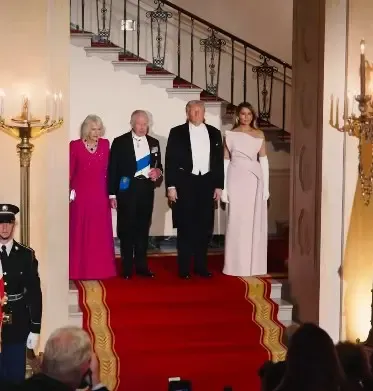
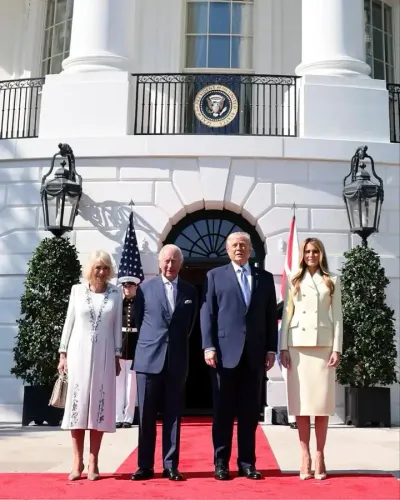
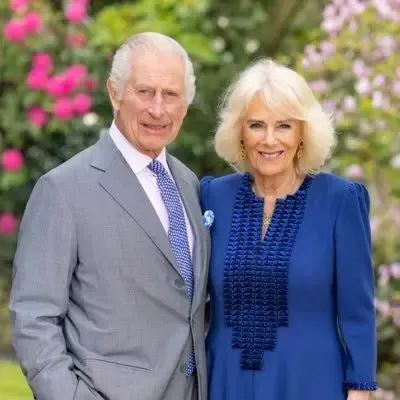
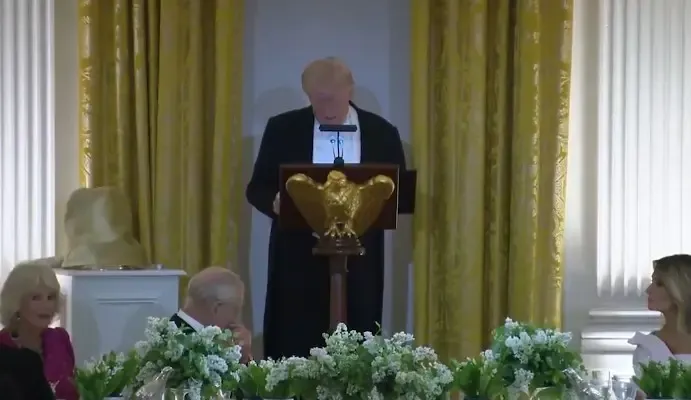
President Donald Trump and First Lady Melania Trump hosted King Charles III and Queen Camilla at a White House state dinner on 29 April .
Senior officials including VP JD Vance , Secretary of State Marco Rubio , and Chief Justice John Roberts were among the guests.
Tech leaders Jeff Bezos , Tim Cook , and Jensen Huang attended alongside media figures and corporate executives.
The menu featured Dover sole meunière, spring herbed ravioli, and a beehive-shaped flourless chocolate gateau finished with White House honey .
Décor drew from English garden themes with 250+ pieces of White House vermeil and ceramics by American artisans.
The dinner was part of a broader effort to mark the US-UK alliance ahead of America's 250th independence anniversary .
President Donald Trump and First Lady Melania Trump hosted a White House state dinner for King Charles III and Queen Camilla on 29 April, bringing together the upper echelons of American political, corporate, and cultural life in a carefully orchestrated celebration of the US-UK "Special Relationship." The evening blended diplomacy with pageantry, as Washington approaches the 250th anniversary of its independence.
A Guest List That Mapped American Power
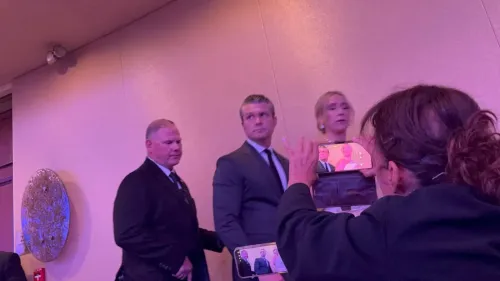
The evening drew a cross-section of the United States' most influential figures. Senior administration officials including Vice President JD Vance and Secretary of State Marco Rubio were present, alongside House Speaker Mike Johnson and senators Lindsey Graham and John Barrasso. The judiciary was represented at the highest level, with Chief Justice John Roberts and Justices Clarence Thomas, Brett Kavanaugh, and Amy Coney Barrett in attendance.
The guest list extended well beyond government. Technology and business leaders — including Jeff Bezos, Tim Cook, and Jensen Huang — were invited alongside prominent investors and corporate executives. Media personalities Bret Baier, Maria Bartiromo, and Laura Ingraham were also present, underscoring the intersection of political power and public discourse that defined the evening's tone.
A visible British contingent, led by senior royal aides, diplomats, and the UK Ambassador to the United States, completed the room — reflecting the multi-layered nature of the transatlantic relationship spanning governance, commerce, and culture.
The Menu: Refinement and Symbolism on the Plate
The dinner opened with a garden vegetable velouté paired with hearts of palm, toasted shallots, and micro mint — a herb-forward introduction suited to the season. The second course featured spring herbed ravioli filled with ricotta cheese and morels, dressed in a parmesan emulsion, with ingredients sourced in part from the White House Kitchen Garden.
The main course was Dover sole meunière, accompanied by potato pavé, spring ramps, snow peas, and parsley oil — a classic European preparation elevated by seasonal American produce. Dessert took a more elaborate form: a beehive-shaped flourless chocolate gateau paired with vanilla bean crémeux, almond joconde, and crème fraîche ice cream, finished with White House honey — a detail that subtly echoed themes of craftsmanship and natural abundance.
The wine selection showcased American winemaking, with a Riesling from Hopkins Vineyards, a Pinot Noir from Oregon's Willamette Valley, and an unfiltered Chardonnay from Newton Vineyard chosen to complement each course.
Décor and Setting: An English Garden at the White House
The evening's visual design drew inspiration from English gardens, featuring cherry blossoms, lilac arrangements, and green linens accented with gold and white elements. Tables were set with more than 250 pieces of vermeil from the White House collection, alongside ceramics crafted by American artisans — a deliberate nod to domestic craft tradition.
Entertainment was provided by US military musicians, including the Marine Band and the Army Chorus, lending a ceremonial gravity to the proceedings.
The Broader Diplomatic Context
The state dinner was part of a broader effort to affirm the enduring ties between the two nations at a moment of geopolitical significance. With the United States approaching its 250th anniversary of independence, the choice to host the British monarch carried symbolic weight — acknowledging history while projecting the alliance's contemporary relevance. Notably, the convergence of Silicon Valley chief executives, Wall Street figures, and senior government officials at a single diplomatic table signals how the US-UK relationship now extends far beyond traditional statecraft into technology, trade, and media influence.
Point of View
Tim Cook, and Jensen Huang at the same diplomatic table as the British monarch is not incidental — it reflects a deliberate signal that the US-UK 'Special Relationship' has been reframed around technology and capital, not just security and intelligence-sharing. The Five Eyes alliance and NATO commitments rarely need a state dinner to function; inviting Silicon Valley does. Whether this convergence of royal soft power and American tech influence produces substantive policy alignment — on AI governance, trade, or data flows — or remains an elaborate photo opportunity is the question mainstream coverage has largely left unasked.
NationPress
19 Sept 2026
Frequently Asked Questions
Why did President Trump host a state dinner for King Charles III?
President Trump hosted King Charles III and Queen Camilla at the White House on 29 April as part of a broader effort to celebrate the enduring US-UK 'Special Relationship,' timed ahead of America's 250th independence anniversary. The event was designed to affirm transatlantic ties spanning diplomacy, commerce, and culture.
Who attended the White House state dinner for King Charles III?
The guest list included Vice President JD Vance, Secretary of State Marco Rubio, House Speaker Mike Johnson, Chief Justice John Roberts, and Justices Clarence Thomas, Brett Kavanaugh, and Amy Coney Barrett. Tech leaders Jeff Bezos, Tim Cook, and Jensen Huang, as well as media figures Bret Baier, Maria Bartiromo, and Laura Ingraham, were also present.
What was served at the state dinner for King Charles?
The menu featured a garden vegetable velouté, spring herbed ravioli with ricotta and morels, Dover sole meunière as the main course, and a beehive-shaped flourless chocolate gateau for dessert, finished with White House honey. American wines from Hopkins Vineyards, Oregon's Willamette Valley, and Newton Vineyard were served throughout.
What was the significance of the décor at the state dinner?
The décor was inspired by English gardens, featuring cherry blossoms, lilac arrangements, and green linens with gold and white accents — a visual nod to British aesthetics. Tables were set with over 250 pieces of White House vermeil and ceramics by American artisans, blending the identities of both nations.
How does this dinner relate to the US-UK Special Relationship?
The state dinner was explicitly framed as a celebration of the longstanding US-UK 'Special Relationship,' with the mix of government officials, business leaders, and British diplomats reflecting how the alliance spans governance, technology, trade, and media — not just traditional foreign policy.