Trump Hosts Xi Jinping for Reciprocal State Visit

Synopsis
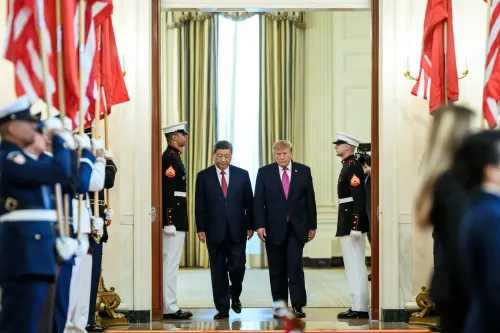
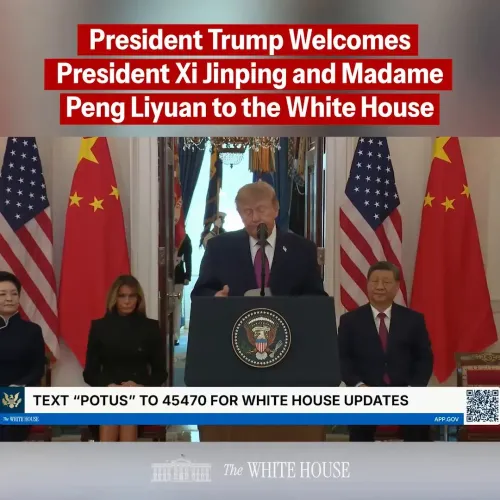
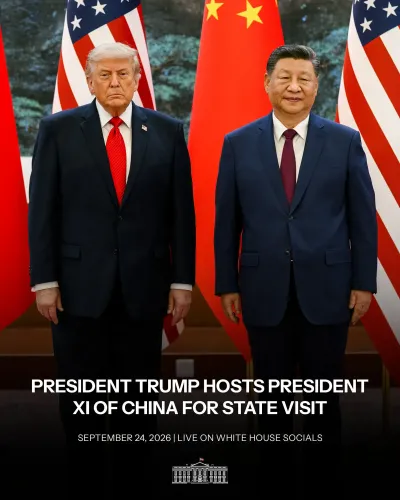
President Donald J. Trump and First Lady Melania Trump have hosted China's President Xi Jinping and Madame Peng Liyuan for a reciprocal State Visit, with the White House emphasising trade, investment, and an America-first approach to advancing the U.S.-China relationship.
Key Takeaways
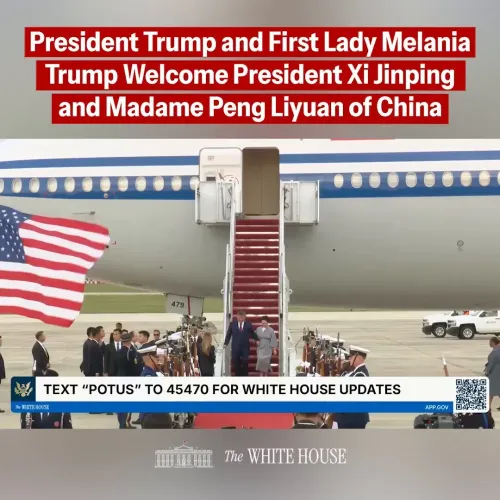
President Trump and First Lady Melania Trump hosted President Xi Jinping and Madame Peng Liyuan of China for a reciprocal State Visit.
The White House described the visit as 'historic' and framed it around advancing the U.S.-China relationship through 'trade and investment.' The visit echoes the 2017 Mar-a-Lago summit, the first State Visit between the two leaders during Trump's first term.
Beginning in 2018 , the Trump administration imposed tariffs on hundreds of billions of dollars of Chinese goods to address trade imbalances — a policy backdrop that frames the current summit.
Markets and governments globally, including India , will watch for any trade deal announcements, tariff changes, or joint statements emerging from the summit.
In what the White House is calling a historic moment for the world's two largest economies, President Donald J. Trump and First Lady Melania Trump have welcomed President Xi Jinping and Madame Peng Liyuan of China for a reciprocal State Visit — a high-stakes diplomatic encounter where trade, investment, and strategic competition all converge at the same table.
A Reciprocal Visit Rooted in Trade Pressure
The White House framed the encounter in precise economic terms: Trump is advancing the U.S.-China relationship through 'trade and investment' while 'putting America first.' That dual framing — engagement on one hand, national interest on the other — is the defining tension of every Trump-era overture to Beijing.
The reciprocal nature of the visit is significant. When Xi Jinping first visited a Trump White House in 2017, the two leaders met at Mar-a-Lago, Florida, a setting designed to project personal warmth while conducting hard-nosed economic talks. Trump subsequently visited Beijing later that year. The current visit picks up that thread — a choreography of summitry that signals neither a cold war nor a clean reset, but something more complex: managed rivalry.
What Tariffs and Deficits Have Built
The backdrop to this State Visit is not just diplomacy — it is a decade of economic warfare. Beginning in 2018, the Trump administration imposed tariffs on hundreds of billions of dollars of Chinese imports, targeting the U.S. trade deficit with China. Those measures reshaped global supply chains, rattled U.S. manufacturers and Chinese exporters alike, and set the terms for every subsequent administration's China policy.
State visits at this level have historically served as inflection points — moments when the heat of that competition is either turned up or, carefully, turned down. The world's investors, factory floors from Michigan to Guangdong, and every government caught between Washington and Beijing will be watching what comes next: any follow-on trade negotiation, tariff adjustment, or joint statement that emerges from this encounter.
Pageantry With Purpose
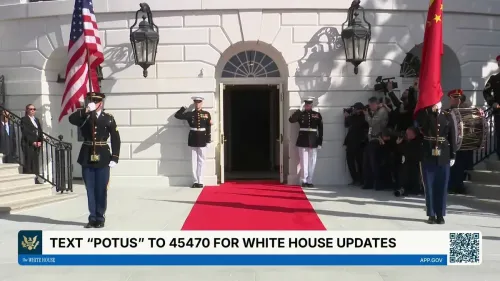
Melania Trump and Peng Liyuan — both figures who attract significant international attention in their own right — add the ceremonial weight that a State Visit demands. The presence of both first ladies signals this is not a working lunch but a full diplomatic production, the kind designed to move markets and set political agendas.
For India, a neighbour and strategic competitor to China simultaneously deepening its own ties with Washington, the optics of a warm Trump-Xi summit are never neutral. Every handshake between the two superpowers recalibrates the geometry of Indo-Pacific diplomacy.
A historic visit, as the White House put it. The question now is what history it actually writes.
Point of View
Not concession. For India, which has carefully cultivated ties with Washington while managing a tense border with Beijing, a warming Trump-Xi summit introduces fresh variables into the Indo-Pacific strategic calculus. The real measure of this summit's weight will come in the days after — in tariff schedules, investment agreements, or their conspicuous absence.
NationPress
28 Sept 2026
Frequently Asked Questions
What is the Trump-Xi reciprocal State Visit about?
President Donald J. Trump hosted President Xi Jinping of China for a reciprocal State Visit, with the White House emphasising trade and investment as the central focus and framing the visit as advancing the U.S.-China relationship while putting America first.
When did Trump and Xi first meet for a State Visit?
Their first State Visit meeting occurred in 2017 , when President Xi visited Trump at Mar-a-Lago, Florida , followed by Trump's visit to Beijing later that same year.
What is the history of Trump's trade policy with China?
Starting in 2018 , the Trump administration imposed tariffs on hundreds of billions of dollars of Chinese imports to reduce the U.S. trade deficit, triggering a prolonged trade dispute that reshaped global supply chains.
Why does the Trump-Xi summit matter for India?
India sits at the intersection of U.S. and Chinese strategic interests in the Indo-Pacific. A warming or cooling of U.S.-China ties directly affects the strategic and economic environment in which India operates, making any shift in Washington-Beijing relations significant for New Delhi.
What should we watch for after the Trump-Xi State Visit?
Analysts will closely track any follow-on trade negotiations, tariff adjustments, investment agreements, or joint statements that emerge in the days after the summit, as these will reveal the substantive outcomes beyond the diplomatic pageantry.