Trump removes Scottish whisky tariffs amid King Charles III's US visit
Synopsis
As King Charles III wrapped up a four-day US state visit, President Trump used Truth Social to announce the removal of the 10% tariff on Scottish whisky — a move the Scotch industry had lobbied for months. Framed as a diplomatic gesture, it is also part of a broader US-UK trade deal covering beef, pharmaceuticals, and ethanol.
Key Takeaways
President Trump announced the removal of 10% tariffs on Scottish whisky on 1 May , coinciding with King Charles III's four-day US state visit.
The Scotch whisky industry had lobbied for the tariff removal for months, citing the US as the largest consumer of Scotch whisky globally.
Scotland imports hundreds of millions of dollars worth of oak barrels annually from Kentucky distillers.
US Trade Representative Jamieson Greer confirmed the move is part of a broader US-UK economic agreement covering beef, pharmaceuticals, and ethanol .
The royal visit also featured an exchange of symbolic gifts and a joint AI and VR educational event hosted by Melania Trump and Queen Camilla .
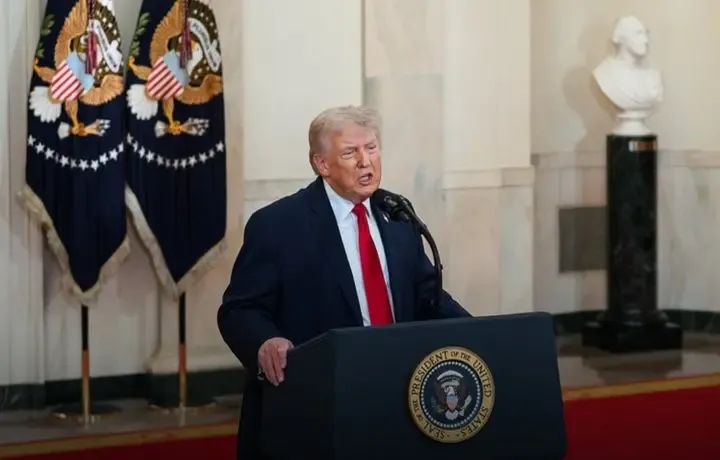
US President Donald Trump on 1 May announced the removal of tariffs on Scottish whisky, framing the move as a celebration of the historic bond between the United States and Britain, as King Charles III concluded his four-day state visit to the United States. The announcement, made on Trump's Truth Social platform, marks a significant win for Scotland's Scotch whisky industry, which had lobbied the Trump administration for months to eliminate the 10-percent tariff on its flagship export.
What Trump Announced
"In Honor of the King and Queen of the United Kingdom ... I will be removing the Tariffs and Restrictions on Whiskey having to do with Scotland's ability to work with the Commonwealth of Kentucky on Whiskey and Bourbon, two very important Industries within Scotland and Kentucky," Trump wrote on Truth Social.
Trump added that the decision reflected longstanding demand from both industries: "People have wanted to do this for a long time, in that there had been great Inter-Country Trade, especially having to do with the Wooden Barrels used."
The Industry Case Behind the Move
The Scotch whisky industry had pressed the Trump administration on two key arguments: the United States is the single largest consumer of Scotch whisky globally, and Scotland spends hundreds of millions of dollars annually importing oak barrels from Kentucky distillers — a supply chain that ties the two industries closely together, according to Xinhua news agency.
US Trade Representative Jamieson Greer described the tariff removal as part of a broader bilateral economic agreement aimed at expanding market access across key sectors, including beef, pharmaceuticals, and ethanol, according to local media reports. Notably, this is not an isolated concession — it sits within a wider framework of trade normalisation between Washington and London.
Diplomatic Symbolism of the Royal Visit
The tariff announcement came against the backdrop of an elaborate exchange of gifts and gestures between the two heads of state. Trump presented King Charles III with a custom facsimile of an 18th-century letter from John Adams to John Jay, recounting Adams's meeting with King George III — widely regarded as a defining moment in the fragile early diplomacy between the two nations following the American Revolution.
The King's gift carried its own layered symbolism: a framed facsimile of the 1879 design plans for the Resolute Desk, the iconic Oval Office fixture crafted from the timbers of a British ship and gifted to the United States as a gesture of goodwill in the 19th century.
First Lady and Queen's Cultural Exchange
First Lady Melania Trump presented Queen Camilla with Tiffany silver teaspoons and a jar of White House honey — a thoughtful nod to Queen Camilla's well-known interest in beekeeping. The Queen, in turn, gifted a brooch designed by British jeweller Fiona Rae.
The day's events extended beyond ceremony into a softer display of cultural diplomacy. At the White House Tennis Pavilion, Melania Trump and Queen Camilla jointly hosted a group of students in an educational programme incorporating virtual reality and artificial intelligence. Students explored British landmarks — from Stonehenge to Buckingham Palace — through immersive headsets, before examining American historical artefacts using AI-enabled glasses.
What Comes Next
The precise timeline for implementing the tariff removal has not yet been formally detailed, though the announcement signals a meaningful shift in US-UK trade relations. With a broader economic agreement reportedly in the works — spanning beef, pharmaceuticals, and ethanol — analysts will watch closely to see whether this royal-visit momentum translates into a durable trade framework between the two allies.
Point of View
But its commercial logic predates King Charles's visit by months. Scotland's Scotch industry had been pressing Washington on this for a long time, and the royal occasion provided Trump with a politically convenient moment to deliver. The broader question is whether this bilateral warmth — spanning whisky, beef, pharmaceuticals, and ethanol — amounts to a substantive US-UK trade deal or a series of headline-friendly gestures that stop short of a comprehensive agreement. Given the Trump administration's track record of announcement-first, detail-later trade moves, the implementation timeline and enforcement mechanism will matter far more than the Truth Social post.
NationPress
19 Sept 2026
Frequently Asked Questions
Why is Trump removing tariffs on Scottish whisky?
President Trump announced the removal of the 10% tariff on Scottish whisky on 1 May, framing it as a gesture honouring the US-UK relationship during King Charles III's state visit. The move also reflects months of lobbying by the Scotch whisky industry, which argued that the US is its largest market and that Scotland imports hundreds of millions of dollars in oak barrels from Kentucky annually.
What is the connection between Scottish whisky and Kentucky?
Scotland imports oak barrels from Kentucky distillers worth hundreds of millions of dollars each year to age Scotch whisky — a deep supply-chain link between the two industries. This trade relationship was one of the key arguments the Scotch industry used to lobby for tariff relief.
Is the whisky tariff removal part of a larger US-UK trade deal?
Yes, according to US Trade Representative Jamieson Greer, the tariff removal is part of a broader bilateral economic agreement aimed at expanding market access for key sectors including beef, pharmaceuticals, and ethanol, as reported by local US media.
What gifts were exchanged between Trump and King Charles III?
Trump gave King Charles III a custom facsimile of an 18th-century letter from John Adams to John Jay. The King gifted a framed facsimile of the 1879 design plans for the Resolute Desk. Melania Trump gave Queen Camilla Tiffany silver teaspoons and White House honey, while the Queen presented a brooch by British jeweller Fiona Rae.
What was the significance of King Charles III's US visit?
King Charles III's four-day state visit to the United States served as a platform for cultural diplomacy and trade announcements. Beyond the whisky tariff removal, the visit featured joint educational events using AI and virtual reality, and a broader framework for US-UK trade cooperation across multiple industries.