Trump signs executive order to end cost-plus federal contracts
Synopsis
Trump's latest executive order takes direct aim at one of Washington's oldest spending habits — the cost-plus contract — by mandating fixed-price agreements as the federal default. It's a structural shift that transfers financial risk from taxpayers to contractors, and its real-world impact will hinge on how agencies implement waivers for complex projects.
Key Takeaways
President Donald Trump signed an executive order on 1 May mandating fixed-price contracts as the default for most federal procurement.
The move replaces the prevalent cost-plus model , which White House Staff Secretary Will Scharf said leads to cost overruns and wastes federal money.
Critics warn fixed-price contracts can result in higher initial bids and reduced flexibility on complex government projects.
Supporters argue the model improves accountability and removes incentives for inefficiency embedded in cost-plus agreements.
The US federal government is one of the world's largest procurement entities; changes to its contracting norms often shape international best practices.
US President Donald Trump on 1 May signed an executive order overhauling federal contracting practices, mandating a shift from "cost-plus" agreements to fixed-price contracts as the default across most government procurement. The administration says the move will reduce waste, curb cost overruns, and bring federal spending in line with private-sector discipline.
What the Executive Order Changes
Under the existing "cost-plus" model, the federal government reimburses contractors for all incurred expenses plus an agreed profit margin — a structure that critics say creates little incentive to control spending. The new order establishes a fixed-price contract as the standard baseline for most federal agreements, shifting financial risk from taxpayers to contractors.
White House Staff Secretary Will Scharf explained the rationale plainly: "Many federal contracts currently operate on a cost plus basis… leads to cost overruns, and costs the federal government a lot of money," he said. The reformed framework, he added, aligns government procurement with how the private sector routinely manages large-scale projects.
What the Administration Said
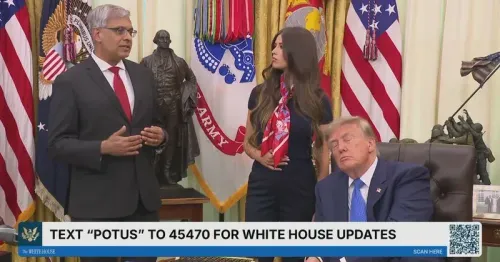
Scharf said the change would directly address structural inefficiencies embedded in the current system. "We believe will continue to drive down fraud and abuse in federal contracting government wide," he said. Trump himself endorsed the reform in characteristically direct terms — "Would anybody like to object to this?" he said, drawing laughter from those present at the signing.
Scharf also used the occasion to highlight broader economic signals, asserting that manufacturing investment in the US is at historic highs. "We have a tremendous amounts of factories being built in our country now, more than we've ever had at any time ever before," he said, linking procurement reform to a wider industrial revival narrative.
The Debate: Risk, Flexibility, and Accountability
Fixed-price contracts are standard in the private sector precisely because they cap government exposure to runaway costs. However, critics argue the model carries its own trade-offs: contractors may submit higher initial bids to hedge against unforeseen risks, and the structure can reduce flexibility in technically complex or long-duration projects — such as defence systems or large infrastructure works — where scope changes are common.
Supporters counter that fixed-price frameworks improve accountability and eliminate the perverse incentive to spend more in order to earn more, which the cost-plus model can inadvertently reward. The debate is not new; procurement specialists have long debated the optimal contract type depending on project complexity and risk profile.
Broader Significance
The US federal government is among the world's largest procurement entities, spending hundreds of billions of dollars annually on contracts spanning defence, technology, infrastructure, and services. Shifts in its contracting framework historically influence procurement norms globally, including in multilateral institutions and allied governments that model their own standards on US practice.
The executive order is part of a wider administrative push — which has also included efforts by the Department of Government Efficiency (DOGE) — to streamline federal operations and reduce expenditure across departments. Whether fixed-price mandates will deliver measurable savings will depend heavily on implementation guidelines and how agencies handle waivers for complex contracts where cost-plus arrangements remain technically justified.
Point of View
Such as next-generation defence systems or multi-decade infrastructure. A blanket default to fixed-price risks pushing contractors to front-load bids or cut corners on quality to protect margins. The administration's framing conflates structural procurement reform with the broader DOGE efficiency narrative, but the two require different tools. The real test will be in the waiver process: if agencies can easily exempt complex contracts, the order's practical impact may be narrower than its headline suggests.
NationPress
19 Sept 2026
Frequently Asked Questions
What did Trump's executive order on federal contracts do?
The executive order, signed on 1 May, makes fixed-price contracts the default for most US federal procurement, replacing the widely used cost-plus model. The administration says this will reduce cost overruns, limit waste, and bring government contracting in line with private-sector standards.
What is a cost-plus contract and why is it controversial?
A cost-plus contract reimburses a contractor for all project expenses plus an agreed profit margin, meaning the government bears the risk of cost escalation. Critics argue this structure reduces the contractor's incentive to control spending, leading to chronic overruns on large government projects.
What are the risks of switching to fixed-price contracts?
Critics argue that fixed-price contracts can lead to higher initial bids as contractors price in risk upfront, and may reduce flexibility on complex or long-duration projects where scope changes are common, such as defence or infrastructure programmes.
Who is Will Scharf and what role did he play?
Will Scharf is the White House Staff Secretary who publicly explained the rationale for the executive order, stating that the cost-plus system leads to overruns and costs the federal government significant sums. He framed the fixed-price shift as a structural reform to reduce fraud and abuse in contracting.
How significant is US federal procurement globally?
The US federal government is one of the largest procurement entities in the world, spending hundreds of billions of dollars annually. Changes to its contracting framework often influence international procurement norms and are studied by allied governments and multilateral institutions.