Trump praises Modi's anti-drug push, flags India in 2027 major drug list
Synopsis
Trump's annual drug determination is usually a list of pressure and reproach — but India got a rare commendation. Modi's counterdrug efforts were explicitly welcomed, India avoided the 'failed demonstrably' label reserved for Afghanistan, Bolivia, Myanmar and Colombia, and the two sides were pointed toward deeper cooperation under a bilateral Drug Policy Framework. The contrast with the document's sharp language on China, Canada and Mexico makes the diplomatic signal hard to miss.
Key Takeaways
Donald Trump praised PM Modi for tackling illicit opium poppy cultivation and strengthening supply chain integrity in a presidential determination submitted to Congress on 15 September 2026 .
India was identified among 23 major drug transit or illicit drug-producing countries for fiscal year 2027 , but was not among the four nations designated as having 'failed demonstrably.' Afghanistan , Bolivia , Myanmar , and Colombia were separately designated as having failed to meet counterdrug obligations.
Trump pressed China to expand controls on precursor chemicals, alleged Canadian labs are producing fentanyl, and urged Mexico to prosecute cartel-linked officials.
Venezuela was removed from the 'failed demonstrably' category; Trump cited cooperation with its interim government.
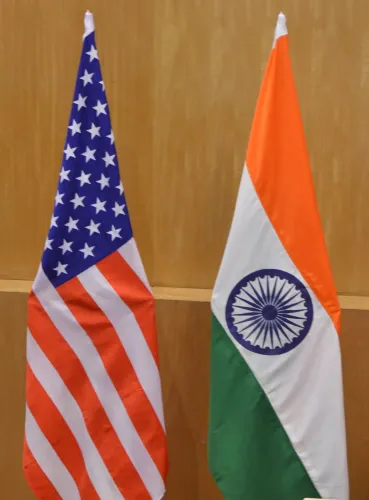
The determination points to deepened bilateral engagement through the United States-India Drug Policy Framework .
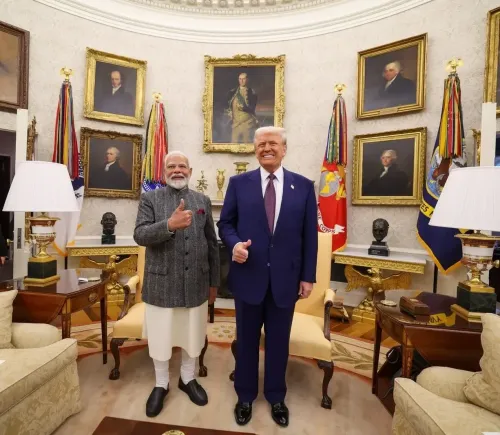
US President Donald Trump has praised Prime Minister Narendra Modi for efforts to combat illicit opium poppy cultivation and reinforce supply chain integrity, even as his administration identified India among 23 major drug transit or illicit drug-producing countries for fiscal year 2027. The presidential determination, submitted to Congress on 15 September and released in a media note on 16 September, sets out Washington's annual assessment of drug production, trafficking, and international cooperation.
What the Determination Says About India
Trump's statement on India was explicitly positive. 'I welcome Prime Minister Modi and the Government of India's efforts to address illicit opium poppy cultivation and bolster supply chain integrity,' he said, adding that he looked forward to 'continued cooperation through the United States-India Drug Policy Framework.'
Crucially, India was not among the four countries separately designated as having 'failed demonstrably' to meet their international counterdrug obligations during the previous 12 months. The determination itself underscores that inclusion on the broader list is not a verdict on a government's performance: 'A country's presence on the foregoing list is not necessarily a reflection of its government's current counterdrug efforts, or coordination with the United States,' the document states.
The Broader Country List and Who Failed
Alongside India, the 23-nation list includes China, Pakistan, Afghanistan, Mexico, and Colombia, among others. Countries placed on this list qualify under statutory definitions in the Foreign Assistance Act of 1961, which allows geographic, commercial, or economic factors — not just weak enforcement — to trigger inclusion.
Trump separately designated Afghanistan, Bolivia, Myanmar (referred to as Burma in the document), and Colombia as countries that had failed demonstrably to make substantial counterdrug efforts. He also determined that US assistance to Bolivia, Myanmar, and Colombia was 'vital to American national interests.' Notably, Venezuela was removed from the 'failed demonstrably' category, with Trump citing cooperation with its interim government and expressing expectation of continued, measurable progress.
Sharp Words for China, Canada, and Mexico
The document's treatment of India contrasted sharply with the tone directed at China, Canada, and Mexico. Trump accused China of remaining the world's largest producer of precursor chemicals used to manufacture fentanyl, methamphetamine, and other synthetic drugs. He said he had raised the issue directly with Chinese President Xi Jinping, and acknowledged that Beijing introduced licensing requirements last year for companies exporting designated precursor chemicals to North America at Trump's request — but said criminals continued to evade those controls through unregulated chemicals. Trump called on Beijing to expand chemical controls and strengthen cooperation on prosecutions.
On Canada, Trump alleged that clandestine laboratories were producing fentanyl and that precursor chemicals were transiting into the United States through Canadian territory. He urged action against those laboratories and criminal networks.
Mexican President Claudia Sheinbaum's administration received partial credit for greater drug seizures, dismantling of clandestine labs, and additional border security deployments — but Trump pressed Mexico to increase port inspections, deepen industry participation in supply chain security, and prosecute officials accused of aiding cartels.
India-US Drug Cooperation: The Bigger Picture
The United States-India Drug Policy Framework, referenced in Trump's statement, anchors bilateral cooperation on narcotics and supply chain security. India's inclusion on the statutory list has historical precedent and does not automatically trigger sanctions or aid restrictions. This is the first such determination under Trump's current term to explicitly commend India's counterdrug trajectory, signalling continued warmth in the bilateral relationship even as Washington presses harder on China and its immediate neighbours. How the two sides operationalise the Drug Policy Framework in the months ahead will be closely watched.
Point of View
But the warm language on the India-US Drug Policy Framework suggests the relationship has real operational depth beyond optics. The test will be whether that framework delivers measurable outcomes on supply chain security, or remains a diplomatic talking point.
NationPress
17 Sept 2026
Frequently Asked Questions
Why was India placed on the US major drug countries list for 2027?
India's inclusion on the 23-nation list is based on statutory definitions in the Foreign Assistance Act of 1961, which can place a country on the list due to geographic, commercial, or economic factors that allow drugs or precursor chemicals to be produced or transported — even where authorities undertake robust enforcement. The determination itself states that inclusion 'is not necessarily a reflection of its government's current counterdrug efforts, or coordination with the United States.'
What did Trump specifically say about PM Modi's anti-drug efforts?
Trump said he welcomed 'Prime Minister Modi and the Government of India's efforts to address illicit opium poppy cultivation and bolster supply chain integrity,' and added that he looked forward to continued cooperation through the United States-India Drug Policy Framework. India was not placed in the more serious 'failed demonstrably' category.
Which countries were designated as having failed demonstrably on drug control?
Trump designated Afghanistan, Bolivia, Myanmar (referred to as Burma in the document), and Colombia as having failed demonstrably to make substantial efforts to meet their international counterdrug obligations during the previous 12 months. He also determined that US assistance to Bolivia, Myanmar, and Colombia was vital to American national interests.
What is the United States-India Drug Policy Framework?
It is a bilateral cooperation framework between Washington and New Delhi that governs joint action on narcotics control and supply chain security. Trump's determination specifically called for continued cooperation under this framework, signalling that it remains an active channel in the India-US relationship.
How did Trump's stance on India differ from his stance on China and Mexico?
Trump praised India's counterdrug efforts, while taking a sharply critical tone toward China, Canada, and Mexico. He accused China of being the world's largest producer of fentanyl precursor chemicals, alleged Canadian labs are manufacturing fentanyl, and pressed Mexico to prosecute officials linked to cartels — a stark contrast to the commendation extended to New Delhi.