Trump: Presidency a 'Dangerous Profession' After White House Shooting Scare
Synopsis
Hours after a gunman was intercepted near the White House Correspondents' dinner, President Trump called the presidency a 'dangerous profession,' revealed he 'fought like hell to stay,' and vowed to reschedule the event within 30 days — marking his second major security scare in under a year.
Key Takeaways
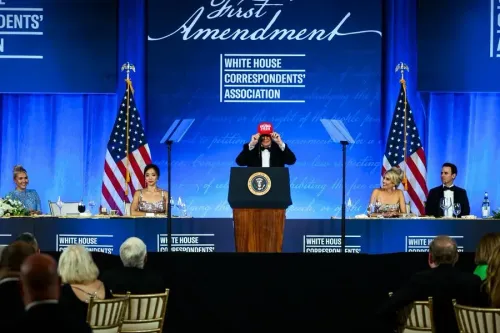
President Donald Trump called the presidency a 'dangerous profession' on April 26, 2025 , after a gunman was stopped near the White House Correspondents' Association dinner in Washington, D.C.
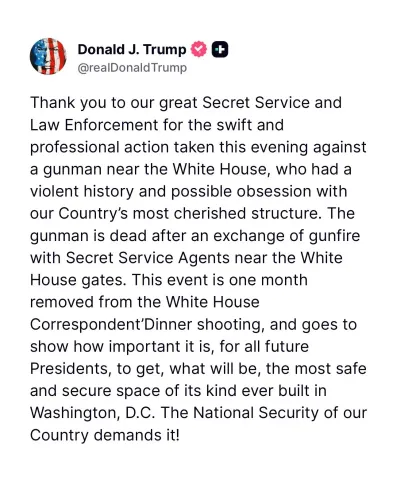
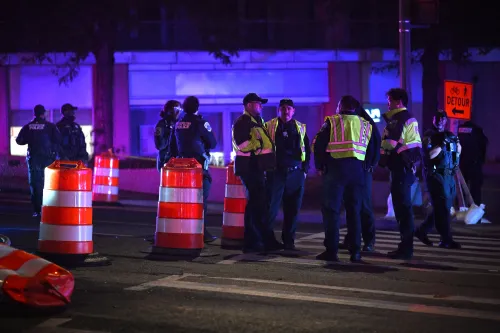
The suspect was intercepted before breaching the secured perimeter and was taken into custody; an investigation into motive and affiliations is ongoing.
Trump revealed he initially mistook gunshots for a falling tray and 'fought like hell to stay' at the venue before deferring to his security detail's evacuation protocol.
This is Trump's second major security scare in under a year , following the July 2024 assassination attempt in Butler, Pennsylvania , where a bullet grazed his ear.
Trump described First Lady Melania Trump as having experienced 'a rather traumatic experience' and praised Secret Service and law enforcement for their swift, coordinated response.
The White House Correspondents' dinner will be rescheduled within 30 days , with Trump vowing that violence will not be allowed to disrupt public events.
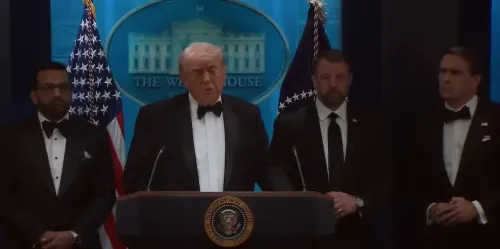
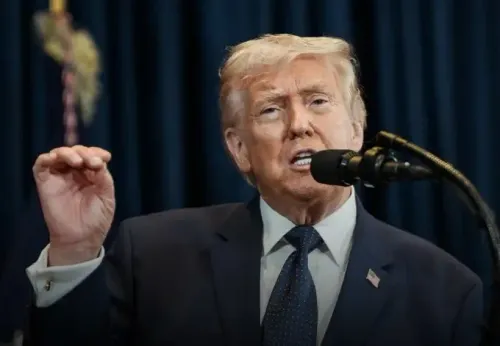
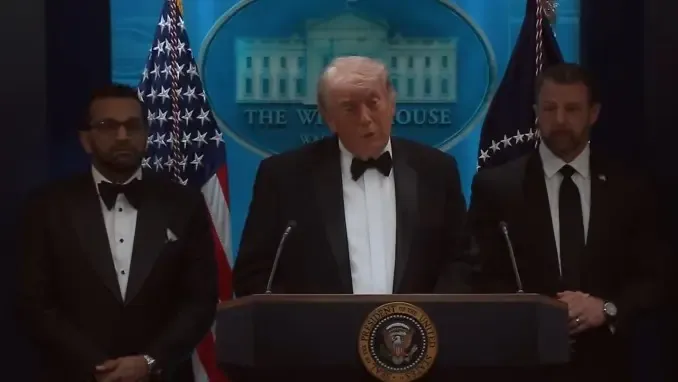
Washington, April 26 — US President Donald Trump called the presidency a 'dangerous profession' on Saturday night, vowing that no act of violence would derail his agenda, hours after armed security personnel intercepted a gunman near the White House Correspondents' Association dinner in Washington, D.C. Speaking candidly to reporters at the White House, Trump struck a rare reflective tone — recounting the chaos of the moment, praising law enforcement, and placing the incident within a broader pattern of threats against political leaders worldwide.
How the Incident Unfolded
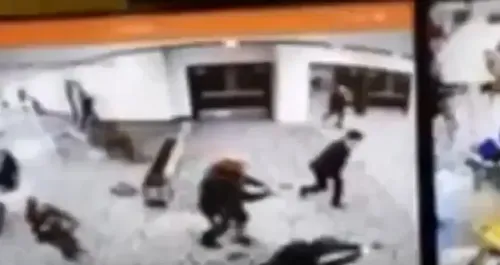
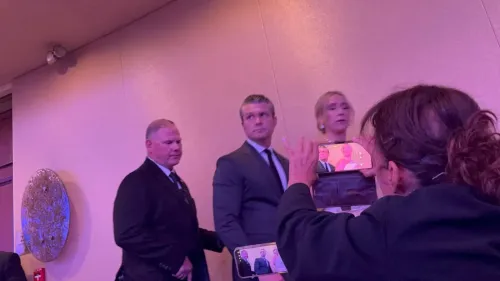
Trump revealed that the situation developed with startling speed, giving him and those around him little time to process what was happening. 'I was watching to see what was happening… probably should have gone down even faster,' he said, noting that First Lady Melania Trump grasped the gravity of the situation almost immediately as security personnel moved swiftly into action.
The president admitted he initially misidentified the sound of gunfire. 'I thought it was a tray going down… it was a pretty loud noise… but it was a gun,' he said, adding that some in the room understood the threat faster than others did.
Crucially, Trump confirmed that the suspect never breached the secured perimeter. 'He hadn't breached the area at all,' he said, emphasising that the attacker was neutralised at a safe distance from the main gathering. Law enforcement confirmed the suspect was taken into custody, with an active investigation underway to determine motive and any potential affiliations.
Trump's Reluctance to Leave and Security Protocol
Despite the disruption, Trump said he resisted being evacuated. 'I fought like hell to stay,' he said, explaining that he refused to allow what he called 'sick people' to alter the course of public life. He ultimately deferred to his security detail, acknowledging that the decision was driven by protocol rather than personal preference.
'They didn't want to take a chance… and I understand,' he said. The president's willingness to remain at the venue — even briefly — underscores a pattern seen since the July 2024 assassination attempt in Butler, Pennsylvania, where Trump survived a rifle shot that grazed his ear during a campaign rally. That incident marked the closest a sitting or former US president had come to assassination since Ronald Reagan was shot in 1981.
Trump on Political Violence and the Risks of Leadership
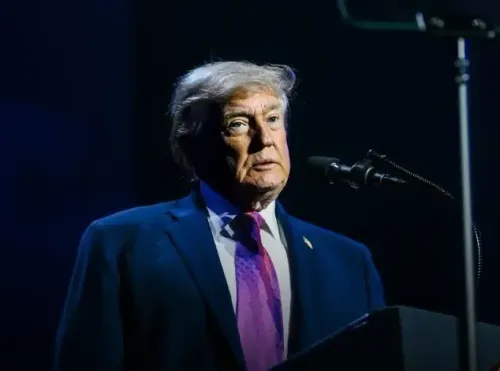
Trump used the episode as an opportunity to reflect on what he sees as the inherent dangers of high-impact leadership. 'I've studied assassinations,' he said. 'The most impactful people… the people who make the biggest impact, they are the ones they go after.'
He drew a direct line between political success and personal vulnerability — a sentiment that, while self-referential, echoes a documented historical reality. Four sitting US presidents — Abraham Lincoln, James Garfield, William McKinley, and John F. Kennedy — have been assassinated in office, and multiple others survived attempts. Trump has now been the target of multiple documented threats during his political career.
Despite acknowledging the risks, Trump rejected the notion of withdrawing from public engagement. 'If you want to do a great job… it comes with a territory,' he said, adding that no nation is immune from political violence. 'There's great violence… all over the world,' he said.
Lone Wolf Assessment and Investigation
When pressed on whether the attacker was part of a larger conspiracy, Trump said early indications pointed to an isolated actor. 'They seemed to think he was a lone wolf, and I feel that too,' he said. However, he cautioned that investigators would make the final determination, and officials confirmed the probe remained active.
Trump said he received no prior intelligence warning about the threat. 'We had no idea,' he said, while noting that Secret Service and other law enforcement agencies had personnel deployed throughout the venue. He praised the coordinated response, saying, 'They acted incredibly,' crediting their swift action with preventing a potentially catastrophic outcome.
Call for Unity and Plans to Reschedule the Dinner
In a moment that drew bipartisan attention, Trump described witnessing a brief but striking sense of collective resolve in the room. 'I saw a room that was just totally unified… it was very beautiful to see,' he said. He appealed directly to Republicans, Democrats, and independents to resolve differences through dialogue rather than violence.
Trump confirmed that the White House Correspondents' dinner would be rescheduled within 30 days, signalling that the administration would not allow the incident to suppress public events. 'We're not going to cancel things out… we can't do that,' he said firmly.
He also acknowledged the emotional toll on Melania Trump, describing the evening as 'a rather traumatic experience for her,' while thanking her for her steadfast support throughout the ordeal.
As the investigation continues, attention will focus on the suspect's background, motive, and whether systemic security gaps allowed the individual to approach the venue perimeter. The incident is also likely to reignite congressional debate over presidential security funding and protocols, particularly in the wake of the 2024 Butler assassination attempt — which had already prompted a sweeping review of Secret Service operations.
Point of View
Near-miss threat against Donald Trump in under twelve months, and it exposes a persistent and deeply troubling pattern in American political life. While Trump's composure and rhetoric of resilience play well politically, the more urgent question is institutional: why, despite a sweeping post-Butler review of Secret Service protocols, was an armed individual able to approach the perimeter of a presidential-adjacent event at all? The mainstream narrative will focus on Trump's bravado; NationPress focuses on the accountability gap — because the next time, composure alone won't be enough.
NationPress
16 Sept 2026
Frequently Asked Questions
What happened near the White House Correspondents' dinner on April 26, 2025?
A gunman was intercepted by law enforcement near the White House Correspondents' Association dinner on April 26, 2025, before breaching the secured perimeter. The suspect was taken into custody and an investigation was launched to determine motive and any affiliations.
What did Trump say after the shooting scare at the Correspondents' dinner?
President Trump called the presidency a 'dangerous profession' and said he 'fought like hell to stay' at the venue before being evacuated by his security detail. He vowed that violence would not disrupt public events and confirmed the dinner would be rescheduled within 30 days.
Has Trump faced assassination attempts before this incident?
Yes. In July 2024, Trump survived a rifle shot that grazed his ear during a campaign rally in Butler, Pennsylvania — the closest a US president or former president had come to assassination since Ronald Reagan in 1981. Saturday's incident marks his second major security scare in under a year.
Was the gunman near the White House Correspondents' dinner acting alone?
Trump said early indications suggested the attacker was a 'lone wolf,' a view he said he personally shared. However, he deferred to investigators to make the final determination, with officials confirming the probe remained active.
Will the White House Correspondents' dinner be rescheduled after the shooting scare?
Yes. President Trump confirmed the White House Correspondents' dinner would be rescheduled within 30 days. He stated the administration would not allow acts of violence to cancel or suppress major public events.