Trump Extends Israel-Lebanon Ceasefire by 3 Weeks in Historic Deal
Synopsis
President Trump announced a surprise three-week Israel-Lebanon ceasefire extension from the Oval Office, calling it 'historic' and hinting at direct leader-level talks in Washington. With Hezbollah framed as a shared enemy and Saudi Arabia as a potential peace partner, this fragile truce could be the opening move in a larger Middle East realignment.
Key Takeaways
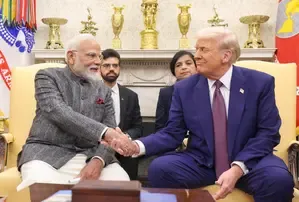
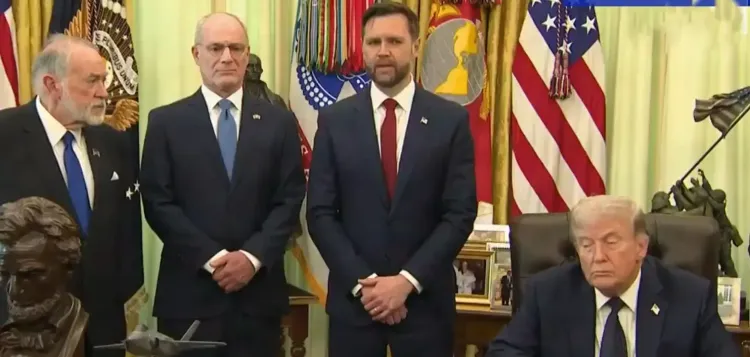
President Donald Trump announced a three-week ceasefire extension between Israel and Lebanon on April 24, 2025 , from the Oval Office .
Lebanese Ambassador Nada Hamadeh Moawad and Israeli Ambassador Yechiel Leiter both attended the high-level Washington meeting that sealed the agreement.
Vice President JD Vance called the ceasefire extension "a major historic moment," crediting Trump's direct personal engagement.
Both Israel and Lebanon 's new government identified Hezbollah — backed by Iran — as a shared security threat and common enemy.
Trump confirmed Israel retains the right to self-defence during the ceasefire period, with any response to be "careful" and "surgical." Saudi Arabia was identified as a potential regional partner in future peace negotiations, linking the truce to broader Abraham Accords diplomacy.
Washington, April 24 — US President Donald Trump announced a three-week extension of the ceasefire between Israel and Lebanon on Wednesday, calling the development "historic" and raising the prospect of direct bilateral negotiations between the two nations in Washington. The announcement marks a significant, if fragile, diplomatic milestone in a region long defined by armed conflict and proxy warfare.
Oval Office Meeting Seals the Deal
The ceasefire extension was formalised following a high-level Oval Office meeting that brought together senior officials from both countries. Key attendees included Lebanese Ambassador to the United States Nada Hamadeh Moawad and Israeli Ambassador Yechiel Leiter, signalling the seriousness of the diplomatic effort.
Trump confirmed the agreement in direct terms: "They've agreed to an additional three weeks of… ceasefire, no more firing," adding that leaders from both nations may travel to Washington in the coming weeks for further dialogue. This would be a rare and potentially transformative face-to-face engagement, given that Israel and Lebanon have no formal diplomatic relations and technically remain in a state of war.
Vice President JD Vance described the development as "a major historic moment," crediting "the President's direct engagement" for bridging the gap between the two sides. Vance emphasised that the extension provides critical breathing room for both governments to pursue a longer-term, sustainable settlement.
Shared Enemy: Hezbollah at the Core of Talks
A central theme of the Oval Office discussions was the shared threat posed by Hezbollah, the Iran-backed militant group that dominates southern Lebanon and is designated a terrorist organisation by both the United States and Israel. One senior official stated bluntly that both countries "are victimized by the same terrorist organization," expressing hope that the ceasefire could eventually evolve into "a permanent peace between two countries."
Israeli Ambassador Leiter reinforced this position, saying Israel "wants peace… and security for citizens," and that both governments are "united… wanting to rid the country of this malign influence called Hizballah." This framing — positioning Hezbollah as a common enemy rather than a Lebanese political actor — is a deliberate diplomatic strategy to find common ground with Beirut.
Lebanese Ambassador Moawad welcomed Washington's involvement, saying, "with your help, with your support, we can make Lebanon" stable again, alluding to the country's deep political dysfunction and economic collapse that has persisted since the 2019 financial crisis and the catastrophic 2020 Beirut port explosion.
Regional Diplomacy: Iran, Saudi Arabia, and the Bigger Picture
Trump explicitly linked the Israel-Lebanon ceasefire push to broader US regional strategy, including ongoing diplomatic pressure on Iran. He described the Israel-Lebanon track as "an easy one relative to some of the things we're working on," a veiled reference to the far more complex Iran nuclear negotiations and the Gaza conflict.
The US President also pointed to Saudi Arabia as a potential stakeholder in future peace efforts, suggesting the kingdom "would be very happy with this" and supportive of regional stability. This aligns with the broader Abraham Accords framework that the Trump administration has sought to revive and expand since returning to office in January 2025.
Notably, any Saudi-Israel normalisation deal — long discussed but never concluded — would require some resolution of the Palestinian question and a stable Lebanon, making this ceasefire extension a potentially important building block in a much larger geopolitical architecture.
Israel Retains Right to Self-Defence
Trump was careful to reaffirm Israel's security prerogatives even as he celebrated the diplomatic progress. "Israel is going to have to defend itself… and they will," he said, adding that any military response would be "careful" and "surgical." This caveat is significant — it signals that the ceasefire is conditional and that Washington will not restrain Tel Aviv if Hezbollah violates the truce.
This position mirrors the structure of the November 2024 ceasefire that paused the Israel-Hezbollah conflict following months of intense cross-border exchanges. That earlier agreement, also brokered with US involvement, had similarly fragile foundations and required constant monitoring by international observers.
What Comes Next: Path to Permanent Peace or Another Pause?
Trump expressed cautious optimism about Lebanon's trajectory, saying, "I think there's a very good chance… it could be brought back pretty quickly," referring to the country's prospects for political and economic recovery. However, analysts note that Hezbollah's deep entrenchment in Lebanese politics, society, and military infrastructure makes any permanent disarmament scenario exceptionally difficult.
Historically, ceasefire arrangements between Israel and Lebanon — including UN Security Council Resolution 1701 passed after the 2006 war — have repeatedly failed to produce lasting peace, largely because the underlying power dynamics, particularly Hezbollah's armed presence, remain unresolved. The current extension buys time, but the structural issues demand far more than diplomatic goodwill.
With potential leader-level visits to Washington on the horizon and Saudi Arabia positioned as a supportive regional actor, the next three weeks will be closely watched by diplomats, analysts, and civilians on both sides of the Israel-Lebanon border as a test of whether this ceasefire can become something more durable.
Point of View
Fragile in substance. The real story is the framing: by positioning Hezbollah as Lebanon's problem too, Washington is attempting to drive a wedge between Beirut and Tehran, a strategy that has been tried before with limited success. The Abraham Accords playbook is clearly being dusted off, with Saudi normalisation as the ultimate prize. But until Hezbollah's weapons are addressed structurally — not just rhetorically — every ceasefire in this theatre remains a countdown clock, not a peace dividend.
NationPress
19 Sept 2026
Frequently Asked Questions
What did Trump announce about the Israel-Lebanon ceasefire?
President Trump announced a three-week extension of the Israel-Lebanon ceasefire on April 24, 2025, following an Oval Office meeting with ambassadors from both countries. He described the move as 'historic' and said leaders from both nations may visit Washington for direct talks.
Why is the Israel-Lebanon ceasefire extension significant?
The extension is significant because Israel and Lebanon have no formal diplomatic relations and are technically still in a state of war. A potential leader-level meeting in Washington would be an unprecedented diplomatic development between the two nations.
What role does Hezbollah play in the Israel-Lebanon ceasefire talks?
Hezbollah is central to the ceasefire discussions, with both Israeli and US officials framing the Iran-backed group as a shared threat to both Israel and Lebanon. Senior officials stated both countries 'are victimized by the same terrorist organization,' making Hezbollah's disarmament a key long-term goal.
Has there been a previous ceasefire between Israel and Lebanon?
Yes, a ceasefire was brokered in November 2024 following months of intense cross-border conflict between Israel and Hezbollah. Prior to that, UN Security Council Resolution 1701, passed after the 2006 Israel-Lebanon war, attempted to establish a lasting peace but was never fully implemented.
Could Saudi Arabia be involved in Israel-Lebanon peace negotiations?
President Trump indicated that Saudi Arabia could play a supportive role in future negotiations, saying the kingdom 'would be very happy' with progress toward regional peace. This aligns with broader US efforts to expand the Abraham Accords framework and pursue Saudi-Israel normalisation.