Trump Faces 3rd Assassination Attempt: History of US Presidential Attacks
Synopsis
Donald Trump has now survived three assassination attempts — more than any other living US president. The latest at a Hilton Hotel echoes the 1981 Reagan shooting at the same venue. Four US presidents have been killed in office, and America's history of political violence shows no signs of abating.
Key Takeaways
Donald Trump has survived three assassination attempts , the latest on April 26, 2025 , at a Hilton Hotel — the same venue where Ronald Reagan was shot in 1981 .
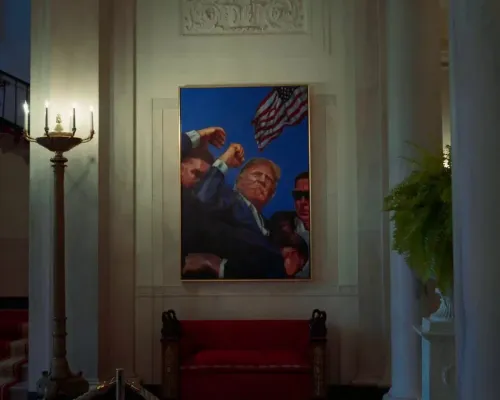
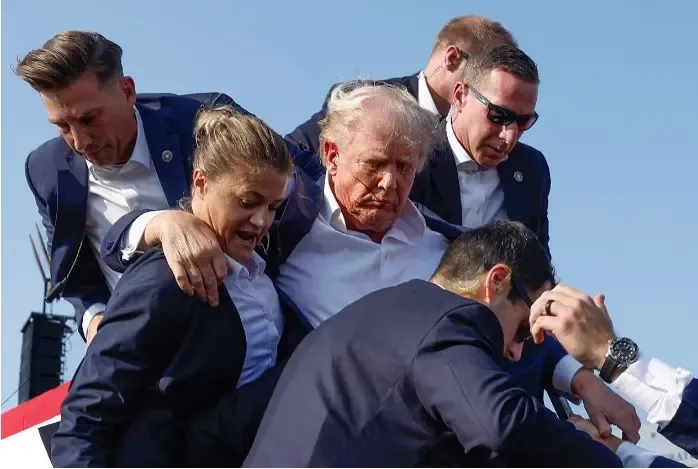
On July 13, 2024 , a bullet grazed Trump's ear at a campaign rally in Butler, Pennsylvania ; the gunman was killed by a Secret Service sharpshooter.
A second attacker discovered at Trump's Florida golf course on September 15, 2024 was sentenced to life in prison in February 2025 .
Four US presidents — Abraham Lincoln, James Garfield, William McKinley, and John F.
Kennedy — have been assassinated in office.
Sai Varshith Kandula , an Indian-origin man, was sentenced to 8 years in prison for ramming a truck near the White House in May 2023 with stated intent to kill President Biden .
Kennedy was assassinated in California in 1968 while campaigning for the Democratic presidential nomination , making the Kennedy family the most targeted political dynasty in US history.
Washington, April 26 — US President Donald Trump has now survived three assassination attempts, the most recent occurring on Saturday at a Hilton Hotel venue, reinforcing his own grim assessment: "It's a dangerous profession." Trump's repeated brushes with political violence place him within a sobering historical pattern that has claimed the lives of four American presidents and left the nation repeatedly questioning the adequacy of its security apparatus.
Trump's Three Assassination Attempts: A Timeline
The most dramatic attempt came on July 13, 2024, during a campaign rally in Butler, Pennsylvania. A gunman opened fire from a rooftop of a nearby building at the open-air venue. Trump narrowly escaped death when a bullet grazed his right ear as he turned his head to glance at a chart on a large screen. The shooter fatally struck a bystander on the stage behind Trump before being neutralised by a Secret Service sharpshooter.
The incident triggered widespread outrage over security failures, resulting in disciplinary action against multiple Secret Service personnel and a sweeping review of presidential protection protocols.
Just two months later, on September 15, 2024, a second threat emerged at Trump's golf course in West Palm Beach, Florida. A man was discovered concealed in shrubbery near the perimeter fence, armed with a rifle. A Secret Service agent fired at the suspect, who fled but was apprehended shortly after. He was subsequently tried and sentenced in February 2025 to life in prison.
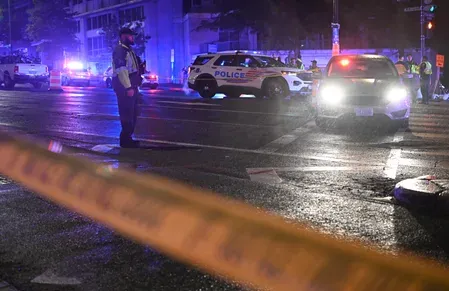
The third and latest attempt took place at the Hilton Hotel on Saturday, April 26, 2025, details of which are still emerging. Notably, this is the same hotel where President Ronald Reagan was shot and wounded in March 1981 — a chilling coincidence that underscores the recurring nature of political violence in American history.
Ronald Reagan and the Hilton Hotel Shooting
Ronald Reagan was shot outside the Washington Hilton Hotel on March 30, 1981, just months into his presidency. The bullet punctured his lung, and he came perilously close to death before surgeons stabilised him. His assailant, John Hinckley Jr., was found not guilty by reason of insanity and was never imprisoned for the attack. Hinckley later stated he attempted to kill Reagan to impress actress Jodie Foster, on whom he had developed an obsessive fixation — a revelation that shocked the nation and sparked debates over mental health and celebrity culture.
Four Presidents Assassinated: America's Darkest Chapters
President Abraham Lincoln holds the grim distinction of being the first US president to be assassinated. He was shot on April 14, 1865, inside Ford's Theatre in Washington, D.C., dying the following morning. Lincoln had just steered the nation through the Civil War, defeating Confederate secessionist states that sought to preserve slavery — making his murder one of history's most consequential political killings.
President James Garfield was the second, shot in 1881, followed by President William McKinley in 1901. The most internationally resonant assassination came on November 22, 1963, when President John F. Kennedy was shot dead in Dallas, Texas. His killer, Lee Harvey Oswald — an American who had defected to the Soviet Union and returned — fired from a building as Kennedy rode in an open motorcade. Oswald was himself killed days later by Jack Ruby, a move that spawned decades of conspiracy theories that persist to this day.
Robert F. Kennedy, brother of JFK and a presidential candidate himself, was assassinated in California in 1968 while campaigning for the Democratic Party's presidential nomination — a double tragedy that devastated the Kennedy family and the American left.
Other Notable Threats and Near-Misses
President Gerald Ford came within inches of death in September 1975 in California, when a female member of a cult aimed a gun at him from close range. The weapon failed to discharge, and the woman was sentenced to 34 years in prison.
In a more recent incident, Sai Varshith Kandula, a man of Indian origin, rammed a truck into a security barrier near the White House in May 2023, stating his intent to assassinate President Joe Biden and seize power. Kandula, who was found with a Nazi flag in his vehicle and expressed admiration for Adolf Hitler, was sentenced to eight years in federal prison.
A Nation Polarised, A Presidency Under Siege
Trump's repeated targeting reflects a deeply fractured American political landscape. Experts and security analysts note that the volume and frequency of credible threats against sitting and former presidents have escalated sharply in the era of social media and extreme political polarisation. The Secret Service reportedly investigates tens of thousands of threats annually, a figure that has grown exponentially over the past decade.
The recurrence of assassination attempts — particularly three against a single individual — raises urgent questions about whether America's presidential security infrastructure is adequately equipped for the modern threat environment. As investigations into the latest attempt continue, expect renewed congressional scrutiny of Secret Service funding, protocols, and intelligence-sharing with law enforcement agencies.
Point of View
Which exports democracy as a brand, is struggling to protect its own elected leaders from domestic political violence, a threat that has metastasised in the age of social media radicalisation and institutional distrust. What is striking is not just the frequency of these attempts, but the ideological diversity of the perpetrators — from cult members to lone obsessives to politically motivated shooters — suggesting that the threat is systemic, not isolated. Until America confronts the root causes of its political polarisation with the same urgency it applies to foreign threats, no amount of Secret Service reform will be sufficient.
NationPress
18 Sept 2026
Frequently Asked Questions
How many assassination attempts has Donald Trump survived?
Donald Trump has survived three assassination attempts. The first was in July 2024 in Pennsylvania where a bullet grazed his ear, the second in September 2024 at his Florida golf course, and the third on April 26, 2025, at a Hilton Hotel.
Which US presidents have been assassinated?
Four US presidents have been assassinated: Abraham Lincoln in 1865, James Garfield in 1881, William McKinley in 1901, and John F. Kennedy in 1963. Kennedy remains the most recent president to be killed in office.
What happened at the Ronald Reagan assassination attempt?
President Ronald Reagan was shot outside the Washington Hilton Hotel on March 30, 1981, sustaining a punctured lung. His attacker, John Hinckley Jr., was found not guilty by reason of insanity and claimed he acted to impress actress Jodie Foster.
Who was sentenced to life in prison for attempting to assassinate Trump?
A man who was found hiding near Trump's Florida golf course with a rifle in September 2024 was sentenced to life in prison in February 2025. He had fled after a Secret Service agent fired at him but was captured shortly after.
What is the Secret Service doing to protect Trump after multiple attempts?
Following the July 2024 Pennsylvania shooting, multiple Secret Service personnel faced disciplinary action and a security review was launched. However, the recurrence of threats has prompted calls for deeper reform of presidential protection protocols and increased funding.