Trump Thanks Secret Service After White House Gunman Incident
Synopsis
President Donald J. Trump on May 24, 2026, publicly commended the Secret Service and law enforcement for swiftly neutralising a gunman near the White House, reaffirming confidence in the federal protective apparatus that has guarded the presidency since 1902.
Key Takeaways
Trump issued a public statement on May 24, 2026 , thanking the Secret Service and law enforcement for their response.
The incident involved an armed individual near the White House at 1600 Pennsylvania Avenue, Washington, D.C.
Trump described the action taken as 'swift and professional' in his official post.
The Secret Service has held full-time presidential protection duties since 1902 .
Official incident reports and a security review are expected to follow as per standard protocol.
No additional operational details — including the identity or motive of the gunman — were disclosed in the presidential statement.
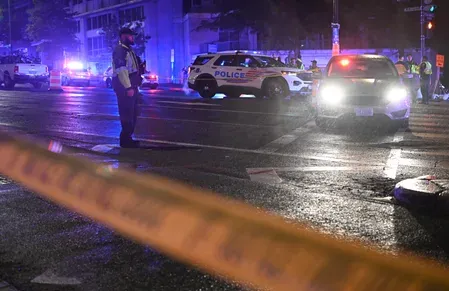
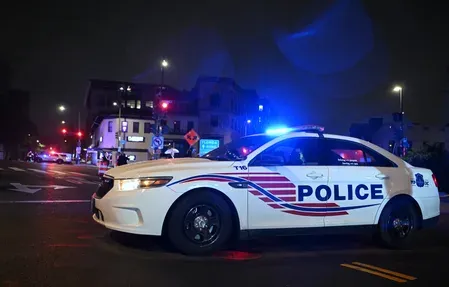
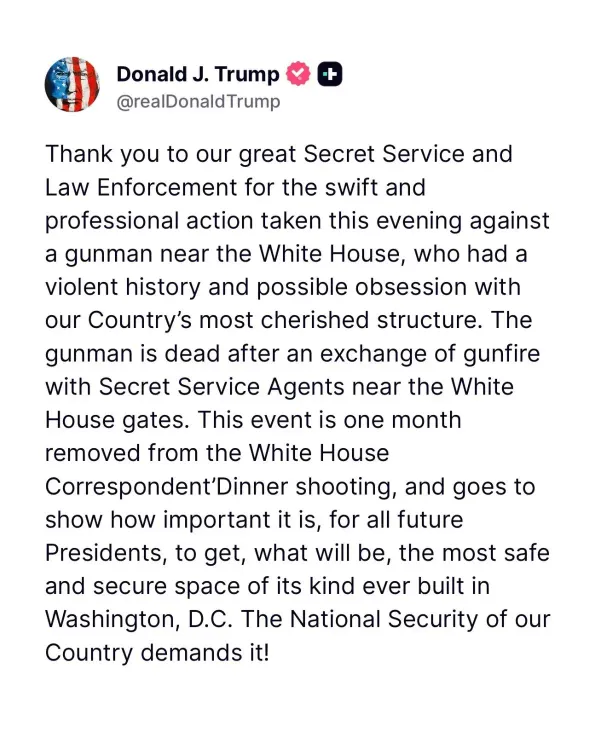
President Donald J. Trump publicly thanked the United States Secret Service and federal law enforcement on Sunday, May 24, 2026, following what he described as a 'swift and professional' response to an armed individual near the White House in Washington, D.C. The statement was issued through the official White House communications account on X.
Context
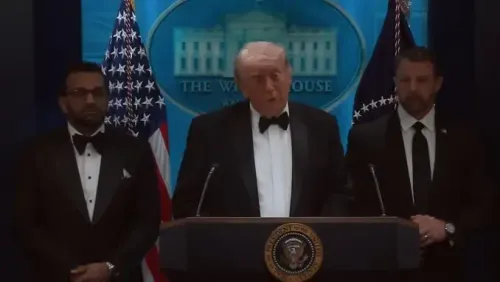
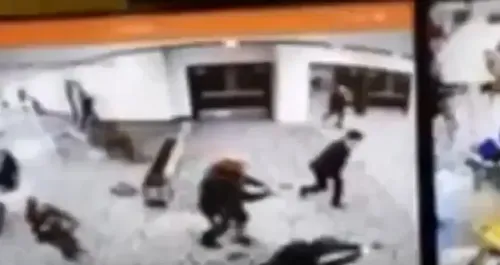
In his post, President Trump said: 'Thank you to our great Secret Service and Law Enforcement for the swift and professional action taken this evening against a gunman near the White House.' The statement follows an established executive practice of publicly acknowledging protective personnel after security incidents at or near the presidential residence. No further operational details were included in the post.
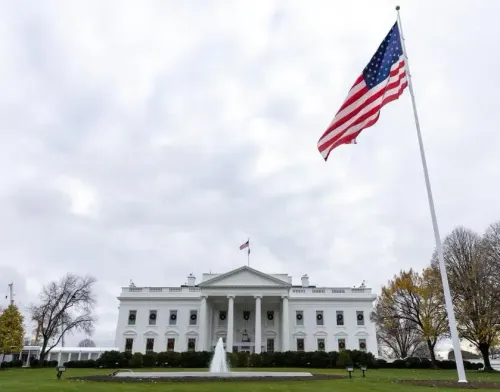
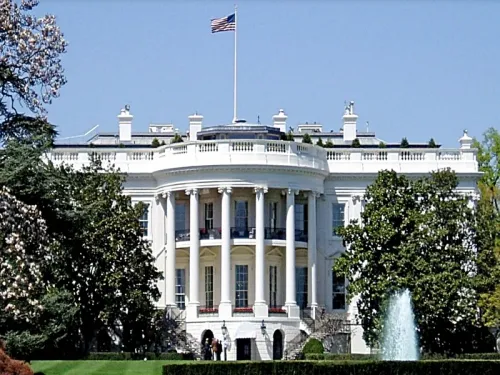
The White House, located at 1600 Pennsylvania Avenue in Washington, D.C., is the official residence and workplace of the President of the United States. It is among the most heavily secured buildings in the world, with a multi-layered perimeter maintained jointly by the Secret Service and other federal and local agencies.
Policy Backdrop
The United States Secret Service has held full-time responsibility for presidential protection since 1902, a mandate formalised in the aftermath of the assassination of President William McKinley. The agency coordinates closely with local and federal law enforcement whenever a threat is identified near the White House perimeter.
Unauthorised approaches and armed incidents near the White House have occurred periodically over the decades, each typically prompting a formal internal review of existing security protocols. Public statements from sitting presidents commending the response of protective personnel are a well-documented part of post-incident communications.
Stakeholders and Impact
The primary stakeholders in this incident are the Secret Service agents and law enforcement officers who responded on the ground. Their swift action, as acknowledged by the President, prevented the situation from escalating further. The statement serves both as recognition of their service and as a signal of institutional confidence in the protective apparatus.
For the broader public and for visiting foreign dignitaries who regularly interact with White House security, such incidents underscore the continuous operational readiness required of federal protective services. The Secret Service's mandate extends beyond presidential protection to include the security of the Vice President and visiting heads of state.
What's Next
Following any armed incident near the White House perimeter, standard procedure involves the release of official incident reports and a review of existing security arrangements. It remains to be seen whether this event will prompt any formal revision of protocols or additional resource deployment around the complex.
Observers will watch for official statements from the Secret Service or the Department of Homeland Security providing a fuller account of the incident, including the identity and motive of the individual involved. Any legislative or administrative response to security gaps, if identified, would follow in subsequent weeks.
Point of View
Project calm, and signal that protective systems functioned as designed. The statement carries political weight beyond mere gratitude — it pre-empts narratives of vulnerability at the seat of executive power. Coming at a time when presidential security has faced recurring public scrutiny, the post also reinforces the administration's posture of strength and operational control. Whether a formal security review follows will be the real indicator of how seriously the incident is being treated internally.
NationPress
23 Sept 2026
Frequently Asked Questions
What happened near the White House on May 24 2026?
President Trump stated that a gunman was encountered near the White House and that the Secret Service and law enforcement took 'swift and professional' action. No further operational details have been officially released.
Who is responsible for protecting the US President?
The United States Secret Service is the primary federal agency responsible for protecting the President, Vice President, and visiting foreign dignitaries. It has held this full-time mandate since 1902 .
Has this kind of incident happened at the White House before?
Yes. Unauthorised approaches and armed incidents near the White House perimeter have occurred periodically over the decades. Each such event typically triggers a formal internal security review.
What will happen after the White House gunman incident?
Standard protocol calls for the release of an official incident report and a review of White House security arrangements. Statements from the Secret Service or the Department of Homeland Security are expected to follow.
Why did Trump post about the Secret Service on X?
Publicly commending protective personnel after a security incident is an established executive communications practice. It signals institutional confidence and keeps the public informed of threats to the presidency.