Trump says US-India ties 'cannot be closer', pledges defence support at G7
Synopsis
At the G7 in Évian, Trump went further than any standard diplomatic script — pledging US military support if India is attacked, calling Modi one of the toughest negotiators he's faced, and declaring bilateral ties 'cannot be closer'. A trade deal may be imminent, and the defence signal is the most direct Washington has sent New Delhi in years.
Key Takeaways
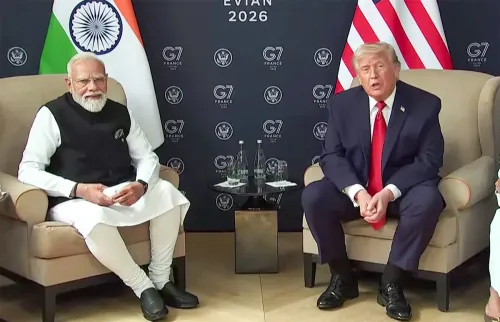
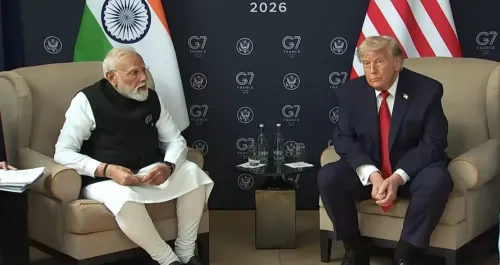
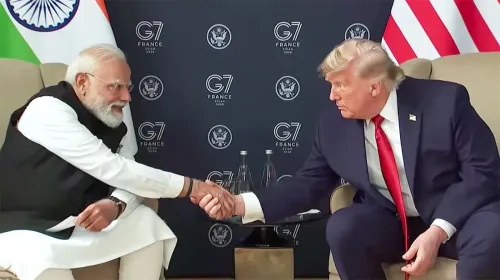
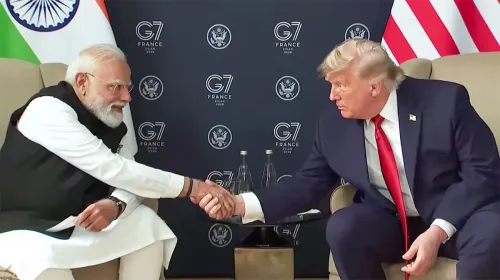
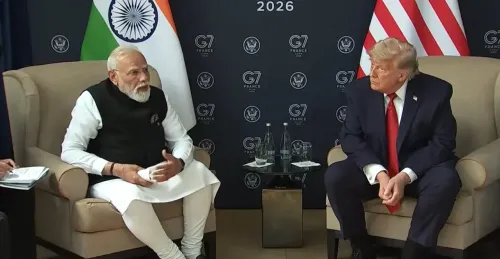
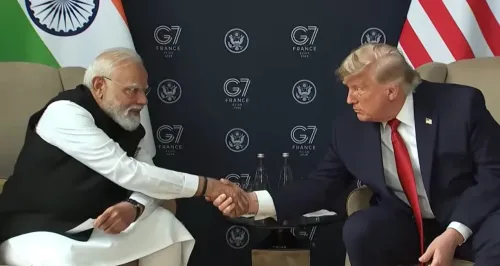
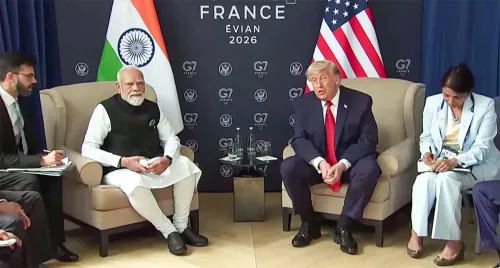
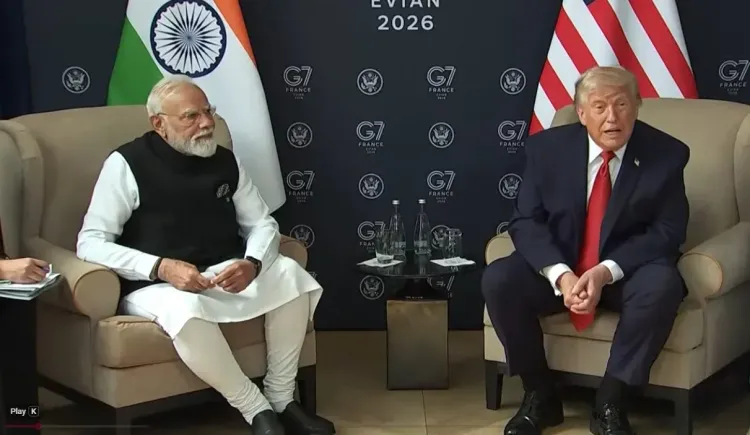
President Trump met PM Modi on the sidelines of the G7 summit in Évian, France on 17 June .
Trump declared US-India ties 'cannot be closer' and pledged: 'If they were attacked, we would be there to help them.' A bilateral trade agreement is described as 'very close', with negotiations reportedly advancing.
PM Modi said both nations had 'given new speed and new energy' to relations since their last Washington meeting.
Modi stressed keeping the Strait of Hormuz open is 'vital for the global economy'.
Both leaders reaffirmed cooperation on defence , energy , technology , and skilled workers ; both are members of the Quad .
US President Donald Trump on Wednesday, 17 June declared that relations between the United States and India 'cannot be closer', pledged American military support if India were attacked, and said a bilateral trade agreement was 'very close' — remarks made during a high-profile sideline meeting with Prime Minister Narendra Modi at the G7 summit in Évian, France. The exchange underscored the deepening strategic partnership between the world's two largest democracies.
Key Statements from Trump
Trump was effusive in his assessment of the bilateral relationship, offering some of his most direct language yet on defence solidarity. 'If they were attacked, we would be there to help them,' he said, adding: 'If anybody attacks that man, we're going to be there.' The comments signal a level of security assurance that goes beyond standard diplomatic formulations, though no formal mutual-defence treaty exists between the two nations.
On trade, Trump confirmed that negotiations were advancing. 'We're very close,' he said, while also praising Modi's negotiating tenacity: 'He's a very tough negotiator. He's one of the toughest, actually.' He characterised the personal rapport between the two leaders as a driver of broader bilateral momentum: 'I don't think we can be any closer, both him and I, and our nations.'
Modi's Remarks on Bilateral Momentum
Prime Minister Modi described the meeting as a continuation of progress made since their last engagement in Washington. 'We had an extremely productive meeting in Washington last year, and since then we have given new speed and new energy to our relations,' he said. He also credited Trump with rekindling hopes for stability in West Asia: 'Thanks to your efforts, Mr. President, a new hope for peace and stability in the region has been rekindled.'
Modi raised the strategic importance of the Strait of Hormuz, stressing that keeping it open was 'vital for the global economy' — a pointed reference to India's dependence on Gulf energy imports and the significant number of Indian seafarers operating on global maritime routes.
Defence, Energy, and Skilled Workers
Trump signalled openness across multiple dimensions of the partnership. On skilled Indian professionals in the US, he said: 'We've always had tremendous relationships in terms of employment with India. Very talented people.' On energy, he indicated Washington would remain a willing partner: 'India can do anything they want with us. We have the best relationship.'
When asked whether India could play a larger role in West Asia, Trump responded: 'I think India plays a big role in everything. As long as he's the leader, India's going to play a big role.' He also sought to reassure Indians more broadly: 'As long as I'm President, they have a great friend in the White House.'
Strategic Context
The United States and India have expanded cooperation steadily over the past two decades across defence, technology, energy, trade, and strategic affairs. Both are core members of the Quad grouping — alongside Australia and Japan — which focuses on maintaining a free and open Indo-Pacific. This comes amid ongoing US-India trade negotiations that have gained urgency following broader shifts in American tariff policy under the Trump administration. Notably, a formal bilateral trade deal has been discussed for years without conclusion; the G7 sideline meeting appears to have injected fresh momentum into those talks.
With the G7 summit providing a multilateral backdrop, the Modi-Trump meeting reinforces India's positioning as a pivotal partner in Washington's Indo-Pacific calculus — and sets up a potentially significant trade announcement in the weeks ahead.
Point of View
We would be there' — is striking precisely because it is unscripted and unbacked by any formal treaty. It plays well domestically in both countries, but it raises the question of what it actually commits Washington to. On trade, 'very close' has been the characterisation for several rounds of negotiations; the proof will be in a signed text, not a sideline press moment. What is genuinely significant is the convergence on the Strait of Hormuz: India's energy security and the US's Gulf posture are aligning in ways that have concrete strategic weight, and that alignment is underreported relative to the headline warmth.
NationPress
16 Sept 2026
Frequently Asked Questions
What did Trump say about US-India relations at the G7 summit?
Trump declared that US-India ties 'cannot be closer' during his sideline meeting with PM Modi at the G7 in Évian, France on 17 June. He also pledged that the US would help India militarily if it were attacked, and confirmed that a bilateral trade deal was 'very close'.
Is a US-India trade deal imminent?
Trump said negotiations are advancing and described the situation as 'very close' following his meeting with PM Modi at the G7. However, no signing date or formal announcement has been made, and similar characterisations have been offered in previous rounds of talks without a concluded agreement.
What did Trump mean when he said the US would help India if attacked?
Trump stated, 'If they were attacked, we would be there to help them,' signalling strong US defence solidarity with India. No formal mutual-defence treaty exists between the two countries, so the remark is seen as a political statement of intent rather than a binding security guarantee.
What did PM Modi say at the G7 meeting with Trump?
PM Modi said the two nations had 'given new speed and new energy' to their relations since their last Washington meeting. He also praised Trump's efforts toward peace in West Asia and stressed the importance of keeping the Strait of Hormuz open for the global economy.
What is the Quad and why does it matter here?
The Quad is a strategic grouping comprising the United States, India, Australia, and Japan, focused on maintaining a free and open Indo-Pacific. The Modi-Trump meeting reinforces India's centrality to Washington's Indo-Pacific strategy, with both leaders signalling deepening alignment on security, trade, and energy.