Trump claims US to make 50% of world's chips after TSMC's $265bn Arizona bet
Synopsis
At an Arizona rally, Trump claimed the US will soon make half of all the world's chips — citing TSMC's $265 billion Arizona bet and a $21 billion GlobalFoundries expansion — and said Eli Lilly, Merck, and Pfizer were moving drug production back from Ireland, China, and the UK. The claims were largely unverified, but for India — a top generic medicines exporter and aspiring chip hub — the implications are significant even in the silences: India went unmentioned.
Key Takeaways
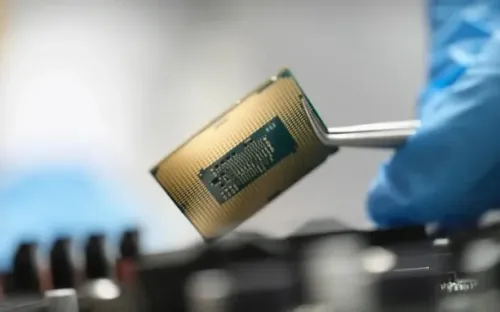
President Trump told a rally in Bullhead City, Arizona on Wednesday that the US would produce 50% of the world's chips.
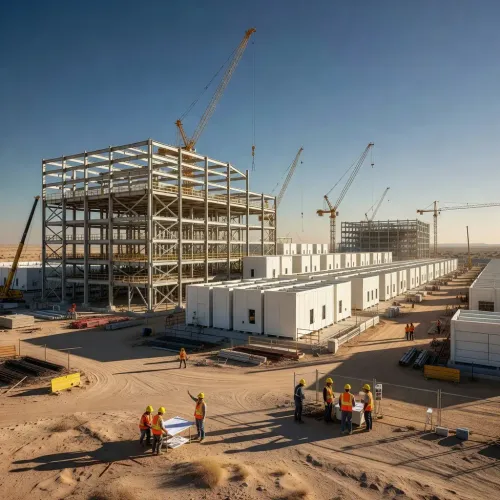
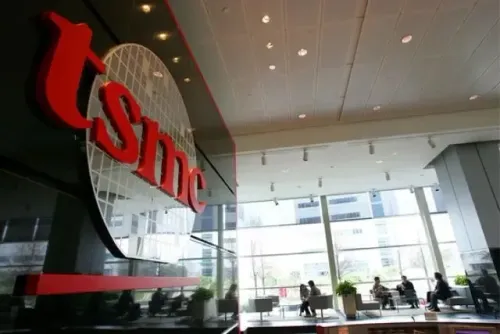
TSMC has committed $265 billion to semiconductor manufacturing in Arizona , with construction employing over 6,000 people.
GlobalFoundries is reportedly set to invest $21 billion in two new chip factories in upstate New York .
Trump claimed Eli Lilly, Merck , and Pfizer are reshoring drug production from Ireland, China , and the UK ; no supporting data was provided.
Trump cited $21.2 trillion in total US investment commitments and a 50% tariff on copper.
India was not named, despite being a leading generic medicine supplier to the US and an emerging chip-industry player under the India Semiconductor Mission .
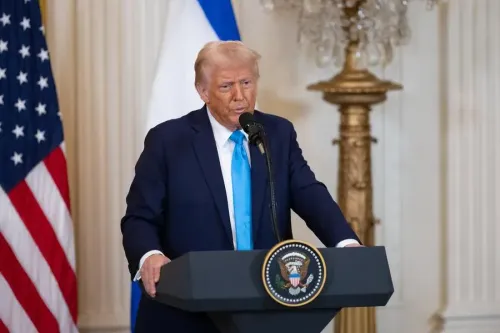
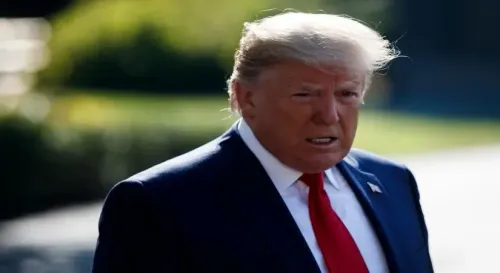
US President Donald Trump on Wednesday told a midterm election rally in Bullhead City, Arizona that the United States would manufacture half of the world's semiconductors, pointing to Taiwan's TSMC committing $265 billion to a fabrication facility in Arizona as the centrepiece of that ambition. He also claimed American pharmaceutical companies were reshoring drug production from Ireland, China, and Britain.
The Semiconductor Claims
Trump took direct credit for the TSMC investment at the Arizona rally. 'I'm the one that got the great Taiwanese, Taiwan, Taiwanese company TSMC… It's $265 billion… you're going to have the largest semiconductor manufacturing facilities,' he said. He added: 'I think we'll have 50 per cent of the world's chips. Right now we have 0 per cent.'
He noted the project was already supporting employment: 'The construction alone is currently employing more than 6,000 people,' Trump said. Beyond TSMC, he pointed to domestic chipmaker GlobalFoundries, claiming it would invest $21 billion to build two new semiconductor factories in upstate New York. He also referenced a deal with Intel, stating 'We made $72 billion profit. I did a deal with Intel,' and cited $10 billion tied to TikTok. The President, however, did not explain how those figures were calculated, nor did he distinguish between announced investment commitments and capital already deployed.
Pharmaceutical Reshoring Claims
On medicines, Trump asserted that major drugmakers were shifting production back to American soil. 'Eli Lilly just announced they're coming in with many medical plants, Merck, Pfizer. All of our drug business is coming back. It's made now in Ireland and China and the UK. It's all coming back. They're spending hundreds of billions of dollars,' he said.
He also claimed his most-favoured-nation drug pricing policy had drastically reduced costs for consumers. 'Drug prices went from the highest anywhere in the world to the lowest… our drugs are going to be cut by 50, 60, 70, 80 per cent,' Trump said. He did not provide supporting data for either the reshoring or pricing claims.
Other Figures Cited
Trump cited $21.2 trillion in total investment commitments to the US, a 50 per cent tariff on copper, and the Resolution Copper mine in Arizona, which he said would generate 3,700 jobs.
What This Means for India
Trump did not mention India by name in his remarks. This comes amid heightened attention in New Delhi, given that India is a leading supplier of generic medicines to the US — accounting for a significant share of generic prescriptions dispensed in the country — and is actively building its own chip industry under the India Semiconductor Mission, which has approved multiple fabrication and chip-assembly projects. Notably, Trump named Ireland, China, and the UK as sources of returning drug production but excluded India, leaving the implications for Indian pharmaceutical exporters ambiguous. US moves to reshore both medicine and semiconductor manufacturing are closely monitored by Indian policymakers and industry as the country positions itself to attract global chip investment.
Point of View
$21 billion from GlobalFoundries, $72 billion from an Intel deal — arrives without a consistent accounting methodology, blurring announced pledges, government incentives, and revenue figures into a single triumphalist number. The pharmaceutical reshoring claim is similarly sweeping: naming Eli Lilly, Merck, and Pfizer without disclosing timelines or production volumes makes independent verification impossible. For India, the silence is the story — New Delhi is watching US semiconductor policy closely while simultaneously competing for generic pharma shelf-space in American pharmacies; being unnamed is neither a clearance nor a threat, but a sign that the pressure could crystallise quietly. The India Semiconductor Mission's progress will now be stress-tested against Washington's willingness to use tariffs, subsidies, and bilateral deals to lock in domestic and allied supply chains.
NationPress
15 Oct 2026
Frequently Asked Questions
What did Trump claim about US semiconductor manufacturing?
Trump claimed the US would produce 50 per cent of the world's chips, citing TSMC's $265 billion investment in Arizona and GlobalFoundries' planned $21 billion expansion into two new factories in upstate New York. He did not distinguish between pledged commitments and capital already spent.
Which pharma companies did Trump name as reshoring production?
Trump named Eli Lilly, Merck, and Pfizer as drug companies returning manufacturing to the US from Ireland, China, and the UK. He did not provide timelines, volume data, or documentation to substantiate the claim.
Why does this matter for India?
India is one of the largest suppliers of generic medicines to the US and is building a domestic chip industry under the India Semiconductor Mission. Trump did not name India among countries losing drug or chip business, but any broad US push to reshore manufacturing could affect Indian pharmaceutical export volumes and competitiveness for chip investment.
Did Trump verify the investment and pricing figures he cited?
No. Trump cited $21.2 trillion in total US investment commitments, an $72 billion profit from an Intel deal, and drug price cuts of 50–80 per cent, but provided no data or methodology to support any of these figures at the rally.
What is the India Semiconductor Mission?
The India Semiconductor Mission is a government programme that has approved multiple fabrication and chip-assembly projects in India, positioning the country to attract global semiconductor investment. Its progress is closely watched in the context of US and allied efforts to diversify chip supply chains away from Asia.