Turkish FM Hakan Fidan meets Bangladesh PM, Jamaat-e-Islami in Dhaka visit
Synopsis
Turkish FM Hakan Fidan's Dhaka visit covered the full sweep of Bangladesh's new political order — from PM Tarique Rahman to the NCP's post-revolution leadership to radical Islamist party Jamaat-e-Islami. With annual 2+2 defence-foreign minister talks now agreed, Ankara is embedding itself structurally into Bangladesh's realigned foreign policy, raising pointed questions about Turkey's strategic calculus in South Asia.
Key Takeaways
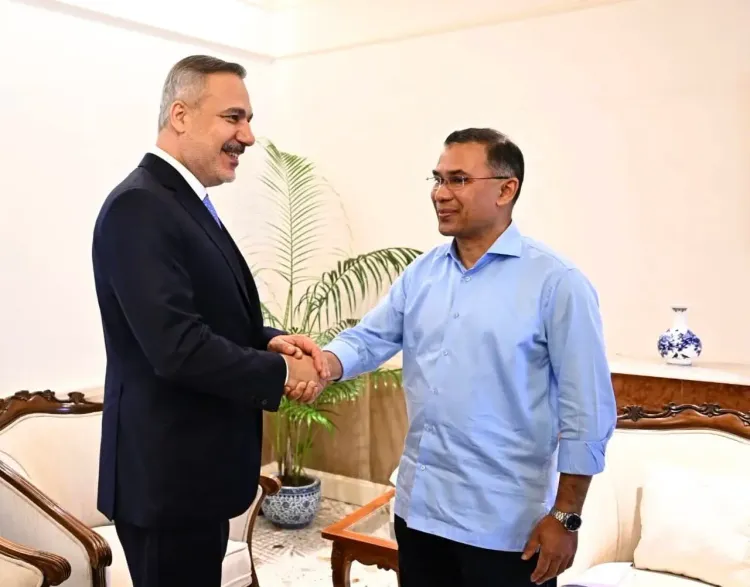
Turkish FM Hakan Fidan met Bangladesh PM Tarique Rahman at the Prime Minister's Office in Tejgaon, Dhaka on 6 June 2025 .
Both sides agreed to annual foreign minister consultations and annual 2+2 meetings involving foreign and defence ministers.
Fidan also met Jamaat-e-Islami chief Shafiqur Rahman and NCP convener Nahid Islam , covering Bangladesh's broader political spectrum.
Fidan visited Rohingya camps in Cox's Bazar and inspected Turkish humanitarian operations including the Turkey-Bangladesh Hospital .
Regional analysts have raised concerns about Turkey's expanding ideological and military footprint in South Asia .
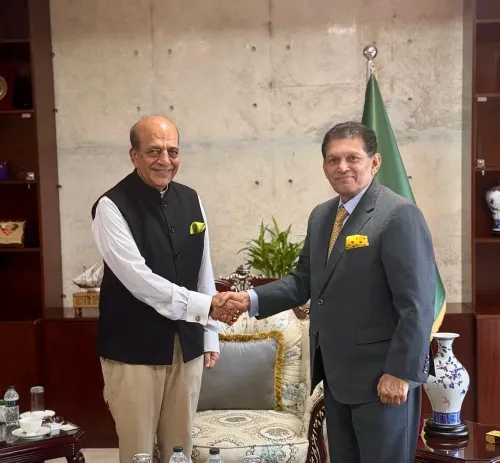
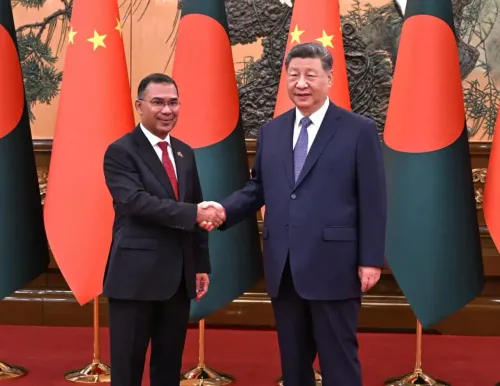
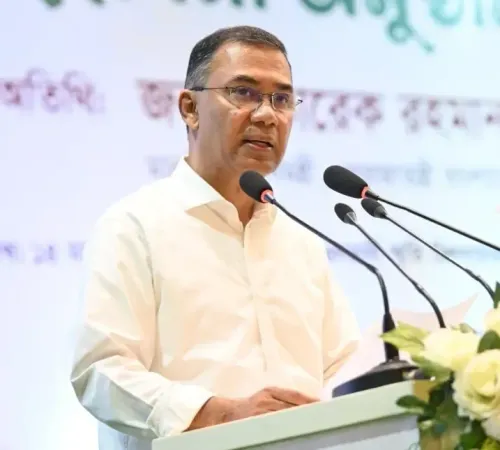
Turkish Foreign Minister Hakan Fidan on Saturday, 6 June called on Bangladesh Prime Minister Tarique Rahman at the Prime Minister's Office in Tejgaon, Dhaka, as Ankara and Dhaka moved to formalise a deeper bilateral framework spanning trade, defence, and diplomacy. The high-profile visit underscores a notable shift in Bangladesh's foreign policy alignments following the ouster of the Sheikh Hasina-led Awami League government.
Key Developments from the Dhaka Meetings
The Bangladesh Nationalist Party (BNP) confirmed the meeting in a post on X, stating that discussions centred on 'strengthening Bangladesh-Turkey bilateral relations, expanding trade and investment, and discussing issues of mutual interest.' According to the Bangladesh Ministry of Foreign Affairs, both sides agreed to institutionalise the engagement through annual foreign office consultations at the foreign minister level, as well as annual 2+2 consultations involving the foreign and defence ministers of both countries.
Fidan arrived in Dhaka on Thursday night on a three-day official visit — his engagements spanning the full spectrum of Bangladesh's current political landscape.
Fidan Meets Jamaat-e-Islami and NCP Leadership
In a meeting that drew significant attention, Fidan received a six-member delegation led by Shafiqur Rahman, chief of the radical Islamist party Jamaat-e-Islami. Jamaat posted on X that discussions 'focused on various issues of mutual interest, particularly expanding cooperation in the fields of industry, trade, education, healthcare, and defense.'
On Friday, a delegation from the National Citizen Party (NCP), led by convener Nahid Islam, also met Fidan. Islam subsequently posted on X that 'Foreign Minister Fidan congratulated the NCP leadership for their pivotal role in the July Revolution, which led to the fall of the Sheikh Hasina government' — a characterisation that carries pointed diplomatic weight.
Defence Ties and the Rohingya Camp Visit
During a separate meeting on Friday with Bangladesh Foreign Minister Khalilur Rahman, Fidan reaffirmed Ankara's commitment to deepening ties, with particular emphasis on the defence sector. Fidan also visited Rohingya refugee camps in Cox's Bazar alongside Khalilur, where he observed operations by Turkish agencies including TIKA, AFAD, the Turkish Red Crescent, the Turkiye Diyanet Foundation, and a Turkey-Bangladesh Hospital run by the Turkish Ministry of Health, according to the Turkish Foreign Ministry.
Regional Stability Concerns
The breadth of Fidan's engagements — spanning the ruling party, a post-revolution political outfit, and a radical Islamist organisation — has drawn scrutiny from regional analysts. Several observers have reportedly cautioned that Turkey is not merely an external stakeholder in South Asia but a power with ideological motivations and expanding military links, raising questions about the implications for regional stability. This comes amid broader concerns about alleged tacit alignments between extremist networks across parts of South Asia, including Pakistan and Bangladesh.
With annual ministerial consultations now agreed upon, the Bangladesh-Turkey relationship is set to deepen structurally — and the composition of Fidan's meeting roster in Dhaka will likely remain a subject of close scrutiny in the months ahead.
Point of View
Not just building state-to-state ties. The 2+2 defence-foreign minister framework is a structural escalation: it institutionalises Turkey's military relevance in a country that borders India and hosts the world's largest refugee population. For New Delhi, the combination of Turkish defence interest, Islamist outreach, and the Dhaka-Islamabad warming trend represents a layered strategic challenge that goes well beyond bilateral optics.
NationPress
26 Sept 2026
Frequently Asked Questions
Why did Turkish FM Hakan Fidan visit Dhaka?
Fidan visited Dhaka on a three-day official visit beginning Thursday to deepen Bangladesh-Turkey bilateral ties across trade, investment, defence, and diplomacy. His meetings with PM Tarique Rahman resulted in an agreement to hold annual 2+2 consultations involving both countries' foreign and defence ministers.
Did Fidan meet Jamaat-e-Islami during his Bangladesh visit?
Yes. Fidan met a six-member Jamaat-e-Islami delegation led by party chief Shafiqur Rahman. According to Jamaat's post on X, discussions covered cooperation in industry, trade, education, healthcare, and defence.
What is the significance of the 2+2 consultations agreed upon?
The annual 2+2 framework — involving both foreign and defence ministers — institutionalises Turkey's security engagement with Bangladesh, going beyond standard diplomatic exchanges. It mirrors formats typically used between close strategic partners and signals Ankara's intent to embed itself in Bangladesh's defence landscape.
What did Fidan do at the Rohingya camps in Cox's Bazar?
Fidan visited Rohingya refugee camps in Cox's Bazar alongside Bangladesh FM Khalilur Rahman, observing operations by Turkish agencies including TIKA, AFAD, the Turkish Red Crescent, and the Turkey-Bangladesh Hospital run by the Turkish Ministry of Health, according to the Turkish Foreign Ministry.
How has Bangladesh's foreign policy shifted since the fall of Sheikh Hasina?
Since the ouster of the Awami League government led by Sheikh Hasina, Bangladesh has visibly pivoted toward countries including Turkey and Pakistan. The current government's engagement with Ankara — spanning defence, trade, and outreach to Islamist political actors — marks a sharp departure from the previous administration's foreign policy orientation.